
No single Florida law bans driving with a cracked windshield. Fla. Stat. 316.610 lets an officer stop you if the crack makes your car unsafe, and the Florida Supreme Court’s Hilton v. State (2007) limits that stop to cracks that actually block your view or endanger someone. If the crack sits in your line of sight, get it fixed. Comprehensive insurance covers the replacement at $0 deductible under Fla. Stat. 627.7288.
What Florida Law Actually Says
Florida does not have a statute that names “cracked windshield” as an offense. Search the books and you will not find that phrase. What you will find are two statutes officers actually rely on, and neither one sets a size limit.
316.610: The Unsafe Equipment Statute
Fla. Stat. 316.610 bans driving a vehicle “in such unsafe condition as to endanger any person or property.” It also gives an officer the authority to stop a vehicle “upon reasonable cause to believe that a vehicle is unsafe or not equipped as required by law.”
Most sites covering this topic miss one detail: the statute’s own example list of lesser defects names “windshield wipers,” not windshields, right alongside worn mufflers and marginally worn tires. For those lesser defects, the officer has to issue a written notice giving you 48 hours, not counting Sunday, to get it fixed. Only a genuinely hazardous defect lets an officer pull the car from service on the spot. A cracked windshield falls under the statute’s general unsafe-equipment language, not a named example, and that distinction shapes how much discretion an officer has when they decide whether to act.
In practice, this statute rarely triggers a stop on its own. Most drivers who get cited for a cracked windshield get pulled over for something else first, a broken taillight, an expired tag, speeding, and the officer notices the crack during that stop. Once noticed, whether it becomes part of the citation comes down to the judgment call the next section covers.
316.2952: The Windshield Requirement
Fla. Stat. 316.2952 requires your windshield to be fixed, upright, and made of approved safety glazing. It bans obstructions, like signs, tinting, or coverings, in your direct forward viewing area, with a short list of exceptions: legally required documents, an approved strip of transparent sunscreening at the top, government toll transponders, and GPS devices. It also requires working wipers.
Violate 316.2952 and you get a noncriminal traffic infraction, classified as a nonmoving violation. That is a ticket, not an arrest, and it does not carry the same weight on your driving record as a moving violation like speeding or running a red light.
There Is No Fixed Size Rule
Neither statute lists an inch measurement, a crack length, or a chip diameter. Enforcement comes down to an officer’s judgment about whether the damage is genuinely unsafe, bounded by the case law below. Anyone telling you Florida has a hard size cutoff for a citation is working from a myth, not the statute text.
The Case That Sets the Real Bar: Hilton v. State (2007)
Auto glass sites rarely mention this case, but it is the rule that actually decides whether a stop for a cracked windshield holds up.
In Hilton v. State, 961 So. 2d 284, 290-92 (Fla. 2007), the Florida Supreme Court set the standard for when a cracked windshield justifies a traffic stop. A stop is only lawful when the officer reasonably believes the crack renders the vehicle “in such unsafe condition as to endanger any person or property.” A crack has to create a real safety concern for the stop to hold up in court. A stone chip that sits well outside your sightline, small and cosmetic, does not clear that bar by itself.
In plain terms, a chip in the lower corner of your windshield reads very differently from a crack that spiders across your direct line of vision. The court drew the line at genuine endangerment, and that standard is what separates a lawful stop from an overreach. Officers have real discretion here, but that discretion has a legal boundary, and the boundary is whether the crack actually endangers someone.
Where the Crack Sits Matters More Than How Big It Is
Location beats length every time an officer is deciding whether to act, and it matters just as much for your own safety.
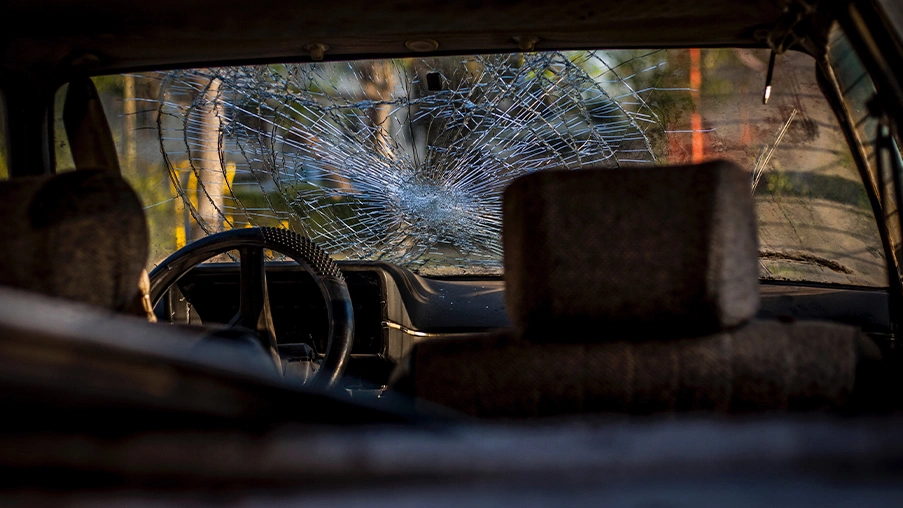
Direct sightline cracks carry the highest risk. A crack running through the area right in front of the driver’s eyes obstructs your view under 316.2952 and gives an officer a straightforward case for a stop under 316.610. These are also the cracks most likely to actually impair your driving, which is the whole point of both statutes.
Edge and corner cracks, outside the wiper sweep, carry lower risk. These rarely meet the Hilton endangerment standard on their own. Still worth fixing, since Florida heat and humidity spread cracks fast, but not the same citation risk as a crack across your sightline.
Cracks over your ADAS camera create a risk almost nobody in this field talks about. If your car has a forward-facing camera mounted near the rearview mirror, for lane departure warning, automatic emergency braking, or adaptive cruise control, that camera reads through the glass directly in front of it. A crack in that zone can degrade what the camera sees, the same way it degrades what you see, and it can throw off lane-centering accuracy or delay an emergency braking response. NuVision’s ADAS calibration technicians see this often on Florida replacement jobs: a crack that looks minor from the driver’s seat sits directly in the camera’s field of view and would have thrown a calibration fault if the car had gone in for service with the old glass still in place. When NuVision replaces a windshield in Florida, ADAS recalibration comes with the job, not as an add-on. See our ADAS calibration service for how that works.
What Actually Happens If You’re Cited
A citation under 316.2952 sounds worse than it is, and understanding the actual process takes a lot of the panic out of it.
You get a noncriminal infraction. The statute classifies a violation as a nonmoving traffic infraction, not a criminal charge. You get a ticket, not handcuffs, and it does not carry the criminal-record weight some drivers assume.
The officer can give you 48 hours to fix it. For a lesser defect, 316.610 requires written notice with 48 hours, excluding Sunday, to make the repair. Immediate removal from service only applies when the defect is genuinely hazardous on the spot, which is rare for a windshield crack alone.
Florida has no periodic vehicle safety inspection to fail. Unlike states that require an annual or biannual inspection sticker, Florida currently runs no statewide periodic vehicle safety inspection program. A cracked windshield cannot cause you to fail an inspection you never have to take. That fear keeps a lot of drivers from getting the crack looked at sooner than they need to. There is no inspection to worry about.
You may also see sites repeat a claim that federal rules allow cracks smaller than three-quarters of an inch, as long as they sit more than three inches from another crack. That figure is not a Florida driving-legality threshold. It reads like a glass industry guideline technicians use to judge whether a chip is a candidate for a quick resin repair or needs a full replacement, not a size an officer checks against before writing a ticket. Florida law sets no such size limit for citations. Treat the two as separate questions: repair eligibility is a technician’s call, based on where the damage sits and how deep it runs, while legality is an officer’s call under 316.610 and Hilton.
The Good News: Fixing It Usually Costs $0
Once you know a crack in your sightline carries real citation risk, the next question is what it costs to fix. In most cases, the answer is nothing out of pocket.
Fla. Stat. 627.7288 waives your deductible on windshield damage when you carry comprehensive coverage. Your insurer pays the shop directly for the repair or replacement, and you never see a bill for the glass or the labor. A full replacement with OEM-equivalent glass and ADAS calibration can run several hundred dollars or more depending on the vehicle, and Florida law says you do not front any of that yourself when you carry comprehensive coverage. For the full walkthrough of how to check your coverage and file the claim, see our guide on how to get your windshield replaced for free in Florida . If you want the claim mechanics carrier by carrier, our Florida windshield insurance claim guide covers that in depth.
Why Waiting Doesn’t Pay Off
A crack that starts small in March rarely stays that way through a Florida summer. Heat and humidity make the glass expand and contract throughout the day, and that stress spreads a hairline crack into a full break faster than most drivers expect. What starts as a low-risk edge chip in your driveway can end up running across your direct line of sight within days, especially if you run the defroster or AC hard against the outside heat.
There’s a structural side to this too. Your windshield is bonded to the frame and works as part of your car’s safety cage, built to help support the roof in a rollover and give your airbags something solid to push against when they deploy. A compromised windshield does not do that job as reliably. And if the crack sits over your ADAS camera, waiting means driving longer with a safety system that may not be reading the road as accurately as it should. We go deeper on both of these in the hidden dangers of a cracked windshield in Florida and why timely windshield repair matters .
A Note on Cash and Gift-Card Offers in Florida
If a company offers you cash, a gift card, or a “free gift” just for filing a windshield claim, treat that as a red flag, not a perk. Florida’s Chapter 2023-136, effective May 25, 2023, made it illegal for a shop or its employees to offer you anything of value in exchange for filing a glass claim. The same law voided assignment-of-benefits sign-over agreements for auto glass claims and banned insurers from forcing you to use a specific shop. Before this law passed, that combination let some shops take over a driver’s claim, inflate the bill, and leave the driver with little say in the outcome.
NuVision does not run cash-back or gift-card offers in Florida. The real value here is a $0-deductible replacement under 627.7288, billed straight to your insurer, done by a certified technician, with ADAS calibration included. That is the whole offer, and it holds up under current Florida law.
How to Get It Fixed Safely, the Same Day
Once you know your crack is a citation risk, worth fixing, and covered at $0 deductible, the next step is getting a technician out to you.
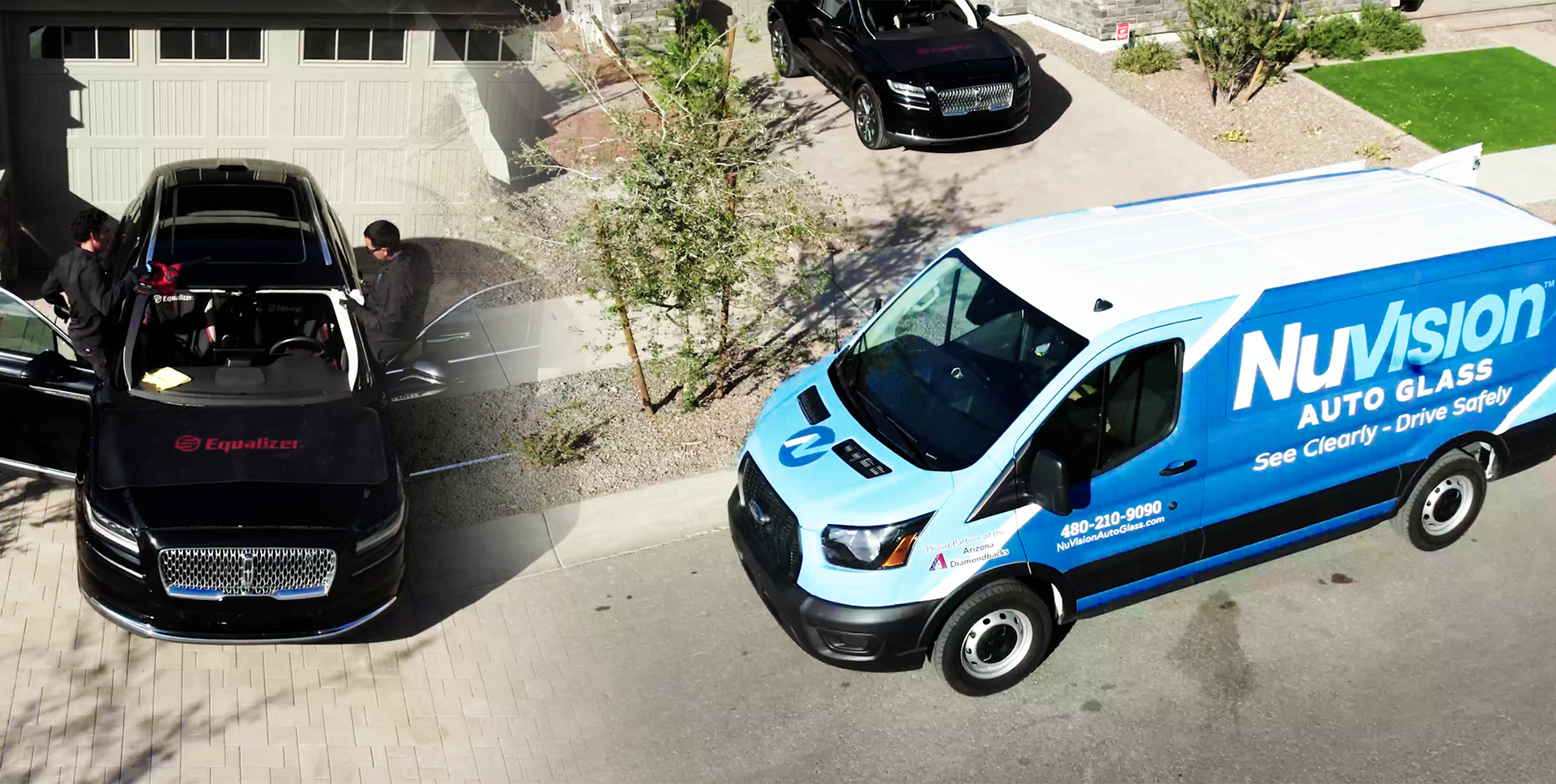
NuVision comes to your driveway, your office lot, or wherever your car is parked, in most Florida markets the same day you call. A technician verifies your coverage, bills your insurer directly, replaces the glass with OEM-equivalent material, and handles ADAS recalibration on-site before they leave, so you are not making a second trip anywhere.
In Tampa, gravel kicked up on I-275 and I-4 turns small chips into cracks fast once summer humidity sets in. In Orlando, the ongoing I-4 construction corridor is a steady source of stone chips for daily commuters. In Jacksonville, salt air off I-95 near the coast wears down older windshield seals and speeds up how fast an existing chip spreads. In Miami, constant UV exposure and heat on I-95 and the Turnpike put steady stress on glass that already has a small chip.
Wherever you are in the state, check windshield replacement in Tampa , Orlando , Jacksonville , or Miami for local availability, or see our windshield replacement service page for the full rundown. Ready to get it scheduled? Get a quote and a NuVision technician will confirm your coverage and get you on the calendar.
Frequently Asked Questions
Can you get pulled over for a cracked windshield in Florida?
Yes, but only under specific conditions. An officer needs reasonable cause under Fla. Stat. 316.610 to believe the crack makes your car unsafe, and under Hilton v. State (2007), that means the crack has to actually endanger you or someone else, not just exist. A minor edge chip rarely meets that bar on its own.
Is it illegal to drive around with a cracked windshield in Florida?
Not automatically. No Florida statute bans driving with a cracked windshield outright. Fla. Stat. 316.2952 bans obstructions in your direct forward viewing area, and 316.610 bans driving in an unsafe condition. If your crack sits outside your sightline and does not create a safety hazard, you are not violating either statute just by having it.
Does Florida replace cracked windshields for free?
In most cases, yes, if you carry comprehensive insurance. Fla. Stat. 627.7288 waives your deductible for windshield damage, so your insurer covers the cost of repair or replacement. You still need to file a claim to trigger the coverage.
Who is responsible for windshield damage in Florida?
If the damage happened while driving, comprehensive coverage on your own policy typically handles it, regardless of fault, since a rock chip usually is not caused by another driver’s negligence in a way you could pursue a claim against them for. If another driver’s actions directly caused the damage, like debris falling from their vehicle, you may have a separate claim against their liability coverage.
Do cops care about a cracked windshield?
It depends on where the crack sits and how visible it is. An officer has discretion under 316.610 and 316.2952, and the Hilton standard means they need a genuine safety concern to justify a stop, not just any crack on your car.
Is there a legal size limit for a cracked windshield in Florida?
No. Florida law sets no specific measurement for citations. You may see a claim online about a three-quarter-inch crack rule, but that is a glass industry guideline for repair eligibility, not a state driving-legality threshold.
Will a cracked windshield make my car fail an inspection in Florida?
No, because Florida currently has no periodic vehicle safety inspection program to fail. That does not remove citation risk from a crack in your sightline, but it does remove inspection failure as a separate concern.
Ready to fix your crack before it becomes a bigger problem? Get a free quote and a NuVision technician can confirm your coverage and get you scheduled today.