
Quick answer
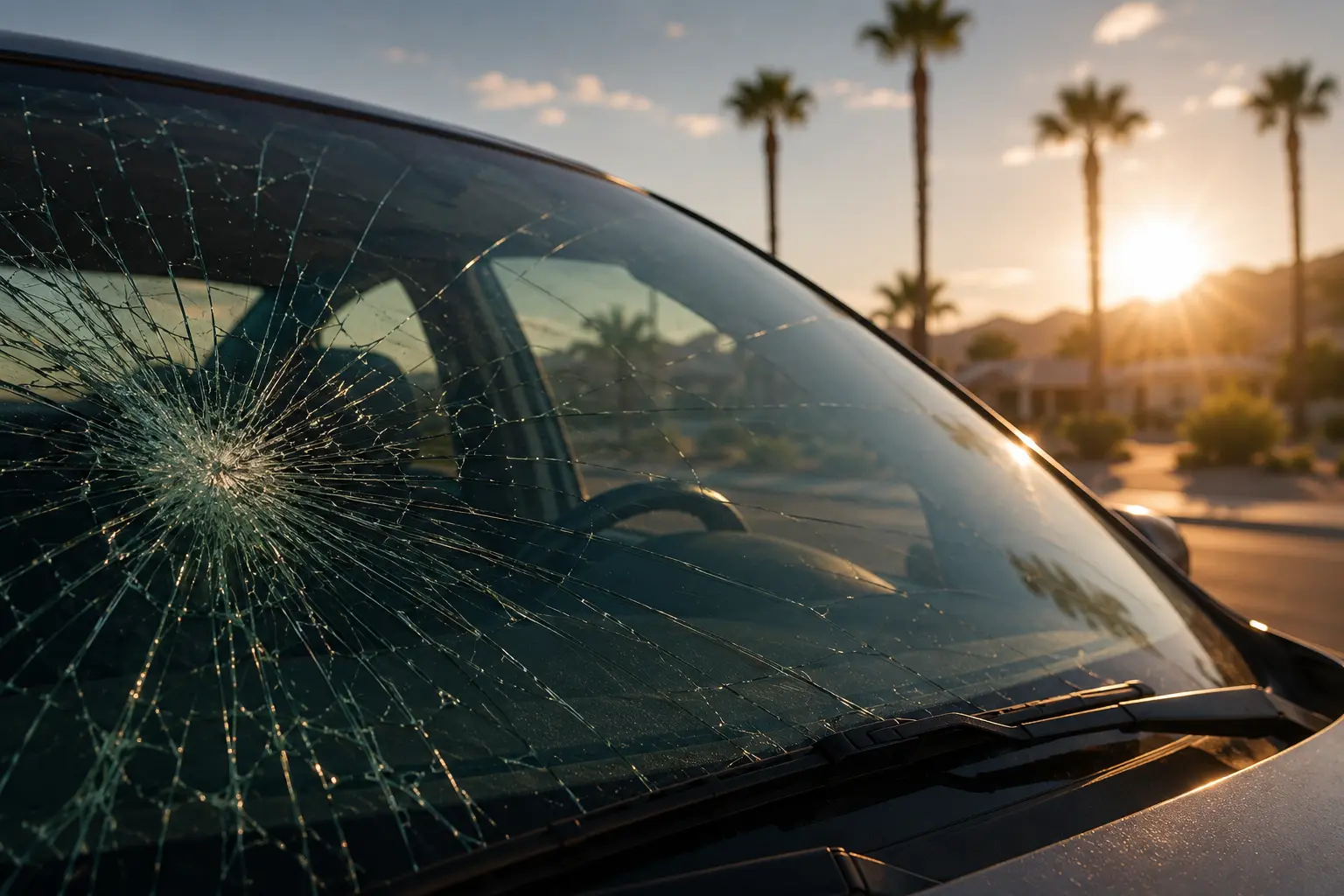
A small chip in Phoenix can turn into a foot-long crack in a single afternoon. The reason is simple. Your windshield is laminated glass, and laminated glass expands and contracts with temperature. When the outside hits 115°F, your dashboard hits 180°F, and then you blast 65°F AC across the inside, the glass twists. Any existing chip becomes the weak point that gives first.
That’s why Phoenix drivers deal with more sudden cracks than almost anywhere else in the country. And once a chip turns into a long crack, repair stops being an option and a full windshield replacement becomes the only safe fix.
What heat actually does to your windshield
Your windshield isn’t one piece of glass. It’s two layers with a thin plastic film called PVB sandwiched in the middle. That design is what keeps the glass from shattering in a crash. It’s also what makes it sensitive to heat.
Glass expands when it heats up. It contracts when it cools. That sounds harmless until you remember Phoenix runs through a 100-degree temperature swing in a single day during summer. Your windshield is constantly stretching and shrinking, and the two glass layers don’t always move at the same rate.
Now add a chip into the mix. A chip is a stress point. Every time the glass flexes, that stress point absorbs more of the movement than the rest of the windshield. Sooner or later, it cracks.
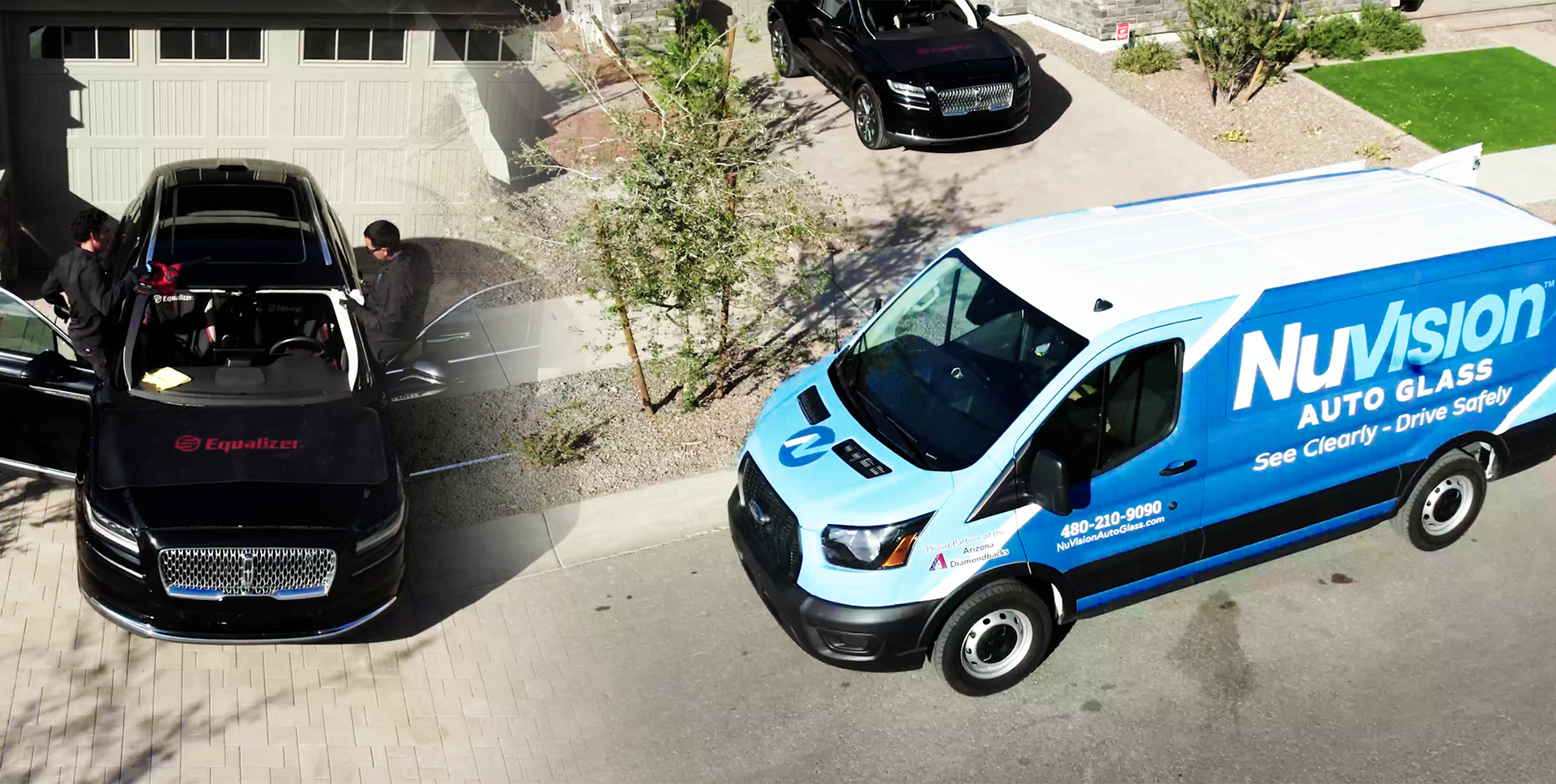
NuVision note: Our technicians have been doing mobile auto glass work across the Valley for years, and the calls we get between June and September are almost all the same story. Customer had a small chip for weeks, drove from the grocery store to the car, blasted the AC, and watched a crack run across the windshield in real time.
Phoenix vs. the rest of the country
Arizona is one of the worst states in the U.S. for windshield damage. Not close.
| Metric | Arizona | U.S. average |
| Days above 90°F per year | 181 | 33 |
| Days above 100°F per year (Phoenix) | 110+ | Negligible |
| Share of national auto glass claims | ~10% | — |
| Share of national population | ~2% | — |
| Peak summer dashboard temps | 180°F to 200°F | 120°F to 140°F |
Phoenix drivers file roughly five times more glass claims per person than the national average. Heat is one part of it. Desert gravel, freeway construction on I-10, the Loop 101, and the 202, plus monsoon debris are the others. But heat is the multiplier that turns small damage into big damage faster than anywhere else.
The thermal shock cycle that kills windshields
Here’s the part most Phoenix drivers don’t think about. The temperature outside isn’t the real problem. The problem is the gap between the temperature outside and the temperature you create inside.
| Scenario | Outside glass temp | Inside glass temp after AC | Stress level on chip |
| Park in shade, AC at 72°F | 95°F | 80°F | Low |
| Park in sun for 2 hours, AC at 65°F | 140°F | 70°F | High |
| Park in sun for 6 hours, AC at 60°F full blast | 165°F | 65°F | Severe |
| Cool morning drive, no AC | 75°F | 75°F | Minimal |
| Pour cold water on hot windshield (don’t do this) | 160°F | 60°F instantly | Catastrophic |
That third row is where most cracks happen. You walk to the car after work in Tempe or Chandler, the cabin is an oven, and instinct says crank the AC to max and aim every vent at the windshield. The glass cools from the inside out while the outside is still cooking. That’s thermal shock, and any existing chip is going to surrender.
Pro tip from our technicians: If you have a chip and the car has been sitting in the sun, don’t blast the AC at the glass. Crack the windows, run the AC on low for 60 seconds, then build it up. Give the glass a chance to cool evenly.
How fast a chip becomes a full crack
People underestimate this constantly. A chip that looks tiny on Monday can be a foot long by Friday. Here’s the rough timeline our shop sees during a Phoenix summer.
| Damage at day 1 | Time to spread (avg in summer) | Time to spread (avg in winter) |
| Small star chip (under 1 inch) | 2 to 7 days | 4 to 8 weeks |
| Bullseye chip (1 to 1.5 inches) | 1 to 5 days | 2 to 6 weeks |
| Short crack (under 3 inches) | Often same day | 1 to 3 weeks |
| Long crack (over 6 inches) | Already past repair | Already past repair |
Once a crack hits about six inches, no repair shop in the Valley can save it. The structural integrity is gone and the only safe answer is a full windshield replacement. That’s not a sales pitch, that’s federal safety standard.
The Phoenix moments that cause the most crack spread
Some situations are way worse than others. If you have a chip right now and you live in the Valley, watch out for these.
1. The parking lot to AC blast
Already covered above. This is number one by a wide margin.
2. The monsoon rain after a 115°F day
Monsoon season runs July through September. A sudden downpour drops surface temps by 30 or 40 degrees in minutes. The glass contracts fast, and any chip pops into a crack.
3. The morning frost in January
Phoenix winters are mild, but a clear night can drop temps into the low 30s, especially out toward Surprise, Buckeye, or the East Valley. People hit the defroster on high to clear the frost. Defroster is hot air blowing directly on cold glass. Same thermal shock, opposite direction.
4. The car wash hot wax cycle
The wax cycle uses heated water, sometimes 140°F or higher. If the car has been sitting in cool air and the windshield is at 70°F, hot water on cold glass with a chip is asking for trouble.
5. The Loop 101 rock strike followed by the rest of your commute
You hear the impact, see the chip, and have another 25 miles to drive. Every minute the chip is in heated, flexing glass is a minute it’s spreading. Pull over, take a photo, and call us before you finish the drive if you can.
Repair vs. replacement: when each one works
Phoenix heat doesn’t just spread cracks. It also changes the math on whether the damage is fixable.
| Damage type | Repairable? | Notes |
| Chip under 1 inch, not in driver’s line of sight | Yes | Best chance if filled within 48 hours |
| Chip 1 to 1.5 inches, edges still tight | Usually | Heat sensitive, fix fast |
| Star break with legs under 3 inches | Sometimes | Depends on contamination and crack direction |
| Any crack over 6 inches | No | Replacement only |
| Damage at the edge of the glass | No | Edge cracks compromise structural strength |
| Damage in the driver’s primary line of sight | Replacement recommended | Repair leaves a small distortion that’s a safety hazard |
If your damage is still small, windshield repair is faster, cheaper, and keeps your factory seal intact. The window to fix it in Phoenix summer is short. A few days at most.
What about ADAS calibration?
If your car is a 2015 model or newer, there’s a good chance the windshield houses cameras and sensors for lane keep assist, forward collision warning, auto emergency braking, or adaptive cruise control. Those systems are called ADAS, and they have to be recalibrated any time the windshield is removed.
Skipping calibration means your lane keep assist might steer you into the wrong lane, or your auto brake might not fire when it should. It’s not optional and it’s not something every mobile glass company can actually do. Our technicians handle ADAS calibration at the same appointment as the windshield replacement, so you’re not driving twice to two different shops.
Arizona has a glass insurance law most drivers don’t use
Worth mentioning since cost is usually the next question.
Arizona is one of only a handful of states where insurers are required to offer a $0-deductible glass option under comprehensive coverage. It’s called the zero-deductible glass option, written into ARS §20-264. And under ARS §20-263, filing a no-fault glass claim cannot legally raise your rates.
Most Phoenix drivers either don’t know they have this option or don’t know they elected it when they bought the policy. Quick check: pull up your declarations page, look for “comprehensive,” and see if the glass deductible says $0. If it does, your windshield replacement costs you nothing out of pocket. If it shows $100, $250, or $500, you have to add the option (usually about $6 a month) before you can use it.
When you call us, we’ll verify your coverage before the appointment. If your policy covers it, we file the claim and bill the insurer directly. You don’t deal with paperwork.
What to do right now if you have a chip in Phoenix
Don’t wait. Here’s the order our technicians recommend.
- Park in shade or a garage as soon as possible. Reduce the heat exposure on the damaged area immediately.
- Cover the chip with clear tape. It keeps dirt, dust, and water out of the break, which improves repair quality later.
- Run AC on low, build slowly. Don’t blast cold air at the windshield. Same goes for the defroster on a cold morning.
- Skip the car wash. Especially the hot wax cycle. Hand wash if you need to.
- Call for repair or replacement within 48 hours. Mobile windshield repair can usually save a fresh chip if you act fast.
We do mobile service across the entire Phoenix Metro area, from Surprise and Peoria in the West Valley to Mesa, Gilbert, and Queen Creek in the East Valley. Same-day appointments are common in summer because we know the heat doesn’t wait.
FAQ
Why do windshields crack so much in Phoenix?
Three reasons. Extreme heat causes the glass to expand and contract daily, which stresses any existing chip. Desert gravel and freeway construction debris cause more rock strikes than most U.S. cities. And monsoon dust storms throw debris at high speed. Phoenix drivers file glass claims at roughly five times the national rate.
Can I drive with a small chip in summer?
For a day or two, maybe. Long term, no. Phoenix summer heat will spread most chips into full cracks within a week, sometimes within hours. Get it filled fast, ideally within 48 hours of the damage.
Will my insurance cover windshield replacement in Arizona?
If you carry comprehensive coverage with the zero-deductible glass option, yes, fully. Arizona law requires insurers to offer this option. Filing a no-fault glass claim cannot raise your rates under state law. Call your insurer or let us verify the coverage when you book.
How long does mobile windshield replacement take?
Most jobs take 60 to 90 minutes for the install, plus another 30 to 60 minutes of safe-drive-away time for the urethane adhesive to set. ADAS calibration adds 1 to 2 hours if your vehicle needs it. We come to your home, office, or wherever the car is parked.
What’s the difference between repair and replacement?
Repair injects resin into a chip or short crack to restore structural strength and clarity. It works for small damage caught early. Replacement removes the entire windshield and installs a new one. Replacement is required for any crack over six inches, edge damage, or damage in the driver’s line of sight.
Is OEM glass worth it over aftermarket?
For most vehicles, yes. OEM grade glass matches the factory spec exactly, which matters more on vehicles with ADAS sensors that need precise positioning. We use OEM grade glass on all installs as standard, backed by our 100% Lifetime Workmanship Warranty.
Get it handled before it spreads
A chip in Phoenix isn’t a problem you can sit on. The heat is going to make the decision for you, usually at the worst time. Our mobile technicians come to you across the Valley, handle the insurance side, and back the work with a Lifetime Workmanship Warranty. If you spot damage today, get a free quote at nuvisionautoglass.com and we’ll have you booked, often same day.