6 Signs of Windshield Seal Failure Every Car Owner Should Know
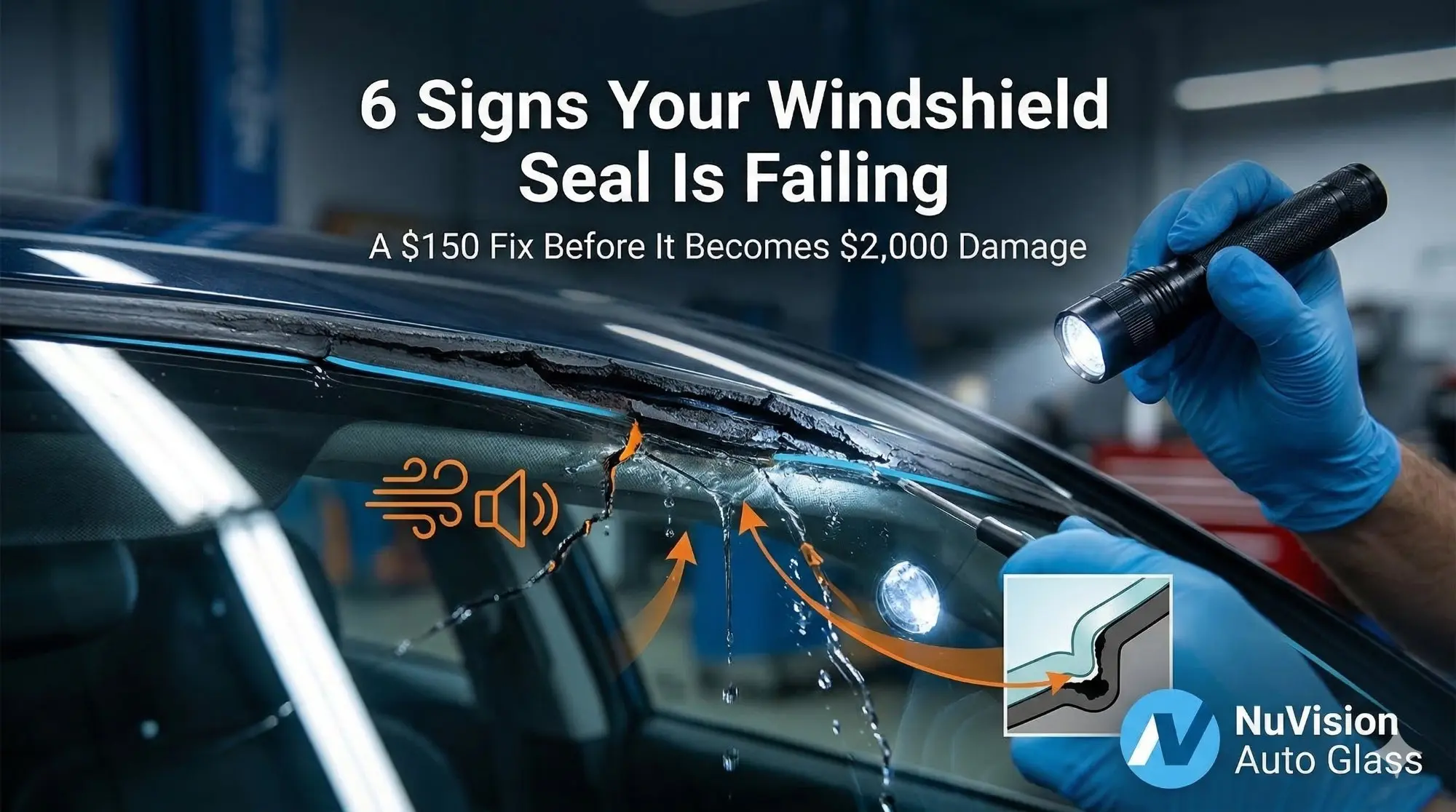
Windshield seal failure shows through six warning signs: visible gaps between glass and frame (the most common, roughly 45% of failures), water leaks during rain or car washes, unusual wind noise or whistling above 50 mph, persistent fogging at windshield edges, visible cracking or crumbling of the black urethane seal, and windshield rattling on rough roads. A failed seal compromises your vehicle’s structural integrity because windshields provide 30 to 60% of roof strength in rollovers, per the Auto Glass Safety Council.
Ignoring seal failure creates a cost escalation that gets expensive fast. Early seal repair runs $150 to $300. Wait two months and you’re looking at $500 to $2,000 in mold remediation, electrical system corrosion, and interior deterioration on top of the seal fix.
This guide covers all six symptoms in detail, explains what causes seals to fail, provides state-specific degradation timelines for Arizona, Florida, South Carolina, and Colorado, and gives you a clear framework for deciding between seal repair ($150 to $300) and full windshield replacement ($300 to $800).
What Does a Windshield Seal Actually Do?
The black urethane sealant around your windshield perimeter is a structural adhesive, not just weatherstripping. It bonds the glass to the vehicle frame with a 1/4 to 1/2 inch depth of adhesive that serves five critical functions.
| Function | What It Does | What Happens When It Fails |
|---|---|---|
| Structural bonding | Contributes 30-60% of roof strength in rollovers | Windshield may eject during accident; roof caves in |
| Water barrier | Prevents rain and car wash water from entering cabin | Interior moisture, mold growth within 2-4 weeks |
| Air seal | Maintains cabin pressure, reduces wind noise | Whistling above 50 mph, increased road noise |
| Airbag support | Keeps windshield in place during passenger airbag deployment | Windshield pops out, airbag effectiveness drops 50-80% |
| Vibration dampening | Prevents rattling and stress fractures in glass | Glass movement, potential stress cracks from vibration |
Under normal conditions, urethane windshield sealant lasts 12 to 15 years. Climate extremes shorten that significantly. Here’s the typical degradation timeline.
| Age | Seal Condition | Action Needed |
|---|---|---|
| Years 1-5 | Fully functional, no visible deterioration | No action |
| Years 6-10 | UV surface damage begins, microscopic cracks forming | Annual visual check |
| Years 11-15 | Visible deterioration in extreme climates, flexibility decreasing | Quarterly inspection, professional evaluation |
| Years 15+ | High failure risk, separation possible | Professional evaluation even without symptoms |
Arizona’s UV and heat cut that timeline to 8 to 12 years. Florida’s coastal humidity pushes failure 20 to 30% faster. South Carolina’s freeze-thaw cycles crack aged seals from November through February. More on state-specific patterns below.
What Are the Six Warning Signs of Seal Failure?
1. Visible Gaps or Separation (45% of Failures)
The most common sign. You’ll see a visible gap between the windshield edge and the vehicle frame, or daylight coming through the perimeter when viewed from inside. Failures typically start at top corners (highest stress points), bottom center (water accumulation zone), and areas near previous repairs or damage.
How to check: Walk around the vehicle and examine the entire windshield perimeter from multiple angles. Look from both straight on and at a 45-degree angle. From inside the vehicle, check for light coming through the edges. Gently press on the windshield edges near the frame. Excessive movement indicates separation.
Urgency: Immediate professional evaluation required. This compromises structural integrity and airbag function.
2. Water Leaks During Rain or Car Washes
The most concerning symptom because water damage costs escalate fast. Leak indicators include water dripping from the headliner near the windshield, wet carpet on driver or passenger floor mats, water pooling in door sills, and dashboard moisture stains.
The leak location tells you where the seal has failed. Top corner leaks indicate upper seal failure. Side leaks point to side seal failure. Center dashboard moisture signals bottom center seal failure. Multiple locations mean widespread deterioration.
| Time Since First Leak | Damage Progression | Additional Cost Beyond Seal Repair |
|---|---|---|
| Week 1 | Damp carpet, musty smell developing | $0 (seal repair only: $150-$300) |
| Weeks 2-4 | Mold growth starts in headliner and carpet | $200-$500 (mold treatment) |
| Months 2-3 | Electrical issues from wiring corrosion | $500-$1,500 (wiring + mold) |
| Month 4+ | Serious mold, potential airbag sensor damage | $1,000-$2,000+ (extensive remediation) |
DIY leak test: Park in shade. Have someone spray the windshield with a garden hose (not high pressure). Sit inside watching for water intrusion. Mark any leak locations. If leaks confirmed, schedule a professional evaluation immediately.
Urgency: Address within one week. Mold growth starts within 2 to 4 weeks of continuous moisture exposure.
3. Unusual Wind Noise or Whistling Above 50 mph
Seal failure creates a gap that whistles as air passes through it at highway speeds. The sound is different from normal road noise. Seal-related wind noise starts at 40 to 50+ mph, comes from a specific location near the windshield perimeter, changes pitch with vehicle speed, and may stop and restart intermittently.
To test: drive at 50+ mph on a smooth highway. Have a passenger listen carefully and try to isolate the noise location (top, sides, corners). Compare to tire noise and side mirror noise, which come from different areas.
Wind noise can also come from door seals or sunroof seals, so professional diagnosis confirms whether the windshield seal is the source.
Urgency: Schedule evaluation within 2 weeks. Wind noise alone is less urgent than water leaks but indicates seal compromise.
4. Persistent Fogging at Windshield Edges
Seal failure fogging looks different from normal condensation. Normal fogging covers the entire windshield and clears completely with the defroster. Seal failure fogging concentrates at edges or corners, doesn’t fully clear even after 5 minutes of defroster on high, and often comes with a musty smell indicating moisture infiltration.
Quick test: Run the defroster on high for 5 minutes. Normal condensation clears completely. If fogging remains at the edges or returns quickly after clearing, moisture is entering through a seal gap.
Urgency: Evaluate within 2 to 4 weeks. Persistent moisture infiltration leads to the same mold progression described above.
5. Visible Seal Cracking, Crumbling, or Discoloration
Direct visual indicators of seal degradation. Each represents a different stage of deterioration.
Discoloration: The black seal turns gray, brown, or white. This is UV damage and the earliest visible warning sign. Precedes cracking.
Cracking: Fine cracks appear in the urethane, resembling dried mud patterns. Starts small and spreads. Water can infiltrate through cracks, especially during rain.
Crumbling: Seal material breaking into small pieces and falling away from the frame. Advanced degradation. The seal has lost its bonding strength at these locations.
Hardening: The seal should have slight flexibility when pressed gently. If it feels rigid and brittle, the urethane has degraded beyond its functional lifespan.
Urgency: Discoloration warrants monitoring. Cracking warrants professional evaluation within a month. Crumbling requires immediate attention.
6. Windshield Movement or Rattling on Rough Roads
The most serious symptom. If the windshield moves independently of the frame or rattles distinctly (different from dashboard rattles) when driving over bumps or rough roads, the seal has lost its bonding integrity.
This means the windshield may not stay in place during an accident. Passenger airbag deployment pushes against the windshield, and the glass must remain bonded to the frame for the airbag to function correctly. A loose windshield can pop out during deployment, reducing airbag effectiveness by 50 to 80%.
Urgency: Immediate professional evaluation. Do not delay. This is a direct safety hazard.
What Causes Windshield Seals to Fail?
| Cause | How It Works | Timeline |
|---|---|---|
| Age and UV exposure | UV breaks down urethane molecular structure. Primary degradation factor. | 12-15 years (normal), 8-12 years (AZ/extreme UV) |
| Temperature cycling | Daily expansion/contraction stresses the bond. AZ sees 40°F daily swings. | Accelerates age-related failure 20-30% |
| Humidity and salt | Moisture degrades seal edges. Salt spray causes chemical breakdown. | Coastal FL vehicles: 20-30% faster degradation |
| Freeze-thaw cycles | Water infiltrates micro-cracks, freezes, expands, creates larger cracks. | SC: rapid deterioration November-February |
| Improper installation | Insufficient urethane, contaminated surface, rushed cure time. | Failure within 1-5 years of replacement |
| Impact damage | Even minor collisions deform the frame, creating seal gaps. | Immediate or gradual depending on severity |
Improper Installation: The Hidden Cause
When seal failure occurs within 1 to 5 years of a windshield replacement, improper installation is usually the cause. Common errors include insufficient urethane application (weak bond), contaminated bonding surfaces (oil or debris prevents adhesion), rushed installation where urethane didn’t fully cure before the vehicle was driven, and incorrect glass placement that creates stress on the seal.
Signs of installation-related failure: uneven seal appearance (thick in some areas, thin in others), gaps present shortly after installation, and water leaks starting within months of replacement. Quality installers provide lifetime workmanship warranties that cover these failures. NuVision’s lifetime warranty covers all workmanship and materials for as long as you own the vehicle.
Impact Damage: Often Invisible
Frame deformation from collisions creates seal gaps that may not be visible immediately. Even minor accidents can compromise the seal. If you’ve been in any collision, even a low-speed parking lot incident, professional seal inspection is warranted. Vibration from driving with an existing windshield chip or crack also stresses the seal over time.
How Fast Does Each State Degrade Windshield Seals?
| State | Primary Threat | Expected Seal Life | Prevention Strategy |
|---|---|---|---|
| Arizona | UV exposure + extreme heat + 40°F daily swings | 8-10 yrs (exposed), 11-13 yrs (covered parking) | Covered parking, bi-annual inspection after year 7 |
| Florida (coastal) | Salt spray + humidity + hurricane debris | 9-12 yrs (coastal), 11-14 yrs (inland) | Monthly seal cleaning, garage parking, post-storm inspection |
| South Carolina | Freeze-thaw cycles + road salt | 10-13 years | Pre-winter inspection (Nov), proper ice removal techniques |
| Colorado | Extended freeze-thaw + altitude UV + mountain driving | 9-12 years | Pre-winter inspection (Oct), covered parking when available |
Arizona: 8 to 12 Years
Arizona is the toughest environment for windshield seals in the country. Year-round UV exposure breaks down urethane at the molecular level, accelerating aging by 30 to 40% compared to moderate climates. Daily temperature swings of 40°F or more (summer days above 110°F, nights below 75°F) create constant expansion and contraction stress.
Covered parking extends seal life 30 to 40%. Ceramic window tint adds 1 to 2 years by reducing UV transmission through the glass and onto the seal edges. Drivers in Phoenix, Mesa, Scottsdale, and Chandler should schedule professional seal inspection bi-annually once the vehicle passes 7 years.
Florida: 9 to 14 Years (Coastal vs Inland)
Florida’s coastal salt spray causes chemical breakdown of urethane. Constant high humidity keeps moisture at the seal interface, promoting edge degradation and mold growth at the bonding surface. Hurricane season adds debris impact risk that can damage seals without breaking the glass.
Coastal drivers in Tampa, Miami, and Jacksonville experience 20 to 30% faster seal degradation than inland drivers in Orlando. Monthly windshield and seal cleaning removes salt deposits that accelerate chemical breakdown. Post-hurricane inspection is critical even if no visible glass damage occurred.
South Carolina: 10 to 13 Years
Freeze-thaw cycles create the most mechanically damaging seal degradation pattern. Water infiltrates microscopic seal cracks during rain. Overnight freezing expands that water, widening the cracks. Repeated cycles from November through February cause rapid deterioration that can turn a minor crack into a major seal gap within one winter.
Road salt adds chemical exposure. Ice scraping with improper tools can directly damage seal edges. Drivers in Charleston, Columbia, Greenville, and Myrtle Beach should schedule pre-winter inspection in November and avoid pouring hot water on frozen windshields (thermal shock damages both glass and seal).
Colorado: 9 to 12 Years
Colorado combines an extended freeze-thaw season (October through April) with higher altitude UV exposure and pressure changes from mountain driving that stress the seal. Drivers in Denver and Colorado Springs should schedule pre-winter inspection in October and prioritize covered parking when available.
How Should You Inspect Your Windshield Seal?
Monthly Quick Check (2 Minutes)
Walk around the vehicle and visually scan the entire windshield perimeter. Look for obvious gaps, separation, or seal material falling away. Check the dashboard and headliner for water stains. Note any new or worsening wind noise during normal driving. This takes two minutes and catches problems early.
For a complete monthly vehicle glass inspection routine, see our guide on best windshield care practices.
Quarterly Detailed Inspection (10 Minutes)
Clean the windshield edges and molding to remove dirt that hides deterioration. Examine the seal for cracks, discoloration, or crumbling. Press gently on the rubber molding around the windshield; it shouldn’t move or separate. Check interior surfaces near the windshield for moisture stains or mold smell.
If you suspect a leak, run the hose test described in the water leak section above. Mark any leak locations for the technician.
Touch test: Gently press on the windshield at several edge points. The glass should feel firmly bonded with minimal movement. Excessive give or visible deflection indicates seal failure.
When to Schedule Professional Inspection
Annually for vehicles older than 8 years. Bi-annually for Arizona vehicles (UV degradation). After any collision, even minor. Whenever any of the six warning signs appear. Before purchasing a used vehicle (seal condition is rarely disclosed).
When Can the Seal Be Repaired vs When Does the Windshield Need Replacement?
| Seal Repair ($150-$300) | Full Windshield Replacement ($300-$800) | |
|---|---|---|
| When appropriate | Localized failure (one section, not entire perimeter) | Widespread seal failure across entire perimeter |
| Glass condition | Windshield glass undamaged | Glass also has chips, cracks, or scratches |
| Frame condition | Frame undamaged | Frame damage present from collision |
| Timing | Caught early (recent, localized failure) | Previous repair failed, vehicle 15+ years |
| Warranty | 1-3 years typical | Lifetime workmanship (quality installers) |
| New seal lifespan | Patch addresses local area only | Complete new seal (12-15 year lifespan) |
Seal repair process: The technician removes loose or degraded urethane, cleans the bonding surfaces thoroughly, applies fresh urethane adhesive to the affected area, allows 2 to 24 hours of cure time (depending on formula and humidity), and verifies the fix with a water test.
When replacement is the better investment: If the seal has deteriorated around the entire perimeter, patching one section won’t stop failure elsewhere within months. Full replacement provides a complete new seal with a 12 to 15 year lifespan and a lifetime warranty on workmanship. If the windshield glass also has damage, replacement addresses both problems simultaneously. For guidance on whether to repair or replace your windshield, see our full guide.
Insurance Coverage for Seal Failure
Comprehensive auto insurance typically covers windshield replacement when the glass is damaged. Seal failure alone may require claim justification, so tying the claim to any existing glass damage (chips, cracks, or scratches) strengthens coverage eligibility.
Arizona’s zero-deductible glass coverage (standard on roughly 85% of policies) means most drivers pay nothing for replacement. Florida and South Carolina drivers should compare their deductible to the cash replacement price before filing. For details, see our guides on how claims affect your insurance and how to file a windshield claim.
What Happens If You Ignore Seal Failure?
The cost escalation is severe. Here’s the progression from early repair to full damage remediation.
| Scenario | Total Cost | What’s Included |
|---|---|---|
| Early seal repair | $150-$300 | Seal repair only. No secondary damage. |
| Delayed repair + mold | $650-$2,300 | Seal repair + mold remediation in headliner, carpet, seats |
| Delayed repair + mold + electrical | $950-$3,500 | Seal repair + mold + corroded wiring harnesses + sensor replacement |
| Full replacement after extensive delay | $1,500-$4,500+ | Windshield replacement + mold + electrical + interior restoration |
Beyond cost, the safety implications are serious. A windshield with a failed seal may eject during a collision, dramatically increasing occupant ejection risk. The passenger airbag deploys against the windshield; if the glass pops out, airbag protection drops 50 to 80%. Water intrusion fogging reduces visibility, increasing accident risk. And vehicle resale value drops $1,000 to $3,000 with water-damaged interiors.
For ADAS-equipped vehicles (Toyota, Honda, Ford, Tesla, Chevrolet), seal failure can affect camera alignment in the ADAS camera zone. If the windshield shifts even slightly due to seal deterioration, ADAS calibration accuracy degrades, potentially compromising lane departure warning, forward collision detection, and automatic emergency braking.
Frequently Asked Questions
How do I know if my windshield is leaking from the seal or somewhere else?
Run a hose test: park in shade, spray the windshield while someone sits inside watching. Seal leaks typically appear at the windshield edge where the glass meets the frame. If water enters from the dashboard area but not at the glass edge, the leak may come from the cowl or HVAC drainage system instead. Professional evaluation with UV dye testing pinpoints the exact source.
Can I fix a windshield seal leak myself?
Temporary silicone sealant from an auto parts store ($5 to $15) can stop a small leak short-term, but it’s a temporary patch, not a proper repair. Automotive urethane adhesive requires professional application: proper surface preparation, the right adhesive formula, correct cure time, and water testing to verify the fix. DIY attempts using the wrong sealant type can make professional repair more difficult later.
Does windshield seal failure affect my ADAS safety systems?
Yes. On vehicles with forward-facing cameras mounted behind the windshield, seal deterioration can allow the glass to shift position slightly. Even minor displacement affects camera alignment, potentially causing lane departure warning, forward collision detection, and automatic emergency braking to function inaccurately. If your seal has failed and your vehicle has ADAS, the windshield replacement should include ADAS calibration.
How long does windshield seal repair take?
Seal repair takes 30 to 60 minutes of technician time, plus 2 to 24 hours of cure time depending on the adhesive formula and humidity. You can usually drive within 1 to 2 hours for quick-cure formulas. Full windshield replacement takes 60 to 90 minutes plus cure time. Your technician provides the exact timeline when scheduling.
Will insurance cover windshield seal repair without glass damage?
Seal-only repair without glass damage falls into a gray area with most comprehensive policies. Many insurers cover it if the seal failure creates a documented water leak or safety concern. If any glass damage exists (chips, cracks, scratches), tying the seal repair to glass replacement strengthens the claim. Arizona’s zero-deductible glass coverage makes this straightforward. In Florida and South Carolina, compare the $150 to $300 repair cost to your deductible before filing.
Is windshield seal failure covered under my vehicle warranty?
Factory windshield seal issues on new vehicles are typically covered under the manufacturer’s bumper-to-bumper warranty (3 to 5 years). After a windshield replacement, the installing company’s workmanship warranty covers seal failure. NuVision’s lifetime warranty covers all workmanship and materials for as long as you own the vehicle.
Can I prevent windshield seal failure?
You can’t prevent age-related degradation entirely, but you can extend seal life significantly. Covered parking reduces UV exposure (the primary degradation factor) and extends seal life 30 to 40%. Monthly cleaning of the seal area removes debris and salt that accelerate chemical breakdown. Pre-winter inspection catches early cracking before freeze-thaw cycles cause rapid expansion. Ceramic tint adds 1 to 2 years by reducing UV transmission. See our windshield care practices guide for the full maintenance routine.
Don’t Wait for a $2,000 Problem That Started as a $150 Fix
Windshield seal failure creates a cascading damage timeline where every week of delay adds cost. The six warning signs are clear: visible gaps, water leaks, wind noise, persistent fogging, seal cracking, and glass rattling. Any one of them warrants professional evaluation. Water leaks and windshield movement require immediate attention.
Schedule a Free Windshield Seal Inspection →
NuVision Auto Glass provides free seal inspection, professional repair ($150 to $300), and full replacement ($300 to $800) with ADAS calibration when needed. Lifetime warranty on every installation. Call 1-855-213-0100 or request your quote online.
Visit us on Google Maps: Arizona | Florida
Same-day mobile service throughout Arizona, Florida, South Carolina, and Colorado.