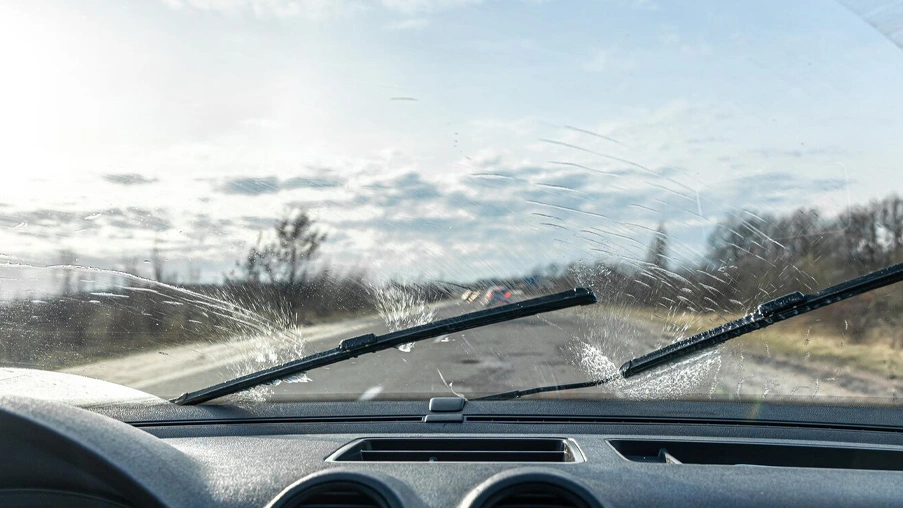

Windshield wiper scratches are surface-level marks caused by worn wiper blades, trapped debris, or dry wiping that drag abrasive particles across the glass. Most wiper scratches can be removed at home using cerium oxide compound, automotive glass polish, or baking soda paste, depending on scratch depth. Deeper scratches that catch your fingernail typically require professional windshield repair or, in severe cases, full windshield replacement.
Those arc-shaped marks across your windshield aren’t just cosmetic. Wiper scratches scatter incoming light, creating glare that’s particularly dangerous during nighttime driving and low-angle sunlight. In states like Arizona where intense sun sits at eye level during morning and evening commutes, even minor scratches can seriously compromise visibility. The same applies to rain-heavy driving conditions in Florida and South Carolina, where scratched glass diffuses headlight glare from oncoming traffic.
This guide walks through how to assess scratch severity, which removal method matches your damage level, step-by-step instructions for each technique, when DIY methods won’t work, and how to prevent wiper scratches from forming in the first place.
What Causes Windshield Wiper Scratches?
Understanding what creates wiper scratches helps you both fix existing damage and prevent future marks. Wiper scratches differ from rock chips and impact cracks because they’re caused by repeated friction rather than a single strike. They appear as thin, arc-shaped lines following the sweep pattern of the wiper blade.
Trapped Debris Under the Blade
Sand, dust, and small grit particles settle on the windshield between uses. When you activate your wipers, these particles get trapped between the rubber blade and the glass, acting like fine-grit sandpaper with every sweep. This is the single most common cause of wiper scratches, and it’s especially problematic in dusty environments like Phoenix, Mesa, and Scottsdale where airborne dust and construction debris are constant.
Worn-Out Wiper Blades
Wiper blades are designed to be replaced every 6 to 12 months depending on climate. As the rubber edge deteriorates, it cracks, hardens, and develops uneven edges. Severely worn blades can expose the metal wiper arm itself, which scratches glass aggressively and can cause damage that goes beyond surface-level polishing. Florida humidity causes rubber to soften and degrade faster, while Arizona heat accelerates cracking and hardening. For a walkthrough on when and how to swap blades before they damage your glass, see our windshield wiper replacement guide.
Wiping on Dry Glass
Running wipers on a dry windshield forces the rubber to drag across the surface without lubrication. This dramatically increases friction and grinds any particles sitting on the glass directly into the surface. Always use washer fluid or wet the glass before activating wipers. This one habit alone prevents the majority of wiper scratches.
Improper Installation or Wrong Blade Size
Blades that don’t fit your vehicle properly create uneven pressure distribution across the windshield. Some sections get pressed harder than others, concentrating abrasion in specific areas. Incorrect installation can also cause the blade to flip or chatter, which drags the hard plastic housing across the glass instead of the soft rubber edge.
How Do You Tell If a Wiper Scratch Is Repairable?
Not all wiper scratches are equal. The depth of the scratch determines which repair method will work, and whether DIY is realistic or professional help is needed.
The Fingernail Test
Run your fingernail perpendicular across the scratch. If your nail glides over it without catching, the scratch is surface-level and responds well to polishing compounds. If your nail catches in the groove, the scratch has penetrated deeper into the glass and may require professional repair or potentially replacement if multiple deep scratches overlap in your sightline.
Scratch Depth Categories
Surface scratches (less than 0.1mm deep): These are the most common wiper scratches. They appear as faint lines visible primarily in direct light or at certain angles. Baking soda paste, acrylic scratch remover, or glass polish handles these effectively.
Moderate scratches (0.1mm to 0.3mm deep): Visible at most angles and noticeable when driving into sunlight. These require cerium oxide compound applied with a polishing pad or buffing wheel for effective removal. Manual polishing with a cloth is usually insufficient.
Deep scratches (greater than 0.3mm): Clearly visible, often felt with a fingernail, and cause significant light distortion. DIY methods can improve but rarely eliminate these completely. Professional glass repair using industrial-grade cerium oxide and commercial buffing equipment is the appropriate solution. If deep scratches sit in the driver’s primary viewing area, auto glass replacement may be the safest option.
How to Prepare Your Windshield Before Scratch Removal
Proper preparation prevents you from grinding additional debris into the glass during the repair process. Skipping this step can actually make scratches worse.
Step 1: Deep clean the windshield. Spray the entire surface with automotive glass cleaner (not household window cleaner, which often contains ammonia that can damage surrounding seals and tinting). Wipe with a clean microfiber cloth using vertical strokes on one side and horizontal on the other. This way, any remaining streaks tell you which side needs more attention.
Step 2: Inspect under good lighting. Examine the glass in direct sunlight or use a bright LED work light held at various angles. Wiper scratches are most visible when light hits the glass at a low angle. Mark the scratched areas on the exterior of the glass with painter’s tape placed just outside the damage zone so you know exactly where to focus your polishing effort.
Step 3: Run the fingernail test. Assess every visible scratch for depth. Group them into the surface, moderate, and deep categories described above. This determines which method you’ll use.
Step 4: Mask surrounding areas. Use painter’s tape to cover the windshield rubber molding, paint around the glass edges, and any sensors or cameras mounted near the wiper area. Cerium oxide and polishing compound are mildly abrasive and can damage non-glass surfaces. If your vehicle has ADAS sensors behind the windshield, avoid polishing directly over camera housings. After any significant windshield work, you may want to verify your safety systems are still functioning correctly. See our guide on the ADAS calibration process for more detail.
What Are the Best DIY Methods for Removing Wiper Scratches?
Match the method to the scratch severity. Starting with the least aggressive option and working up prevents unnecessary glass removal.
Method 1: Baking Soda Paste (Surface Scratches)
Best for: Very light scratches that are barely visible except in direct sunlight.
What you need: Baking soda, distilled water, clean microfiber cloths.
Mix equal parts baking soda and water into a thick paste (roughly the consistency of toothpaste). Apply a small amount to a clean microfiber cloth and rub the paste over the scratched area using small circular motions with light to moderate pressure. Work for 30 to 60 seconds per section, keeping the paste moist. Rinse the area thoroughly with clean water and dry with a fresh microfiber cloth. Inspect under good light and repeat if needed.
Limitations: Only effective on the shallowest surface marks. Won’t make a visible difference on moderate or deep scratches. Low risk of causing additional damage, making it a safe starting point.
Method 2: Acrylic Scratch Remover or Glass Polish (Surface to Light-Moderate Scratches)
Best for: Light scratches visible at multiple angles but not felt with a fingernail.
What you need: Automotive glass polishing compound (available at most auto parts stores), microfiber applicator pad, clean microfiber towels.
Apply a small amount of glass polish to the applicator pad. Work the product into the scratched area using firm, overlapping circular motions. Keep the area slightly damp by misting with distilled water every 30 seconds. Buff for 2 to 3 minutes per section, then wipe clean and inspect. Automotive glass polish contains very fine abrasives that gradually smooth the glass surface, reducing the depth and visibility of scratches. For a more detailed walkthrough of the full polishing process, see our guide on how to polish windshield glass.
Limitations: Works well on surface scratches but struggles with anything deeper than about 0.1mm. Manual application limits the pressure and speed you can achieve compared to a powered buffer.
Method 3: Cerium Oxide Compound (Moderate Scratches)
Best for: Moderate scratches visible at most angles that noticeably scatter light during driving.
What you need: Cerium oxide powder, distilled water, mixing container, felt polishing pad or foam buffing wheel, variable-speed drill or rotary polisher, spray bottle, painter’s tape.
Cerium oxide is a rare-earth compound used by professional glass repair shops worldwide. It works through a chemical-mechanical reaction: the cerium chemically bonds to the glass surface at the point of friction while simultaneously polishing away microscopic layers of glass. This combination makes it significantly more effective than purely mechanical abrasives.
Mix 2 parts cerium oxide powder with 1 part warm water (95-115°F is the ideal working temperature since heat activates the cerium’s chemical reaction). Stir into a smooth paste roughly the consistency of thick cream. Apply the paste to your felt polishing pad and spread it over the scratched area. Using a variable-speed drill or polisher at 1,300+ RPM, work the compound into the scratch using overlapping passes with moderate pressure. Keep the work area wet by misting frequently with your spray bottle. Do not let the paste or the pad dry out, as dry cerium oxide can create new scratches. Gradually reduce pressure as the scratch diminishes. Wipe clean and inspect every 2 to 3 minutes of buffing.
Limitations: Requires proper equipment (a drill with polishing attachment at minimum). Working temperature matters because cerium oxide is chemically activated by heat. Over-polishing one area can create a slight optical distortion in the glass. Keep the pad moving and work evenly across the damaged zone. Deep scratches may improve significantly but not disappear completely.
Method 4: Windshield Polish and Sealant (Finishing Step)
Best for: Follow-up treatment after any of the above methods to smooth the repair area and add a protective layer.
After you’ve polished out the scratches, apply a windshield sealant or glass polish designed for automotive use. Work it into the treated area per the product instructions (typically circular motions, let it haze, then buff off). This fills any remaining micro-imperfections and creates a hydrophobic barrier that helps rain bead and sheet off the glass, reducing future wiper friction.
When Should You Skip DIY and Call a Professional?
DIY methods have clear limits. Here’s when professional intervention is the right call.
Deep scratches in the driver’s sightline: Any scratch deep enough to catch your fingernail that sits directly in the driver’s viewing area is a safety concern. Professional glass repair technicians use commercial-grade cerium oxide with industrial buffing equipment that achieves consistent pressure and speed across the damaged area, something hand-held tools can’t replicate.
Multiple overlapping scratch patterns: When years of wiper use have created dense networks of scratches across the wiping zone, spot repair becomes impractical. The glass needs uniform treatment across the entire affected area, which requires professional equipment and expertise.
Scratches that distort ADAS cameras: Modern vehicles have forward-facing cameras and sensors mounted behind the windshield. Scratches in these zones can interfere with lane departure warning, automatic emergency braking, and adaptive cruise control. If scratches affect the area directly in front of your vehicle’s camera housing, professional assessment is essential. ADAS recalibration may be necessary if the scratch removal process affects the glass surface in the sensor zone.
Scratches combined with other damage: If your windshield has both wiper scratches and chips, cracks, or stress fractures, the glass may need full replacement rather than repair. A professional assessment determines whether repair is viable or replacement is the safer path. See our guide on when to repair vs. replace your windshield for the specific criteria.
Failed DIY attempts: Over-polishing, uneven buffing, or using the wrong compound can create hazy spots or optical distortion that’s worse than the original scratches. If your DIY effort didn’t produce the results you expected, a professional can assess whether the glass is still viable for repair.
How Does Climate Affect Wiper Scratches Across NuVision’s Service Areas?
Different environments create different scratch challenges. Understanding your local conditions helps prioritize prevention and choose the right approach.
Arizona (Phoenix, Mesa, Scottsdale, Chandler): Desert dust and construction sand are the primary culprits. Fine silica particles settle on windshields constantly, especially during monsoon dust storms. Arizona’s extreme heat also accelerates wiper blade degradation, turning rubber brittle within 4 to 6 months. The combination of hard particles on the glass and compromised blades creates aggressive scratching conditions. Replace blades every 4 to 6 months rather than the standard 12-month interval.
Florida (Tampa, Orlando, Miami, Jacksonville): High humidity softens rubber faster than dry climates, and mold can develop on blade edges during extended parking periods. Florida drivers run wipers far more frequently due to daily afternoon thunderstorms, which means more total blade-to-glass contact cycles. Salt air in coastal cities like Miami and Tampa deposits corrosive particles on glass that scratch when wiped. Replace blades every 6 months and rinse the windshield before activating wipers after the vehicle has been parked outdoors.
South Carolina (Charleston, Columbia, Greenville, Myrtle Beach): Pollen season deposits a thick layer of plant material on windshields that gums up wiper blades and creates a gritty paste when mixed with humidity. Coastal salt spray in Charleston and Myrtle Beach creates similar issues to Florida. The pollen-salt combination is particularly abrasive. Wash windshields more frequently during spring months and run washer fluid before activating wipers.
Colorado (Denver, Colorado Springs): Ice scraping causes the most damage here. Using plastic ice scrapers incorrectly or relying on wipers to clear frost creates deep scratches that DIY methods struggle to fix. Colorado drivers should allow gradual defrosting rather than scraping and never use wipers on ice-covered glass.
How to Prevent Wiper Scratches From Coming Back
Prevention is far cheaper than repair. These habits protect your windshield over the long term.
Replace wiper blades on schedule. Every 6 months in harsh climates (Arizona heat, Florida humidity, Colorado freeze cycles). Every 12 months maximum in moderate conditions. Any visible cracking, stiffness, streaking, or chattering means immediate replacement. Our wiper replacement guide walks through the process step by step.
Never run wipers on dry glass. Always hit the washer fluid first or wet the glass manually. Running dry wipers is the fastest way to create new scratches. Keep your washer fluid reservoir full and carry an extra bottle in the trunk.
Clean the windshield and blades regularly. Wipe the rubber edge of each blade with a damp microfiber cloth every two weeks. This removes embedded grit that would otherwise scratch the glass on every sweep. Clean the windshield itself with proper automotive glass cleaner, not household ammonia-based products.
Lift wipers when parked for extended periods. Especially in freezing conditions. This prevents the blade from freezing to the glass, which forces ice between the rubber and the surface when the blade is pulled free. It also prevents heat-induced rubber bonding in extreme summer temperatures.
Inspect before you wipe. Before activating your wipers, especially after your vehicle has sat outdoors overnight, visually check for debris on the windshield. A 5-second check can prevent scratches that take hours to remove. For more preventive strategies, see our tips on preventing windshield scratches.
Can Wiper Scratches Affect ADAS Safety Systems?
Yes. Roughly 68% of vehicles on the road today have Advanced Driver Assistance Systems that rely on cameras and sensors mounted behind the windshield. The forward-facing camera used for lane departure warning, automatic emergency braking, and adaptive cruise control sits directly in the wiper zone. Scratches across this area scatter the light that the camera interprets, potentially causing false readings, delayed warnings, or system errors.
If wiper scratches overlap with your vehicle’s camera zone (typically centered behind the rearview mirror), professional assessment is important. Whether you drive a Toyota, a Honda, a Ford, a Tesla, or a Chevrolet, the camera zone should remain optically clear. For more on how sensor alignment works after glass service, read our mobile ADAS calibration guide.
Frequently Asked Questions
Can toothpaste really remove windshield wiper scratches?
Regular white toothpaste containing silica can improve very faint surface scratches. However, it’s the least effective option compared to dedicated glass polish or cerium oxide. Toothpaste is designed for tooth enamel, not automotive glass, so it works as a very mild abrasive at best. It won’t make a visible difference on anything beyond the lightest marks.
How much does cerium oxide cost for a DIY windshield repair?
A 100-gram bag of cerium oxide powder typically costs $10 to $20 online or at auto supply stores. That’s enough for multiple windshield treatments. You’ll also need a felt polishing pad ($5 to $15) and ideally a variable-speed drill or polisher if you don’t already own one. Total cost for a first-time setup runs $30 to $60, compared to $75 to $200 for professional scratch polishing.
Will wiper scratches get worse over time?
Surface scratches generally don’t worsen on their own. However, continued use of worn wiper blades will deepen existing scratches and create new ones. The scratches also accumulate dirt and debris in their grooves, which makes them progressively more visible even if the depth remains unchanged. Address the root cause (replace worn blades) to prevent escalation.
Can wiper scratches fail a vehicle inspection?
In most states, windshield damage that obstructs the driver’s view or compromises structural integrity can result in a failed inspection. Severe wiper scratches in the driver’s direct sightline that create significant glare or visibility impairment may be flagged. Minor scratches outside the primary viewing area typically don’t cause inspection failures.
Is it possible to polish scratches out of a tinted windshield?
Factory-tinted windshields have the tint embedded within the glass layers, so surface polishing won’t affect the tint. However, if your windshield has aftermarket tinting film applied to the interior surface, polishing the exterior won’t interact with it. Never polish the interior surface of a tinted windshield, as this will damage the film.
How long does it take to polish out wiper scratches?
Using cerium oxide and a powered polisher, expect 30 to 60 minutes for moderate scratches across the typical wiper zone. Simple surface scratches with glass polish and a cloth take 15 to 30 minutes. Professional shops can complete the work faster due to commercial-grade equipment. Account for prep time (cleaning, taping, inspection) adding another 15 to 20 minutes.
Should I replace my windshield instead of trying to remove wiper scratches?
Only if the scratches are deep enough to compromise structural integrity, too extensive for polishing to address, or located in the ADAS camera zone where optical clarity is critical. For most wiper scratches, repair is effective and far less expensive than replacement. When scratches combine with other damage (chips, cracks, delamination), replacement becomes the more practical solution. Check our guide on windshield replacement costs for pricing context.
When DIY Isn’t Enough, NuVision Is Here
Most wiper scratches respond well to the DIY methods covered in this guide. Clean the glass thoroughly, assess the depth, match the method to the damage, and work patiently. Prevention through regular blade replacement and proper wiper habits will keep new scratches from forming.
But when scratches run too deep, cover too much area, or sit in your ADAS camera zone, professional repair ensures the job is done safely and completely. NuVision Auto Glass provides professional windshield repair and replacement services across Arizona, Florida, South Carolina, and Colorado. Our certified technicians assess whether your scratches can be polished, repaired, or require replacement, and we handle the full process including ADAS recalibration when needed.
Get a Free Quote in 60 Seconds →
Have scratches beyond what a polishing pad can fix? Our mobile auto glass service comes to your home or office across all four states. OEM-equivalent glass, certified technicians, lifetime workmanship warranty. Zero hassle.
Schedule Your Windshield Assessment →
/script>