How Often Should You Inspect Your Windshield for Damage?
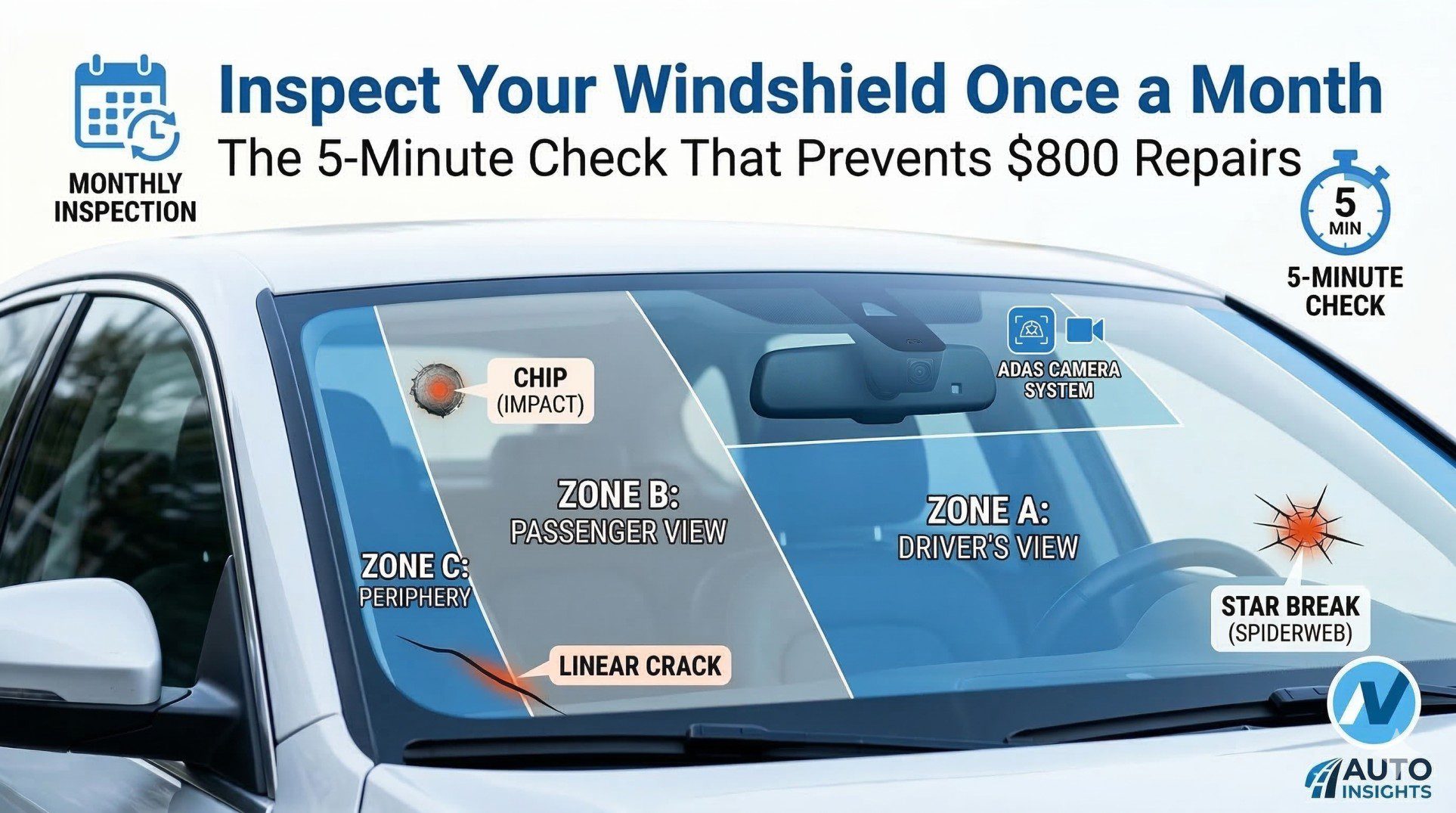
Inspect your windshield once a month as a baseline. That 5-minute check catches minor chips while they’re still repairable ($75 to $150) rather than waiting until they’ve spread into cracks that require full windshield replacement ($300 to $800). Addressing chip damage within 48 hours prevents roughly 78% of chip-to-crack progression.
Monthly works for most conditions, but certain environments demand more. Arizona’s extreme summer heat accelerates crack growth 3 to 4 times faster than normal, requiring bi-weekly checks from June through September. Florida’s hurricane season (June through November) brings debris that demands the same bi-weekly schedule. South Carolina’s freeze-thaw cycles from November through February can double a chip’s size overnight.
Beyond scheduled checks, inspect immediately after hailstorms, debris strikes, long highway trips, or any event where something hit your glass. This guide covers the full inspection schedule by state, a step-by-step self-inspection checklist, how to identify different damage types, and when professional evaluation becomes necessary.
| State | Baseline | High-Risk Period | Enhanced Frequency |
|---|---|---|---|
| Arizona | Monthly | June – September (extreme heat, monsoon) | Bi-weekly |
| Florida | Monthly | June – November (hurricane season) | Bi-weekly |
| South Carolina | Monthly | November – February (freeze-thaw) | Bi-weekly |
| Colorado | Monthly | November – March (freeze cycles, ice) | Bi-weekly |
What Does a 5-Minute Monthly Inspection Look Like?
You don’t need equipment or expertise. Just good light, your eyes, and a fingertip. Pick the first Sunday of every month and make it a habit.
Step 1: Interior Visual Sweep (2 Minutes)
Sit in the driver’s seat. Scan the windshield for chips, star breaks, or cracks within a 10-inch radius of the steering wheel center. This is your primary sight line and the most critical safety zone. Any obstruction here creates a legal issue in Arizona, Florida, and South Carolina.
Look for long cracks (6+ inches) anywhere on the windshield, spiderweb patterns, discoloration or cloudiness, and circular bullseye damage patterns.
Check your dashboard for ADAS warning lights. Camera obstruction indicators can signal windshield damage you haven’t noticed visually. Roughly 68% of vehicles on the road now have ADAS systems that depend on clear glass in the camera zone.
Step 2: Exterior Inspection (2 Minutes)
Walk around the vehicle and check the edge seal condition (the black rubber/urethane perimeter). Look for wiper blade contact marks or scratches in the wiper sweep area. Check for impact points with raised edges or depressions.
The touch test: Run your fingertip over any suspected chip or crack. Raised edges indicate progressing damage. Rough spots or irregularities that weren’t there last month mean something changed. Moisture inside a crack indicates a seal breach that accelerates spreading.
Step 3: Critical Zones Assessment (1 Minute)
Focus on four priority areas in order of importance.
| Zone | Location | Why It Matters |
|---|---|---|
| Driver sight line | 10-inch radius in front of driver | Any obstruction here = immediate repair/replacement. Illegal to drive with sight-line damage. |
| Wiper sweep area | Where wipers operate | Damage here worsens with every wiper pass. Chips spread rapidly from wiper contact. |
| Edges and corners | Within 2 inches of windshield frame | Structural stress concentration points. Edge cracks propagate inward quickly. |
| ADAS camera zone | Behind rearview mirror | Even minor damage triggers ADAS malfunctions. Camera needs optically clean glass. |
For more on how scratches in the wiper zone affect your glass and safety systems, see our guide on removing windshield wiper scratches.
What Types of Damage Should You Look For?
Knowing what you’re looking at determines whether you need a $75 repair, a $600 replacement, or just continued monitoring.
| Damage Type | What It Looks Like | Repairable? | Urgency |
|---|---|---|---|
| Bullseye | Circular with dark center, typically quarter-sized or smaller | 90% if under 1 inch | Repair within 7 days |
| Star break | Multiple cracks radiating from impact point | 70% if legs under 3 inches | Repair within 3-5 days |
| Combination break | Multiple damage types at single point (bullseye with extending cracks) | 50-60% depending on size | Immediate (24-48 hours) |
| Edge crack | Crack starting within 2 inches of windshield edge | Rarely, replacement usually needed | Immediate (safety compromise) |
| Long crack | Linear crack 6+ inches, often from chip neglect or thermal stress | No, replacement needed | Immediate (structural integrity) |
Severity indicators requiring immediate action: chips larger than a quarter (1 inch diameter), cracks longer than a dollar bill (6+ inches), multiple chips within 6 inches of each other, damage in driver’s sight line, damage touching the windshield edge, or damage over ADAS sensors.
If any damage shows visible growth from your last inspection, new cracks branching from an existing chip, or moisture/dirt inside a crack, don’t wait for the next scheduled check. See our guide on when to repair vs. replace your windshield for the specific criteria.
How Does Arizona’s Climate Affect Your Inspection Schedule?
Arizona creates the most aggressive environment for windshield damage in the country. Drivers in Phoenix, Mesa, Scottsdale, and Chandler face conditions that accelerate every type of glass damage.
Thermal stress: Summer dashboard temperatures reach 160 to 180°F. The windshield surface can exceed 185°F in direct sun. Then you start the engine and blast cold AC. That rapid temperature swing, sometimes 50°F+ in minutes, creates thermal stress that turns chips into cracks 3 to 4 times faster than in moderate climates. According to Glass Doctor, cracks are 60% more likely to spread when glass experiences rapid temperature changes.
Dust and debris: Monsoon season (July through September) brings dust storms that deposit fine silica particles on windshields. These particles create microscopic scratches during wiper use and can mask small chips. Post-monsoon inspection and wiper cleaning are essential.
UV degradation: Intense UV exposure degrades glass clarity over time, primarily affecting vehicles 8+ years old. Look for cloudiness or haziness during inspections.
Arizona schedule: Monthly from January through May and October through December. Bi-weekly from June through September. Post-storm checks immediately after monsoon events.
How Does Florida’s Climate Affect Your Inspection Schedule?
Florida’s combination of hurricanes, humidity, and coastal salt creates a unique damage profile for drivers in Tampa, Orlando, Miami, and Jacksonville.
Hurricane and storm debris: Flying objects during storms cause impact damage that may not be immediately obvious. Post-storm inspection within 24 hours is mandatory. Check for impact points, seal integrity, and any new chips or cracks.
Coastal salt exposure: Salt deposits etch glass surfaces over time. Coastal vehicle windshields degrade roughly 40% faster than inland vehicles. Monthly cleaning prevents permanent damage. Look for white residue or cloudiness during inspections.
Humidity and moisture: High humidity prevents proper chip drying and pushes moisture inside cracks, causing rapid spread. AC/heat cycling creates additional thermal stress. Inspect the area around AC vents for stress cracks that develop from repeated cooling cycles.
Florida schedule: Monthly from January through May and December. Bi-weekly from June through November. Post-storm checks within 24 hours. Coastal areas add monthly salt deposit cleaning.
How Does South Carolina’s Climate Affect Your Inspection Schedule?
South Carolina’s freeze-thaw cycles are the primary concern for drivers in Charleston, Columbia, Greenville, and Myrtle Beach.
Freeze-thaw damage: Winter temperatures fluctuate above and below freezing frequently. Water inside chips freezes, expands, and can double or triple a chip’s size in a single cycle. This is the fastest natural crack propagation mechanism outside of direct impact.
Road salt and chemicals: Winter de-icing chemicals damage glass surfaces. Post-winter thorough cleaning (April) and inspection is critical. Chemical residue can obscure damage underneath.
Pollen accumulation: Spring pollen mixed with humidity creates an abrasive paste on windshields. Combined with wiper use, this accelerates surface scratching. See our tips on preventing windshield scratches.
South Carolina schedule: Monthly from March through October. Bi-weekly from November through February. Comprehensive post-winter check in March/April. Pre-winter preventive inspection in October.
When Should You Inspect Immediately Instead of Waiting?
Scheduled inspections cover gradual wear. But certain events demand a check within 24 hours.
After hailstorms or severe weather. Impact damage from hail may appear as small divots or chips that aren’t visible from the driver’s seat.
After a debris strike. You heard or felt something hit the glass. Inspect even if you don’t see damage immediately. Some chips are invisible from inside the vehicle.
After accidents or collisions, even minor ones. Hidden stress fractures aren’t visible to an untrained eye. The windshield provides up to 45% of structural cabin integrity in a rollover, per NHTSA safety standards (FMVSS 205/212).
After extreme temperature exposure. Below 20°F or above 115°F. These extremes create thermal stress cracks that have no visible impact point.
After long highway trips (500+ miles). Extended Interstate driving at highway speeds exposes your windshield to significantly more debris than city driving.
After parking under trees during storms. Falling branches and debris create impact damage from above that’s easy to miss.
When Should You Skip DIY and Get a Professional Inspection?
Monthly self-checks handle routine monitoring. But some situations need a trained eye with professional equipment.
When you can’t determine damage type. If you can’t tell whether a mark is a chip, scratch, or embedded debris, a professional assessment clarifies whether repair or replacement is needed.
When damage is near the ADAS camera zone. Whether you drive a Toyota, Honda, Ford, Tesla, or Chevrolet, damage near the camera behind the rearview mirror requires expert evaluation. ADAS calibration may be needed if glass clarity is compromised.
After any collision. Even minor fender benders warrant professional assessment. Stress fractures from impact forces can compromise structural integrity without any visible surface damage.
Annually for comprehensive evaluation. Before long road trips, during routine maintenance, when selling or buying a used vehicle, and at insurance renewal periods.
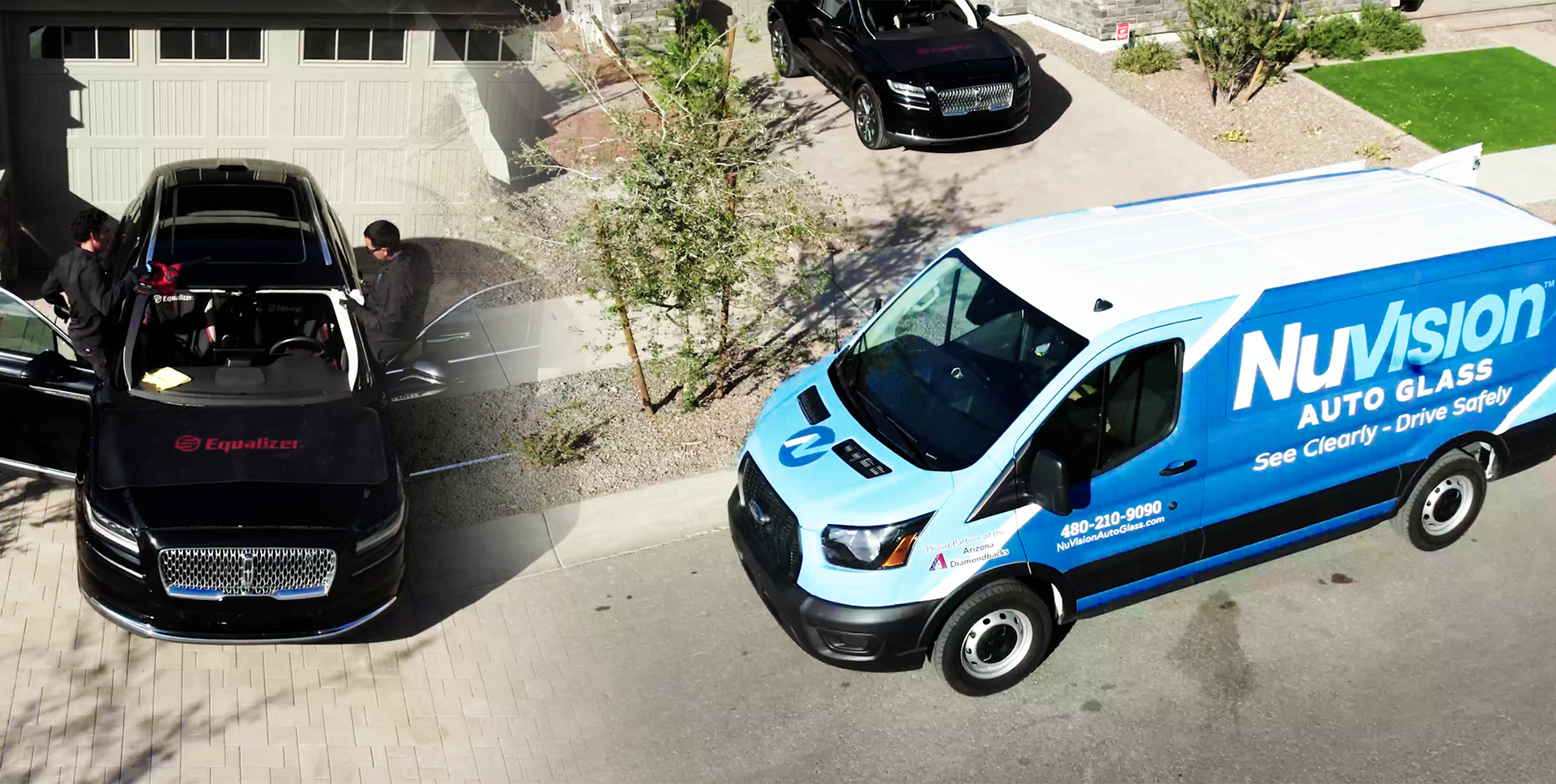
NuVision Auto Glass offers free professional windshield inspections throughout Arizona, Florida, South Carolina, and Colorado. Certified technician assessment takes 15 to 20 minutes, includes repair vs. replacement recommendation and insurance coverage verification, and carries zero cost with no obligation. Visit us at our Arizona location or our Florida location for an in-person assessment, or schedule our mobile inspection service to have a technician come to you.
How Should You Document Inspection Findings?
Documentation protects you financially in three ways: it strengthens insurance claims, supports warranty coverage, and prevents pre-existing damage disputes.
Monthly photo log: Take a wide-angle shot of the entire windshield from outside, plus a close-up of any chips or damage. Your phone camera auto-dates photos. Store them in a dedicated folder or cloud album. This takes 30 seconds and creates a record that’s worth hundreds of dollars if you ever need to prove when damage occurred.
Damage tracking: Note the date discovered, location on windshield (use a simple description like “6 inches below mirror, passenger side”), size and type, action taken (repaired, monitored, replaced), and cost/insurance claim details.
This documentation habit directly prevents the most common insurance claim denial reason: pre-existing damage disputes, which account for 35% of all windshield claim denials. For more on avoiding claim problems, see our guide on common reasons windshield claims get denied.
What’s the Real Cost of Skipping Inspections?
The math is straightforward.
| Scenario | Cost |
|---|---|
| Chip caught early and repaired | $75-$150 (often $0 with insurance) |
| Chip ignored, becomes crack, requires replacement | $300-$800 |
| Replacement triggers insurance premium increase (10% over 3-5 years) | $450-$750 additional |
| Total cost of skipping one inspection | $750-$1,550 potential |
Your annual time investment: 5 minutes per month, 12 months, equals 60 minutes total. The ROI on that one hour runs $225 to $650 per early catch.
Arizona drivers have an even stronger case. Zero-deductible glass coverage means chip repairs are completely free through insurance. Missing early damage doesn’t just cost you repair money. It converts a free repair into a free replacement (which wastes a larger claim on your record) or a cash expense if you’ve used too many claims recently. For a full breakdown of when insurance vs. cash makes sense, see our cash vs. insurance decision guide.
What Are the Most Common Inspection Mistakes?
Only inspecting after you notice damage. By the time a chip is visible from the driver’s seat, it’s often advanced beyond the repair stage. Small chips are invisible from normal driving position until they spread.
Assuming wiper streaks are blade problems. About 40% of “wiper problems” are actually windshield damage or scratches, not blade issues. Inspect the glass first before replacing wipers. Our wiper replacement guide covers how to tell the difference.
Ignoring edge damage. Edge cracks compromise the entire windshield’s structural integrity. A “small crack at the edge” often requires immediate emergency replacement.
Delaying inspection after a debris strike. Immediate inspection catches repairable damage before thermal stress and road vibration turn a chip into a crack. The 48-hour window is critical.
Not inspecting after extreme temperatures. Thermal stress creates cracks without any visible impact point. Parking in 115°F+ heat (common in Arizona summers) or below-freezing cold (South Carolina winters, Colorado year-round) warrants inspection even without a debris event.
Frequently Asked Questions
How long does a self-inspection take?
Five minutes. Interior visual sweep (2 minutes), exterior walk-around (2 minutes), critical zones assessment (1 minute). Less time than filling up your gas tank.
Can I inspect my windshield in the rain?
Interior inspection works fine in any weather. Exterior inspection is better in dry conditions with good lighting. Direct sunlight at a low angle reveals chips and cracks most effectively.
What tools do I need for a monthly inspection?
None. Your eyes and a fingertip for the touch test. A smartphone camera for documentation photos. Optional: a flashlight for inspecting from inside the car in low light.
How do I know if a chip needs professional repair?
If it’s smaller than a quarter, not in the driver’s sight line, and not at the windshield edge, it’s likely repairable. If your fingernail catches in it, it’s deeper than surface level. When in doubt, NuVision’s free inspection provides a definitive answer.
Does NuVision charge for windshield inspections?
No. Free professional inspections are available across all service areas. Our certified technicians assess damage, recommend repair vs. replacement, and verify your insurance coverage at no cost.
Will my insurance cover chip repair found during inspection?
In most cases, yes. Windshield repair is covered under comprehensive insurance, often with zero deductible. Arizona’s zero-deductible standard means free repairs. Florida’s statutory deductible waiver covers repairs at no cost. South Carolina depends on your policy endorsement. For the full coverage picture, see our zero-deductible windshield guide.
Should I inspect a brand new windshield?
Yes. Inspect within the first week after replacement to verify seal integrity, proper alignment, and absence of installation defects. Then resume the monthly schedule. If your vehicle has ADAS, verify the system is functioning correctly after any glass work. See our mobile ADAS calibration guide.
What if I find damage during my inspection?
Document it with photos immediately. For chips under 1 inch, schedule repair within 48 hours to prevent spreading. For cracks 6+ inches or edge damage, contact NuVision for same-day assessment. For a full decision guide on repair vs. replacement costs, see our windshield replacement cost guide.
Build the Habit, Protect the Investment
Monthly inspections transform unpredictable windshield expenses into preventable costs. Five minutes on the first Sunday of every month catches the $75 repair before it becomes the $800 replacement. In high-risk periods (Arizona summer, Florida hurricane season, South Carolina winter), bump it to every two weeks.
When you find something, or even if you’re just not sure what you’re looking at, NuVision’s free inspection gives you a definitive answer. No guesswork, no obligation.
Schedule Your Free Windshield Inspection →
Call 1-855-213-0100 or request a quote online. Same-day mobile service available throughout Arizona, Florida, South Carolina, and Colorado. Visit our Google Maps (AZ) or Google Maps (FL) for directions and reviews.