
By Moises Briceno, Certified Master Technician
Back windshield replacement costs $200 to $600 for most vehicles in 2026. Economy sedans like the Honda Civic land near the $200 mark. SUVs, trucks, and luxury vehicles with integrated defrost wiring, antenna elements, or third brake lights push toward $500 to $600. Vehicles with rear-mounted cameras or advanced features can reach $800 to $1,200 when specialized glass and electronic recalibration are needed.
The price breaks down into five components: the glass panel itself, labor for removal and installation, new weatherstripping and seals, urethane sealant, and reconnection of any embedded electrical features. If you carry comprehensive auto insurance, your policy likely covers the full replacement minus your deductible, and in Arizona, roughly 85% of policies include zero-deductible glass coverage.
This guide covers the exact factors that determine your price, how OEM and aftermarket rear glass compare, what insurance covers (and doesn’t), state-specific pricing differences across Florida, South Carolina, and Colorado, and how NuVision’s mobile service eliminates shop visit hassles at no extra charge.
What Determines Your Rear Windshield Replacement Cost?
Five factors account for virtually all pricing variation. Understanding each one tells you exactly where your vehicle falls on the $200 to $1,200 spectrum.
| Factor | Cost Impact | Why It Matters |
|---|---|---|
| Vehicle make and model | Primary driver ($200-$600 range) | Glass dimensions, curvature, and availability vary significantly |
| Glass grade (OEM vs aftermarket) | $100-$250 difference | OEM fits perfectly, aftermarket saves money on most vehicles |
| Defrost wiring and heating elements | Adds $75-$150 | Reconnection or replacement of embedded heating circuits |
| Additional features | Adds $50-$200 | Rain sensors, antenna elements, heated mirror mounts, third brake lights |
| Insurance coverage | Reduces out-of-pocket to $0-$500 | Comprehensive policies cover glass damage; AZ has zero-deductible |
Vehicle Make and Model
This is the biggest variable. A 2024 Honda Civic rear window uses a smaller, flatter glass panel that costs less to manufacture and install. A 2024 Cadillac Escalade requires a larger panel with more complex curvature, heavier weight, and longer installation time.
| Vehicle Category | Typical Rear Glass Cost | Examples |
|---|---|---|
| Economy sedan | $200-$300 | Honda Civic, Toyota Corolla, Hyundai Elantra |
| Mid-size sedan/crossover | $250-$400 | Toyota Camry, Honda CR-V, Ford Escape |
| Full-size SUV/truck | $350-$550 | Chevrolet Silverado, Ford F-150, Toyota 4Runner |
| Luxury vehicle | $500-$800 | Mercedes-Benz S-Class, BMW X5, Lexus RX |
| Specialty/rare vehicle | $600-$1,200 | Porsche Panamera, Tesla Model X (full glass roof) |
Whether you drive a Toyota, Honda, Ford, Chevrolet, or Tesla, NuVision provides a free quote before any work begins so you know exactly what you’re paying.
Glass Grade: OEM vs Aftermarket
Two choices here. OEM (Original Equipment Manufacturer) glass comes from the same supplier that made your vehicle’s factory glass. Identical fit, identical features, identical optical quality. It costs $100 to $250 more than aftermarket alternatives.
Aftermarket glass is manufactured by independent companies to DOT (Department of Transportation) safety standards under FMVSS No. 205. It’s safe, legal, and reliable. The tradeoff: slightly looser fitment tolerances on some vehicles and potential minor wind noise. Most drivers never notice the difference.
The general guidance: aftermarket works great for most economy and mid-range vehicles. OEM is worth the premium for luxury vehicles, vehicles with integrated features (defrost, antenna, sensors), and newer vehicles where precise fit matters for weather sealing.
Defrost Wiring and Heating Elements
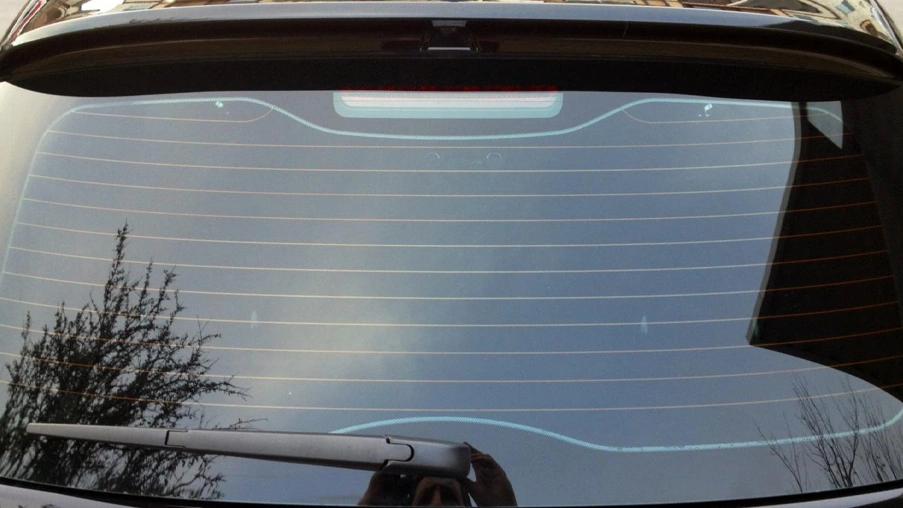
Most modern vehicles have rear window defrost systems. Those thin lines you see across the glass are tiny heating wires that melt frost and condensation. Replacing rear glass with defrost wiring means the technician has to properly reconnect or replace those circuits.
This specialized work adds $75 to $150 to the total bill. If the original wiring harness is salvageable, costs stay at the lower end. If new wiring needs installation, expect the higher range. The defrost reconnection has to be tested before you leave to confirm every heating zone functions correctly.
Additional Integrated Features
Some vehicles pack more technology into the rear glass than drivers realize. Honda Odysseys have specialized rear window designs. Many SUVs integrate antenna elements for radio reception. Some models have rain sensors, heated mirror attachments, or third brake light housings built into the glass panel.
Each integrated feature adds complexity and $50 to $200 in additional cost. Vehicles with rear-mounted cameras for backup assist require precise glass positioning to maintain camera alignment. For vehicles with ADAS features, proper installation ensures safety systems continue functioning accurately.
Mobile vs Shop Installation
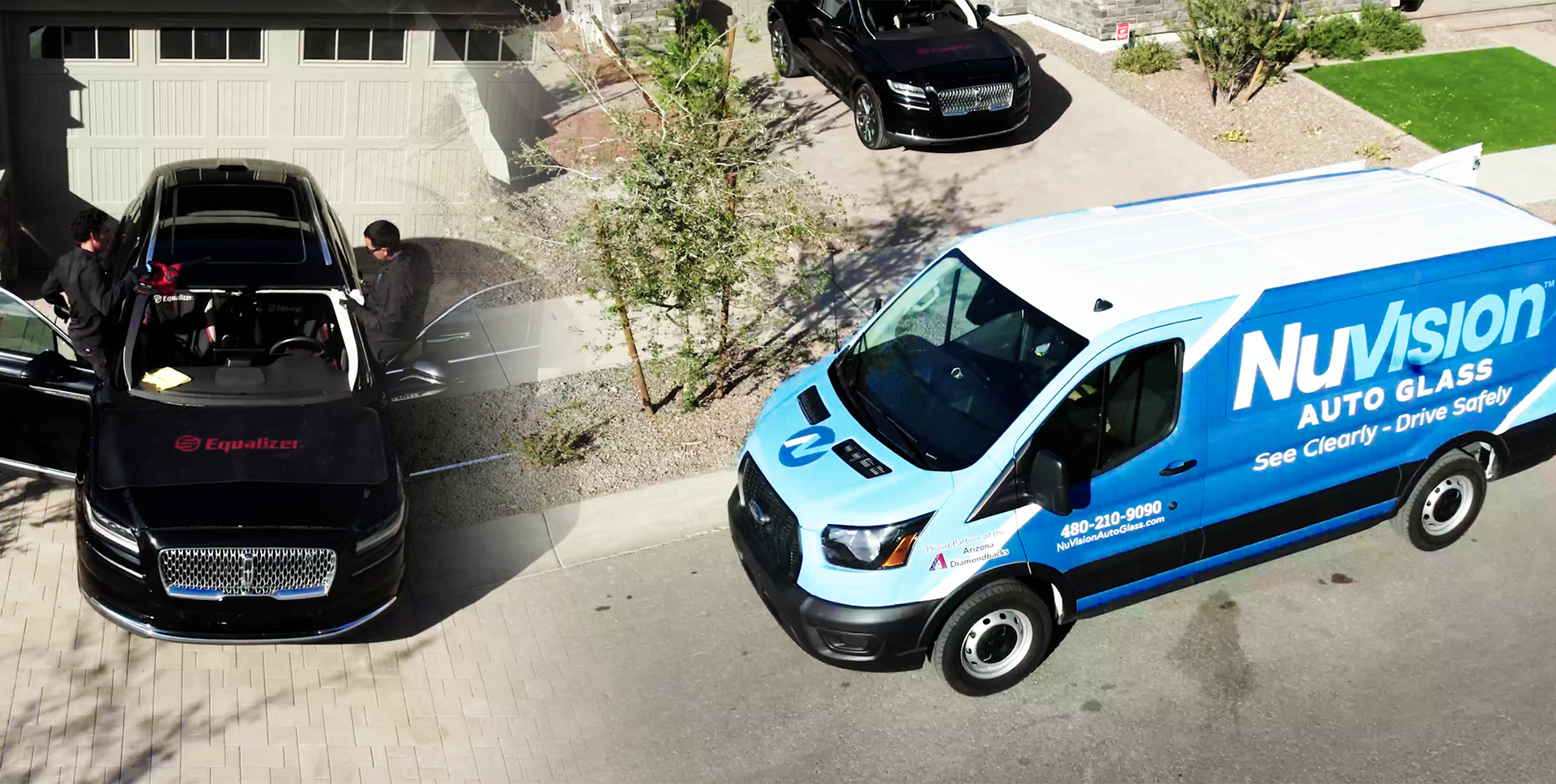
Traditional auto glass shops require you to drive to their location, wait 60 to 90 minutes, and drive home. NuVision’s mobile service brings the technician, tools, and glass to wherever your vehicle is parked. Your driveway, office parking lot, or wherever works for you.
Most competitors charge $25 to $75 extra for mobile service. NuVision includes it in the standard price because convenience shouldn’t cost more. Same technicians, same materials, same warranty. You just skip the drive and the waiting room.
How Does Insurance Cover Rear Windshield Replacement?
Comprehensive auto insurance covers glass damage in most cases. This section matters because it determines whether you’re paying $0 or $200 to $600 out of pocket.
How the Insurance Process Works
Your comprehensive policy covers the full replacement cost. You pay your deductible directly to the service provider. The provider handles all claim paperwork and insurance coordination. Glass claims filed under comprehensive coverage don’t increase your premiums in the vast majority of cases.
NuVision is directly integrated with major insurance carriers. When you call, we verify your coverage immediately and confirm your financial responsibility before scheduling. No surprises on the bill.
State-Specific Insurance Differences
| State | Typical Glass Coverage | Deductible | What This Means for You |
|---|---|---|---|
| Arizona | ~85% of policies include full glass | $0 (zero-deductible) | Most drivers pay nothing out of pocket |
| Florida | Comprehensive required for glass | $100-$500 | Compare deductible to cash price; cash may save money |
| South Carolina | Comprehensive covers glass | $250-$1,000 | Cash often cheaper for standard replacements under $500 |
| Colorado | Comprehensive covers glass | $250-$500 | Compare deductible to cash price before filing |
Arizona’s zero-deductible glass coverage makes filing a claim the obvious choice for almost every driver. In Florida and South Carolina, where deductibles run $250 to $1,000, many standard replacements cost less than the deductible. Filing a claim in that scenario means you pay the same amount but add a claim to your record for zero benefit.
For detailed guidance on the cash vs insurance decision, see our full guide on how filing a windshield claim affects your insurance. For step-by-step claim filing instructions, see our claim filing guide.
How Do OEM and Aftermarket Rear Glass Compare?
| OEM Rear Glass | Aftermarket Rear Glass | |
|---|---|---|
| Manufacturer | Same supplier as original factory glass | Independent manufacturers |
| Fitment | Identical to factory specifications | Meets DOT standards; slightly looser tolerances |
| Safety certification | FMVSS No. 205 compliant | FMVSS No. 205 compliant |
| Integrated features | All original features included | Basic defrost usually included; advanced features vary |
| Cost premium | $100-$250 more than aftermarket | $200-$300 less than OEM |
| Availability | May have lead time for newer/rare models | Widely available, faster delivery |
| Best for | Luxury, newer vehicles, sensor-equipped models | Economy, mid-range, older vehicles |
Both grades are safe and DOT-approved. The practical difference: OEM guarantees perfect fit with all factory features. Aftermarket delivers 90 to 95% of that quality at a meaningful cost reduction.
When OEM is the right choice: luxury vehicles, models with integrated cameras or antenna amplifiers (like the Mercedes-Benz S-Class), and any vehicle where precise fitment matters for weather sealing or electronic integration.
When aftermarket makes more sense: older vehicles (often the only option), economy and mid-range models without advanced features, and budget-conscious replacements on vehicles with simple rear glass designs.
For vehicles with front ADAS cameras and sensors, the front windshield replacement has different considerations entirely. See our guide on front windshield replacement costs for that breakdown. We also provide a separate detailed guide on back window replacement costs by vehicle type.
What’s Included in the Replacement Price?
Pricing transparency matters. When NuVision quotes you a number, here’s exactly what it includes.
| Included in Price | Details |
|---|---|
| Professional glass removal | Safe removal of shattered glass, debris cleanup, old sealant scraping |
| New weatherstripping and seals | Fresh rubber seals prevent water leaks and wind noise |
| Premium urethane sealant | Automotive-grade adhesive for structural bonding (meets FMVSS standards) |
| Proper alignment and fitting | Precision installation to match factory contours and prevent gaps |
| Defrost system reconnection | All heating wires tested and confirmed functional before completion |
| Mobile service | Technician comes to your location at no additional charge |
| Insurance claim handling | We file paperwork, verify coverage, coordinate with your carrier |
| Lifetime warranty | 100% coverage on workmanship and materials for as long as you own the vehicle |
Installation takes 60 to 90 minutes for most vehicles. The urethane sealant needs cure time, but you can typically drive within an hour after completion. Your technician provides the exact timeline when you book.
How Do Rear and Front Windshield Costs Compare?
Front windshields typically cost more than rear glass. Here’s why.
Front windshields use laminated glass (two glass layers bonded with a PVB interlayer) because they provide up to 45% of cabin structural integrity in frontal collisions and up to 60% in rollovers, per the Auto Glass Safety Council. They also house ADAS cameras, rain sensors, and head-up display projectors on many newer vehicles.
Rear glass uses tempered glass, which is four to five times stronger than standard glass but shatters into small rounded fragments on impact. Tempered glass is simpler to manufacture, and rear windows don’t need the ADAS camera integration that drives front windshield costs up.
| Front Windshield | Rear Windshield | |
|---|---|---|
| Glass type | Laminated (PVB interlayer) | Tempered |
| Standard cost | $300-$600 | $200-$600 |
| With ADAS/features | $600-$1,500+ | $400-$1,200 |
| Calibration needed? | Yes (if ADAS-equipped) | Rarely (only if rear cameras are glass-mounted) |
| Structural role | 45-60% of cabin integrity | Supports roof structure, protects rear passengers |
Front windshield replacement with ADAS calibration adds $150 to $400 to the total. Rear glass rarely requires calibration unless the vehicle has a rear-mounted camera integrated into the glass panel itself. For full front windshield pricing, see our windshield replacement cost guide.
How Do You Protect Your Rear Windshield from Damage?
You can’t prevent everything, but these habits reduce rear glass damage risk significantly.
Park in covered areas when possible. Covered parking prevents hail damage, falling branch impacts, and temperature extremes that stress glass. In Arizona, where dashboard temperatures hit 160 to 180°F, covered parking reduces thermal stress on all vehicle glass.
Skip automatic car washes with brush systems. Brush mechanisms can aggravate small chips and spread existing micro-damage into full cracks. Touchless washes are safer for glass.
Address chips immediately. Small chips and cracks spread rapidly from temperature changes and road vibrations. A $50 to $85 repair today prevents a $300 to $600 replacement next month. However, tempered rear glass (unlike laminated front glass) often can’t be repaired and requires full replacement when damaged.
Maintain safe following distance. Most rear glass damage comes from road debris kicked up by the vehicle ahead. Increasing your following distance, especially on highways and behind trucks, reduces impact frequency.
Inspect monthly. A quick visual check of all vehicle glass on the first Sunday of each month catches damage early. For a full inspection routine, see our guide on best windshield care practices.
When Should You Choose Emergency Replacement?
A shattered rear windshield is a safety and security emergency. The interior is exposed to weather, theft risk increases dramatically, and rear visibility drops to zero.
NuVision offers same-day emergency auto glass service across Phoenix, Mesa, Tampa, Orlando, Miami, Charleston, Columbia, and Denver. Emergency service carries the same pricing as scheduled replacements. No rush charges.
If your rear windshield is completely shattered, don’t drive the vehicle. Glass fragments continue to fall and the structural compromise creates a safety risk. Call for mobile service and have the technician come to you.
Frequently Asked Questions
Why does rear windshield replacement cost more than a side window?
Rear glass is larger, requires adhesive bonding (side windows use tracks and clips), integrates heating elements and antenna wiring, and has structural requirements that side windows don’t. The manufacturing complexity and installation time are significantly greater.
Can insurance cover my rear window if I caused the damage?
Comprehensive coverage covers glass damage regardless of cause: rock impact, rear-end collision, vandalism, weather events. Only collision-only policies have cause restrictions. Glass claims filed under comprehensive don’t increase premiums in most cases. For the full breakdown, see our insurance impact guide.
How long does rear windshield replacement take?
60 to 90 minutes for most vehicles. The urethane sealant needs additional cure time, but you can typically drive within an hour after the technician finishes. Vehicles with complex defrost reconnection or sensor integration may take slightly longer. Your technician confirms the exact timeline when you book.
Is aftermarket rear glass safe for vehicles with backup cameras?
Yes. Aftermarket glass is DOT-approved under FMVSS No. 205 and safe for all vehicles. If your backup camera mounts in the glass panel, verify the replacement includes identical mounting provisions. For vehicles with backup cameras and advanced safety features, OEM glass ensures perfect integration.
Will my insurance rates increase if I file a rear glass claim?
Glass claims filed under comprehensive coverage don’t typically affect your premium. Comprehensive claims are classified differently from collision claims. Your agent can confirm your specific policy terms, but rate increases from glass claims alone are extremely rare.
Can a cracked rear windshield be repaired instead of replaced?
Rear glass is tempered, which means it shatters into small granular pieces when it breaks. Unlike laminated front windshields, tempered rear glass generally can’t be repaired once cracked or chipped. Full replacement is almost always required. For front windshield chip and crack repair options, see our repair vs. replace guide.
Does NuVision charge extra for mobile rear windshield service?
No. Mobile service is included in standard pricing at NuVision. Most competitors charge $25 to $75 for mobile visits. We include it because we believe convenience shouldn’t cost extra. Same technicians, same materials, same lifetime warranty whether we come to you or you visit our shop.
What happens if my vehicle needs rear glass that’s on backorder?
Rare and specialty vehicles sometimes have glass availability delays. NuVision maintains relationships with multiple glass distributors and OEM suppliers across all four states. If a specific glass panel isn’t immediately available, we provide an estimated delivery timeline and can source from alternative suppliers when possible. Economy and mid-range vehicles rarely have availability issues.
Get Your Rear Windshield Replaced Today
Rear windshield replacement costs $200 to $600 for most vehicles in 2026. Your exact price depends on vehicle type, glass grade, integrated features, and insurance coverage. Arizona drivers with zero-deductible glass coverage typically pay nothing. Drivers in Florida, South Carolina, and Colorado should compare their deductible to our cash price before deciding whether to file a claim.
Get a Free Rear Windshield Quote →
NuVision Auto Glass provides transparent pricing, same-day appointments, free mobile service, full insurance claim handling, and a lifetime warranty on every installation. Call 1-855-213-0100 or request your quote online.
Visit us on Google Maps: Arizona | Florida
Same-day mobile service throughout Arizona, Florida, South Carolina, and Colorado.