5 Seasonal Windshield Maintenance Tips for US Drivers
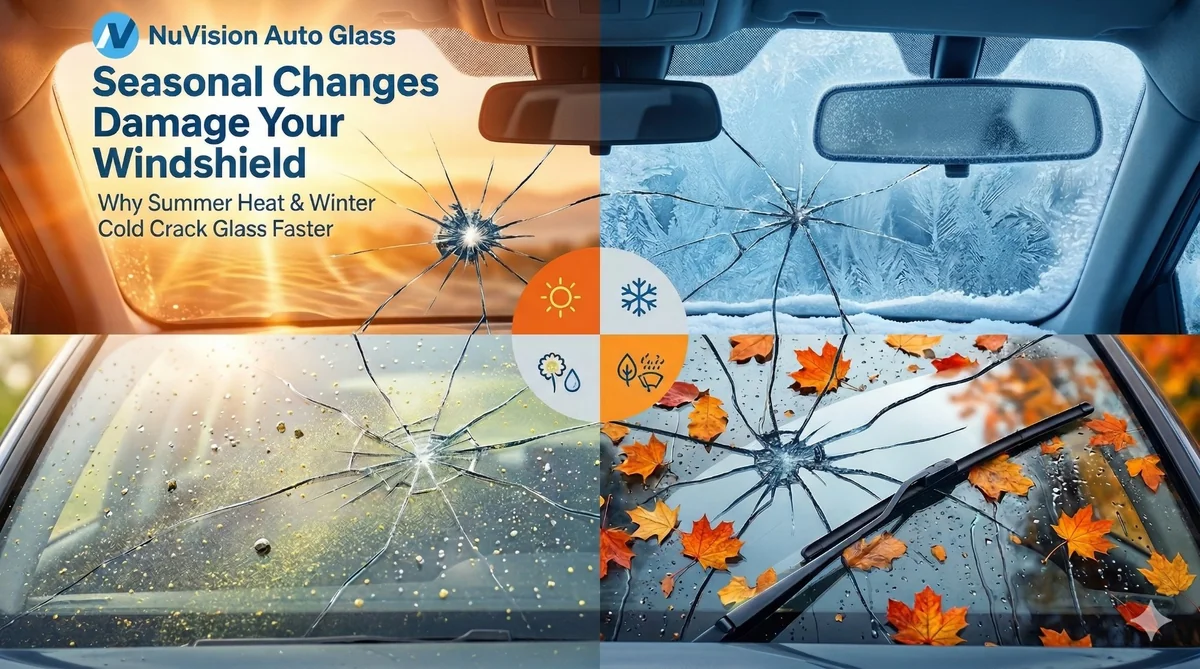
A customer in Chandler called us last July after a chip she’d been ignoring for three weeks turned into a fourteen-inch crack overnight. She hadn’t done anything different. She’d just parked outside during a 112°F afternoon, then blasted her AC on the drive home.
That temperature swing — ambient heat to cold interior air — is one of the most consistent crack triggers we see during Arizona summers. The chip was repairable at $70. The replacement cost her $340.
Seasonal windshield maintenance isn’t complicated. But it is specific. The damage patterns that show up in June in Phoenix are completely different from the ones we see in January in Charleston. This guide covers both — and gives you a clear calendar so nothing gets missed.
Following seasonal maintenance protocols prevents 40–60% of windshield damage. The annual cost is $195–290. The damage it prevents averages $1,250–3,100 in replacement costs.
What Does Spring Windshield Damage Actually Look Like?
Spring is inspection season. If your windshield survived winter without a visible crack, that doesn’t mean the glass came out clean. Freeze-thaw cycles stress the entire perimeter — we regularly find hairline cracks at the edges that weren’t there in October.
The other thing spring brings is road salt. In South Carolina especially, salt residue from winter roads sits on the glass and begins chemically etching it as spring humidity rises. Left for a few weeks, it weakens the surface and accelerates any future damage.
Spring Inspection Checklist (March–May)
| Task | What You’re Looking For | Action If Found |
|---|---|---|
| Full glass inspection | Edge cracks, freeze-thaw stress lines | Repair or replace before summer heat spreads them |
| Road salt removal | White crusty buildup on glass and lower frame | pH-neutral glass cleaner — not acidic formulas |
| Seal inspection | Cracks, separations, gaps along windshield perimeter | Professional seal repair ($150–300) before summer UV degrades it further |
| Wiper blade check | Torn rubber, streaking, bent frames from ice | Replace immediately — damaged blades scratch glass |
| Cowl area cleaning | Clogged drain holes, debris buildup | Clear debris — clogged drains cause water intrusion |
South Carolina priority: This is your most critical inspection window. Freeze-thaw damage from November–March needs to be found and addressed before spring humidity turns stress cracks into spreading ones.
Florida priority: Pollen is your main concern in spring. Acidic pollen left on glass for weeks etches the surface. Clean it off before June — hurricane season starts then.
Arizona priority: Mild winters mean less freeze damage, but check for thermal stress cracks from winter temperature swings. Begin UV protection prep — summer arrives early here.
Why Does Summer Heat Crack Windshields So Fast?
Glass expands and contracts with temperature. A windshield sitting in 110°F Phoenix heat, then subjected to maximum AC on the drive home, experiences a thermal shock that stresses any existing weak point. That’s the mechanism. It’s not dramatic — it just happens reliably, over and over, until the chip gives way.
We see this most often with chips that have been sitting for a few weeks. In moderate climates, a chip might hold for 30–90 days before spreading. In Arizona summer, we’ve seen the same chip crack fully in three to seven days.
Summer Maintenance Priorities (June–August / Arizona: April–October)
| Priority | Action | Cost / Notes |
|---|---|---|
| High | Bi-weekly windshield inspection | Free — 5 minutes, every two weeks |
| High | Chip repair within 24–48 hours of finding new damage | $50–90. Waiting in summer heat is why chips become cracks |
| High | Covered parking whenever available | Reduces glass temp 40–50°F. Free if the option exists |
| Medium | Windshield sunshade | $15–30. Reduces dashboard and glass temperature significantly |
| Medium | Hydrophobic coating (Rain-X or ceramic) | $20–50 DIY or included in seasonal service |
| Medium | Monthly wiper blade check | Heat-resistant blades ($25–35) last longer than economy blades in extreme heat |
Arizona note: Summer here runs April through October — not June through August. Bi-weekly inspection is non-negotiable during this window, and covered parking should be treated as a priority, not a convenience.
Florida note: Hurricane season starts June 1. Before it does, take photos of your windshield’s current condition for insurance purposes. After any major storm, check for debris impact damage before driving.
What Windshield Prep Should You Do Before Winter?
Fall is the preparation window. Everything you skip in September or October will cost more in January. The most important items aren’t expensive — wiper replacement, washer fluid change, and a seal check take under an hour and prevent the most common winter damage patterns we see.
October is also the optimal replacement window in Arizona. Adhesive cures best at moderate temperatures. The extreme heat of summer and cold nights of winter both slow the curing process. If you’ve been putting off a replacement, fall is the right time.
Fall Preparation Checklist (September–November)
| Task | When | Why It Matters |
|---|---|---|
| Replace wiper blades | September–October | Worn blades scratch glass when used on frost or dry glass in winter |
| Full seal inspection | October | Deteriorated seals fail rapidly in freeze-thaw. Water intrusion becomes ice damage |
| Switch to winter washer fluid | By November 1 | -20°F rated fluid. Don’t mix with summer formula — it dilutes freeze protection |
| Deep clean (bugs, pollen) | September | Summer residue is harder to remove once temperatures drop |
| Address any chips | Before first freeze | Freeze expansion will crack any unrepaired chip. Repair now costs $50–90. Waiting costs $300–400 |
South Carolina priority: This is your highest-stakes season. A harsh winter is coming. November is the cutoff — wipers replaced, seals checked, winter fluid installed, chips repaired. After that, you’re managing damage rather than preventing it.
Arizona priority: Minimal winterization needed, but October is your ideal window for any needed windshield replacement. Temperatures are moderate, adhesive cures well, and you’re ahead of the monsoon damage season.
What’s the Biggest Winter Windshield Mistake Drivers Make?
Hot water on a frozen windshield. We see it every year — someone in a hurry pours a kettle on the glass to melt the ice faster. If there’s an existing chip or any edge stress, the thermal shock cracks the glass immediately. It’s a $300–400 replacement for a two-minute shortcut.
The second most common mistake: using a metal scraper or a credit card edge. Metal creates deep scratches that scatter light at night and compromise visibility in ways that don’t show up until you’re driving into oncoming headlights.
Winter Ice Removal: What Works and What Breaks Glass
| Method | Verdict | Notes |
|---|---|---|
| Plastic ice scraper ($3–6) | ✓ Safe | Use after de-icer spray to reduce pressure needed |
| De-icer spray | ✓ Safe | Apply first. Softens ice and reduces scraping force required |
| Defroster (10 min warm-up) | ✓ Safe | Best method. Gradual temperature change, no scraping required |
| Hot or warm water | ✗ Never | Thermal shock. Will crack glass, especially if chip is present |
| Metal scraper or coin edge | ✗ Never | Scratches glass permanently. Affects night visibility |
| Credit card edge | ✗ Avoid | Softer than metal but still leaves micro-scratches over time |
Winter Maintenance Checklist (December–February)
Beyond ice removal, winter requires a few consistent habits:
- Lift wiper blades off the windshield when parked in freezing conditions. Rubber freezing to glass tears the blade when you try to use it.
- Check washer fluid weekly. Winter consumption is higher than summer, and running out during a snowstorm is both dangerous and fixable in 30 seconds.
- Weekly windshield inspection in South Carolina — freeze-thaw cycles work on glass constantly. A chip that was stable in October may start moving by December.
- Never operate wipers on an iced windshield. Clear the glass first.
- Road salt removal weekly — not just for aesthetics. Salt etches glass and deteriorates seals when left through humidity cycles.
South Carolina note: Winter is your most intensive maintenance season. -20°F rated fluid is the minimum. Weekly inspections are worth the five minutes. Any new crack appearing in January or February needs a professional look within days — not weeks.
Arizona note: Minimal winter maintenance outside of northern areas like Flagstaff. Monitor for thermal stress from 40°F day-to-night swings. Tucson and Phoenix rarely freeze, but the temperature differential still affects glass with existing chips.
Florida note: Rarely relevant. Focus on storm-related debris from late-season systems and maintain regular cleaning through the mild winter months.
What Does a Full Year of Windshield Maintenance Look Like by State?
| Month | Arizona | Florida | South Carolina |
|---|---|---|---|
| Jan–Feb | Monthly inspection, mild UV protection | Regular cleaning, minimal needs | Weekly inspection, ice protocols, salt removal |
| Mar–Apr | Inspect for thermal cracks, begin UV prep | Pollen removal, hurricane prep begins | Post-winter deep clean, seal repair, damage assessment |
| May | Bi-weekly inspections begin, covered parking priority | Final pre-hurricane prep, document condition | Monthly maintenance resumes |
| Jun–Aug | Max UV protection, chip repair within 24–48 hrs | Pre/post-storm inspection, bi-weekly monitoring | Monthly cleaning, summer bug removal |
| Sep–Oct | Optimal replacement window. Wiper check. | Post-hurricane season damage assessment | Replace wipers, inspect seals, install winter fluid |
| Nov–Dec | Return to monthly inspection | Post-season assessment, mild winter prep | Begin winter protocols, weekly inspection |
Is Seasonal Maintenance Actually Worth the Cost?
The short version: yes, by a wide margin. Here’s what the math looks like across a full year.
| Season | Key Tasks | Annual Cost | Damage Prevented |
|---|---|---|---|
| Spring | Inspection, salt removal, seal check | $50–75 | $150–300 seal damage |
| Summer | UV treatment, bi-weekly inspection, premium wipers | $75–100 | $300–800 heat crack replacement |
| Fall | Wiper replacement, seal inspection, winter fluid | $50–75 | $500–1,200 winter freeze damage |
| Winter | De-icer, plastic scraper, fluid top-ups, monitoring | $20–40 | $300–800 thermal shock cracks |
| Total | Full seasonal protocol | $195–290/year | $1,250–3,100 in prevented replacements |
The ROI isn’t subtle. The $195–290 covers supplies and one professional inspection. The $1,250–3,100 in prevented damage is the cost of two to four replacements — which is roughly what we see from customers who skip seasonal maintenance for two or three years in a row.
Does Seasonal Maintenance Matter More for Vehicles with ADAS?
Yes — and most people don’t realize this. Modern vehicles mount cameras and sensors directly to or near the windshield. Lane departure warnings, automatic emergency braking, and adaptive cruise control all depend on that glass being in the right position and in good condition.
A windshield that’s shifted from seal deterioration, or one that was replaced without proper recalibration, can cause ADAS systems to throw intermittent errors — or worse, to operate on incorrect data without any warning light.
This is why seal inspection in spring and fall matters beyond just water leaks. If you have any ADAS warning lights appearing, don’t treat it as a minor annoyance. It needs a professional evaluation. You can learn more about how ADAS calibration works after a windshield replacement.
Frequently Asked Questions
How often should I inspect my windshield for seasonal damage?
Monthly for most drivers. In Arizona during summer (April–October) and South Carolina during winter (November–March), bi-weekly inspections are recommended. Heat and freeze-thaw cycles can turn a small chip into a full crack within days — not weeks.
Does summer heat actually crack windshields?
Yes. Heat accelerates crack propagation 3–4x compared to moderate climates. A chip that might take 30–90 days to spread in mild weather can crack fully in 3–7 days during an Arizona summer. The combination of high ambient temperature and rapid interior cooling from AC is the most common trigger.
Is it safe to pour hot water on a frozen windshield?
No. Hot water causes thermal shock, which cracks glass — especially if there’s an existing chip. Use a plastic ice scraper with de-icer spray instead. The defroster with a 10-minute warm-up is the safest option.
Do wiper blades really need seasonal replacement?
In Arizona, yes — heat degrades rubber in 3–4 months rather than the standard 6–12. Replace in September before winter. In South Carolina, stiff blades from summer heat can scratch glass when dragged across frost or dry glass in November.
Does road salt damage windshields?
Over time, yes. Salt spray accumulates on glass and seals. Left through spring humidity, it accelerates chemical etching and deteriorates the rubber seal bonding the windshield to the frame. Weekly removal during and after winter prevents this.
When is the best time to replace a windshield in Arizona?
October or November. Adhesive cures best in moderate temperatures. Extreme summer heat (110°F+) and cold winter nights both slow the curing process. Fall is the optimal window, and the replacement itself takes 60–90 minutes.
The Maintenance Is Simple. The Timing Is What Most Drivers Miss.
Most windshield damage we see isn’t the result of bad luck. It’s a chip that was left too long, a wiper blade that should have been swapped in September, or a seal that went unchecked until water got in. These are all preventable with a checklist and a calendar.
The full year of maintenance we described costs less than $300. The replacement it prevents costs between $300 and $800 — and that’s before you factor in the time and scheduling.
If you’re in Arizona, Florida, or South Carolina and want a free seasonal inspection, our mobile technicians come to you. Schedule one here — it takes 15 minutes and we’ll tell you exactly what, if anything, needs attention before the next season hits.