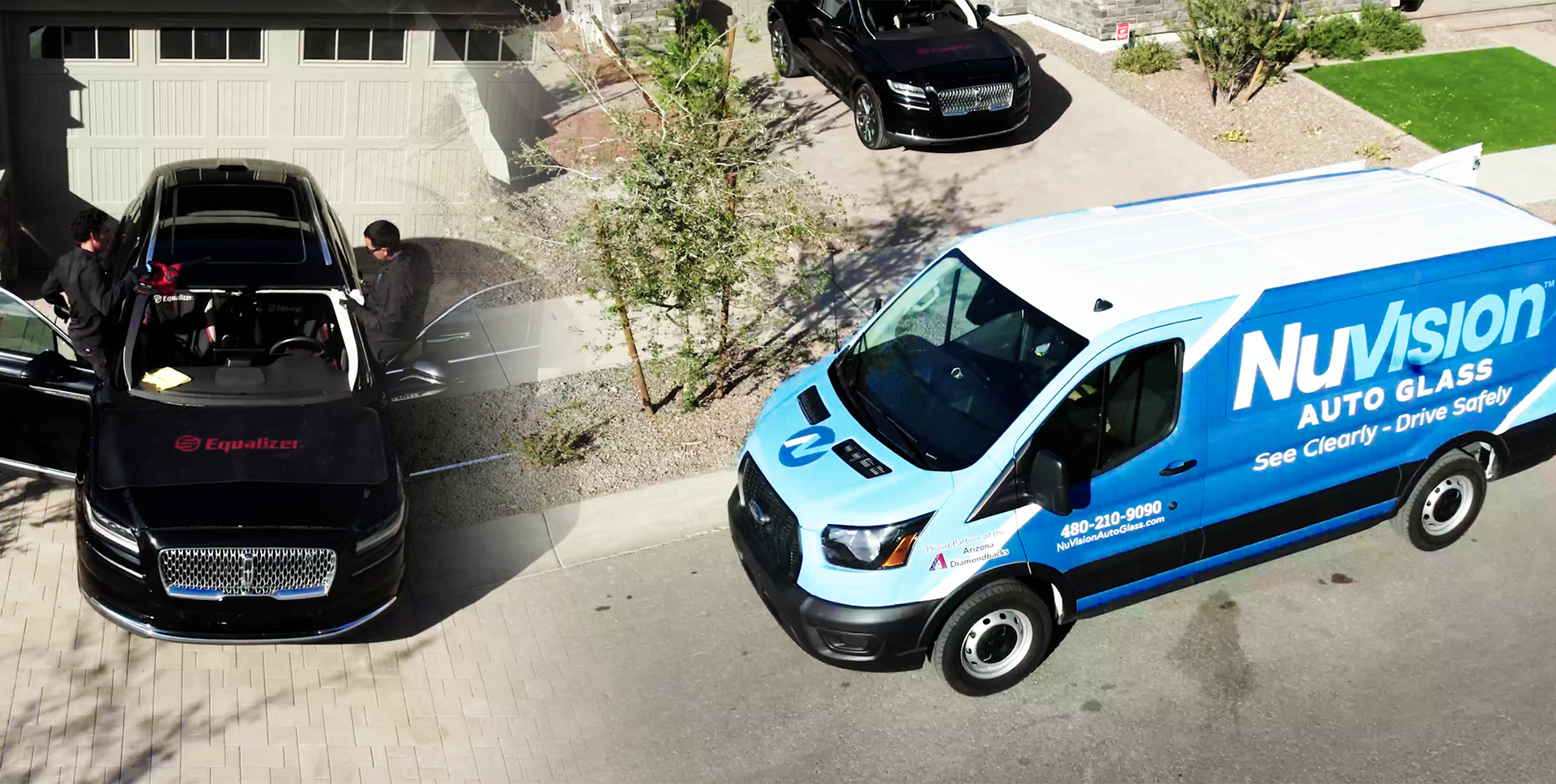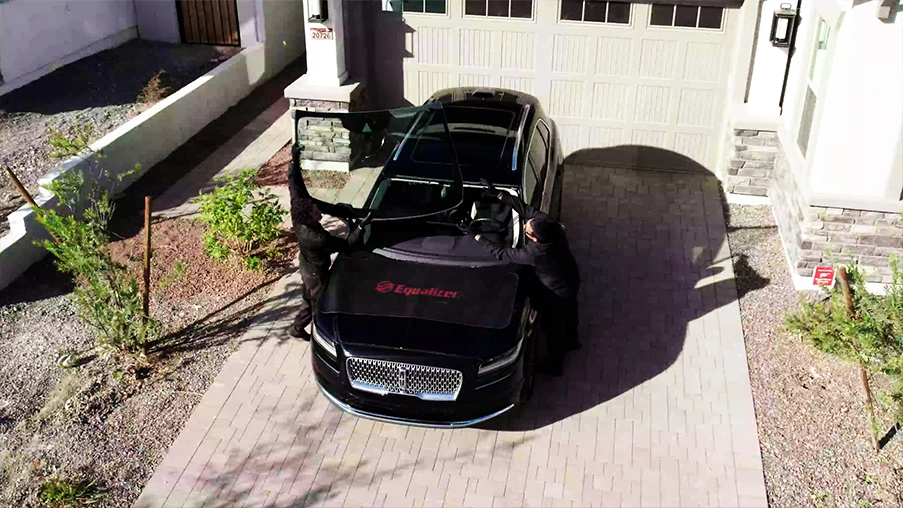

The most common question we hear before a windshield replacement appointment is how long does windshield replacement take. The short answer is 60–90 minutes of active work. But that’s not the full picture — and the gap between “installation done” and “safe to drive” is where most drivers get tripped up.
A customer in Chandler last October was back on the road 45 minutes after his replacement. He’d been told the job was done, the adhesive would “finish up while he drove.” Two weeks later he had wind noise at every highway speed above 65 mph. The adhesive hadn’t cured correctly. The seal had never fully bonded along the passenger lower edge.
The installation took 45 minutes. The correct process takes longer — and for a reason.
Standard vehicle: 60–90 min installation + 60 min minimum cure = 2–2.5 hours total
ADAS-equipped vehicle: Add 45–90 min recalibration = 3–4 hours total
Cold weather (<50°F): Cure time extends to 2–3 hours minimum
Same-day mobile service: Available — technician comes to your location
What Actually Happens During a Windshield Replacement — Step by Step?
Understanding each step explains where the time goes and why shortcuts produce problems.
Step 1 — Assessment (5–10 minutes). The technician inspects the damage to confirm replacement is the right call versus a repair. Chips under 1 inch outside the sightline are often repairable in 30–45 minutes. Cracks over 6 inches, edge damage, or sightline damage require full replacement. Getting this right saves time — and money. See the full repair vs. replacement guide for the decision criteria.
Step 2 — Interior protection (5 minutes). Seats, dashboard, and door trim are covered. Any loose trim pieces near the windshield are removed. This step is easy to rush and easy to regret — adhesive on a leather dashboard is not a quick clean.
Step 3 — Removal of the old windshield (15–20 minutes). The old glass is cut free using a cold knife or power tool along the urethane bead. The glass comes out in one piece when possible. Broken glass takes longer.
Step 4 — Frame preparation (10–15 minutes). This is the step most rushed jobs shortcut. Old adhesive residue must be fully removed from the pinch weld — the metal channel the glass bonds into. Applying new urethane over old residue creates a weak bond that degrades rapidly. The frame is then cleaned and primed on both the metal surface and the glass edge before new adhesive is applied.
Step 5 — Adhesive application and glass installation (15–20 minutes). A continuous urethane bead is applied to the frame. The new glass is set, aligned, and pressed into position. The bead must be consistent in height with no gaps — gaps become moisture entry points. Temperature at this step matters: above 100°F the adhesive skins over too fast; below 40°F it cures too slowly.
Step 6 — Cure time (60 minutes minimum). The vehicle sits. Nothing happens visibly, but the urethane is completing its moisture-activated bond. This is the step most often abbreviated by busy shops. The minimum safe drive-away time for most professional-grade adhesives is 60 minutes at temperatures between 60–80°F. In cold or extreme heat, that window changes — see the state-specific section below.
Step 7 — ADAS recalibration (45–90 minutes — if applicable). On vehicles with a forward-facing camera mounted to the windshield, recalibration is required before the safety systems operate correctly. This step is covered in detail in the next section.
Step 8 — Final inspection and cleanup (10 minutes). The technician checks the seal perimeter, removes protective covers, and confirms the glass is correctly positioned. Any excess adhesive at the edges is cleaned before it cures.
How Does ADAS Recalibration Change the Total Time?
Most vehicles manufactured after 2016 have a camera mounted directly behind the rearview mirror, bonded to the windshield glass. Lane departure warning, automatic emergency braking, and adaptive cruise control all operate off that camera’s field of view.
When the windshield is replaced, the camera bracket moves with the old glass or is transferred to the new one. Either way, the camera’s position relative to the vehicle frame shifts at the millimetre scale. A 1mm shift creates approximately a 6-foot lateral detection error at highway range — with no dashboard warning.
Recalibration corrects that shift. The time it adds depends on the method your vehicle requires:
| Calibration Method | Time Added | Common Vehicles |
|---|---|---|
| Static only | 45–90 minutes | Subaru EyeSight, Ford Co-Pilot360, Hyundai SmartSense |
| Dynamic only | 20–40 min drive | Honda Sensing, Mazda i-Activesense, Tesla Autopilot |
| Static + Dynamic | 90–120 minutes total | Toyota TSS-2.0+, Mercedes multi-sensor, GM SuperCruise |
NuVision performs mobile ADAS recalibration as part of the replacement appointment — no separate shop visit. If you’re unsure whether your vehicle requires calibration, give us your VIN when you book. For the full breakdown of static versus dynamic methods, see the calibration guide.
What’s the Full Appointment Timeline From Start to Drive-Away?
| Vehicle Type | Installation | Cure Time | Recalibration | Total |
|---|---|---|---|---|
| Standard (no ADAS) | 60–90 min | 60 min min | Not required | 2–2.5 hrs |
| ADAS — static calibration | 60–90 min | 60 min min | 45–90 min | 3–4 hrs |
| ADAS — dynamic calibration | 60–90 min | 60 min min | 20–40 min drive | 2.5–3.5 hrs |
| ADAS — static + dynamic | 60–90 min | 60 min min | 90–120 min | 3.5–5 hrs |
| Any vehicle — cold weather | 60–90 min | 2–3 hrs min | As required | Add 1–2 hrs |
| Chip repair (not replacement) | 30–45 min | Drive immediately | Not required | 30–45 min total |
If your damage is a chip under 1 inch outside the sightline, repair is likely possible — and it takes 30–45 minutes with no cure wait. You drive away immediately. Check the chip vs pit guide if you’re unsure what you’re dealing with.
Does the Timeline Change in Arizona, Florida, or South Carolina?
It does — and the reason is temperature. The urethane adhesive that bonds the windshield is moisture-activated. Heat and cold both affect how fast or how slowly that reaction completes.
Arizona. Summer is the variable. Phoenix regularly hits 110°F+ from May through September. Glass surface temperatures in direct sun can reach 140–160°F — well above the adhesive’s upper threshold of around 100°F ambient. At those temperatures, the adhesive can flash-cure: it skins over on the surface before the inner layers have finished bonding. The result is a seal that looks complete but has internal voids.
We schedule Arizona summer replacements in shaded or covered workspaces, ideally before 9am when glass surface temperatures are manageable. If a replacement is done on an exposed vehicle at noon in July, the 60-minute cure minimum doesn’t apply — the adhesive needs to be managed, not just timed. Confirm your shop is working in shade before you confirm the appointment.
Florida. Humidity is the variable. High ambient humidity actually helps urethane cure in normal conditions — the moisture-activated reaction has more to work with. But when glass surface temperature is elevated and humidity is also high, cure rates become uneven across the perimeter. Shaded workspace matters here too. The good news for Florida drivers: the standard 60-minute cure window is generally reliable in the humidity range Florida provides, provided the glass isn’t in direct sun.
South Carolina. Winter is the variable. Morning temperatures from November through February regularly drop into the 20s and 30s. Below 40°F, most standard urethane adhesives require 2–3 hours minimum before safe drive-away — not 60 minutes. A shop that gives you a 60-minute cure time on a 32°F morning is either using a cold-weather-rated adhesive product (confirm this) or releasing the vehicle before the bond has reached safe strength.
What Can Delay a Windshield Replacement Beyond the Standard Timeline?
Glass availability. Common vehicles — Honda, Toyota, Ford, Chevrolet — have glass in most regional warehouses. Same-day service is typically possible. Less common vehicles, older models, or vehicles with special glass specifications (acoustic interlayer, solar control, ADAS-specific) may require ordering. That adds 1–2 business days in most cases.
ADAS vehicle complexity. Some vehicles require both static and dynamic calibration, and dynamic calibration requires suitable road conditions — clear lane markings, dry weather, and a straight highway section. If weather conditions at the time of the appointment don’t allow a dynamic drive, the calibration has to be completed separately.
Additional damage found during removal. When the old glass comes out, the frame is inspected. Rust, corrosion on the pinch weld, or damaged trim clips add time. A rusted frame needs treatment before new adhesive can bond correctly. Skipping this step causes the same problem as skipping full adhesive removal — a seal that looks complete but isn’t.
Insurance claim processing. The replacement itself isn’t delayed by insurance — the shop handles the paperwork and the work proceeds. But confirming coverage, approving the claim, and confirming ADAS recalibration coverage should happen before the appointment, not during it. A quick call to your insurer the day before saves any on-the-day surprises.
Frequently Asked Questions
How long does windshield replacement take?
Active installation: 60–90 minutes. Minimum cure time before driving: 60 minutes at normal temperatures. ADAS recalibration on equipped vehicles: 45–120 minutes depending on method. Total time from arrival to drive-away is 2–2.5 hours for a standard vehicle and 3–4 hours for an ADAS-equipped vehicle. Cold weather adds 1–2 hours to the cure phase.
Can you drive immediately after a windshield replacement?
No. Most professional urethane adhesives require at least 60 minutes before the vehicle is safe to drive. In cold weather below 50°F that extends to 2–3 hours. Driving before minimum cure time risks shifting the glass in its frame — the bond is still forming and mechanical stress from the road can compromise it permanently.
Does windshield replacement take longer on ADAS-equipped vehicles?
Yes. ADAS recalibration adds 45 minutes to 2 hours depending on whether your vehicle requires static calibration, dynamic calibration, or both. NuVision performs mobile recalibration as part of the same appointment — no separate shop visit. If you’re unsure whether your vehicle needs recalibration, provide your VIN when you book.
Is windshield replacement available as same-day mobile service?
Yes. NuVision offers same-day mobile windshield replacement across Arizona, Florida, and South Carolina. The technician comes to your home, office, or any convenient location. Most same-day appointments can be confirmed within a few hours of your call, subject to glass availability for your vehicle.
How long until I can wash my car after windshield replacement?
Wait at least 24 hours before washing, and 72 hours before any high-pressure or automatic car wash. Water directed at the windshield perimeter before full bond strength is reached can penetrate the seal. Gentle hand washing after 24 hours is fine — avoid directing pressure at the glass edges.
The Installation Is 60–90 Minutes. Everything Else Is Why It Takes Longer.
The Chandler customer’s 45-minute replacement cost him an afternoon re-do two weeks later. The installation was fast. The frame prep was skipped, the cure time was ignored, and the seal never properly formed.
A correctly done replacement — full frame prep, proper cure time, ADAS recalibration where applicable — takes longer because each step matters to what comes after it. The glass you’re left with should outlast the vehicle. That doesn’t happen when steps are rushed to hit a schedule.
If you’re in Arizona, Florida, or South Carolina and want same-day mobile service with the full process done correctly, book at nuvisionautoglass.com/get-a-quote. We’ll confirm the timeline for your specific vehicle before you commit to the appointment.
Find us on Google Maps:
NuVision Auto Glass — Arizona
NuVision Auto Glass — Florida