How a Cracked Windshield Compromises Airbag Deployment?
Here’s something most drivers never think about: that hairline crack running across your windshield isn’t just a cosmetic annoyance. It’s a ticking safety hazard hiding in plain sight.
Most people assume a windshield is just a sheet of glass that keeps the wind and bugs out. But your windshield is actually one of the most critical structural safety components in your vehicle and it plays a direct role in whether your airbag deploys correctly during a crash. That’s why timely windshield replacement isn’t just about visibility, it’s about survival.
- 45% of your vehicle’s structural strength in a front-end collision comes from the windshield
- 60% of structural support in a rollover accident is provided by the windshield
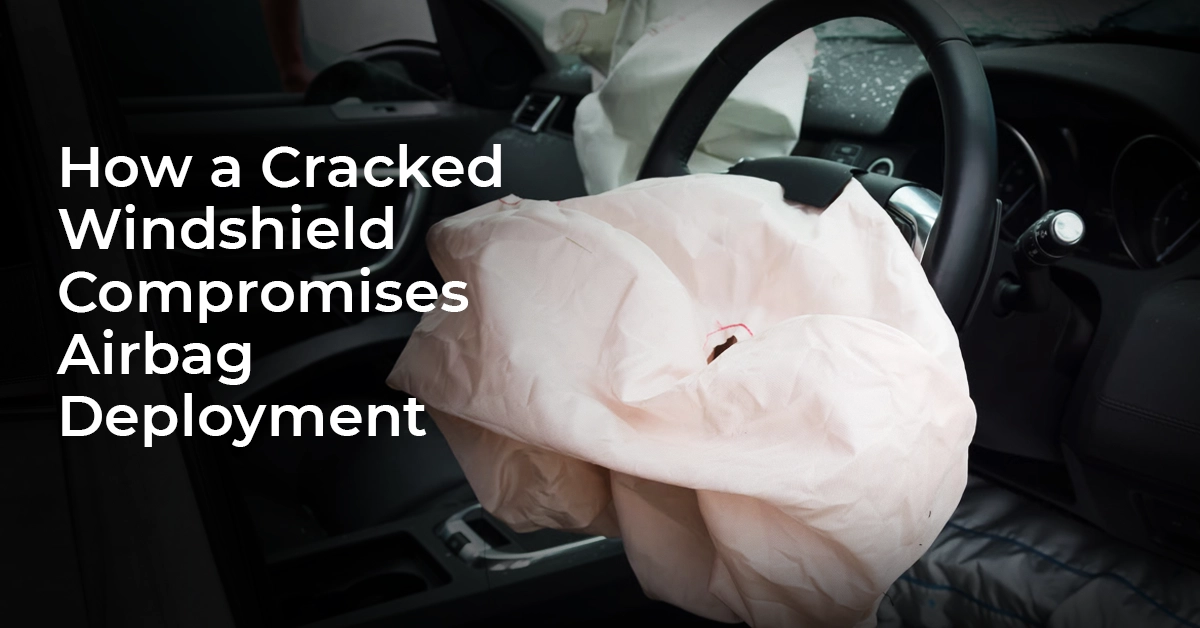
And here’s the part that catches people off guard: your passenger-side airbag is specifically engineered to bounce off the windshield before it cushions the occupant. If the glass is compromised, the entire deployment sequence can fail.
This article breaks down exactly how a cracked windshield compromises airbag deployment, what the research says, and what you need to do about it, before it’s too late.
The Hidden Safety System You’re Driving With Every Day
Your Windshield Is Engineered as a Structural Safety Component
Modern windshields aren’t the simple panes of glass your grandparents drove behind. Today’s automotive windshields are laminated safety glass, two layers of tempered glass bonded together with a polyvinyl butyral (PVB) interlayer. This lamination is specifically designed to hold the glass together on impact, preventing it from shattering into dangerous shards. Understanding what makes an OEM windshield different helps you appreciate why glass quality matters so much.
Your windshield is also bonded directly to the vehicle’s frame using high-strength urethane adhesive. This bond transforms the windshield from a passive barrier into an active, load-bearing structural component. It serves three critical safety functions that most drivers never realize:
1. Structural Rigidity – Preventing Roof Collapse
In a rollover accident, your windshield helps distribute the force of impact across the vehicle’s frame and prevents the roof from caving in on you. Without an intact windshield, the roof has significantly less resistance to collapse putting everyone inside at risk of catastrophic injury.
2. Airbag Backstop – Directing Proper Inflation
This is the critical function we’re going to focus on. The passenger-side airbag deploys upward from the dashboard and uses the windshield as a firm surface to push against, redirecting it toward the occupant at the correct angle and speed. The windshield is, quite literally, the backstop that makes the airbag work as designed.
3. Occupant Retention – Keeping You Inside the Vehicle
During a high-force impact, your windshield helps keep passengers inside the vehicle. If the glass is weakened by cracks or the urethane bond is compromised, occupants face a significantly higher risk of ejection. This is also why maintaining your side window repair is equally important for every piece of auto glass contributes to occupant retention.
How Airbags Actually Deploy And Why the Windshield Is Central to the Process
To understand why a crack matters so much, you need to understand how airbags work in that split-second moment of a collision:
- Detection: Crash sensors detect sudden deceleration and send a signal to the airbag control module.
- Ignition: The module triggers gas inflators that rapidly expand the airbag. This entire process takes just 20 to 30 milliseconds faster than the blink of an eye.
- Deployment: Front airbags inflate at speeds of up to 150–200 mph, relying on precise timing and surface resistance to protect occupants.
For the driver-side airbag, the deployment path is fairly straightforward, the bag inflates from the steering wheel directly toward the driver. But for the passenger-side airbag, the airbag deploys upward from the dashboard, strikes the windshield, and bounces off the glass surface to reach the passenger at the correct angle. Without a solid windshield, the airbag can deploy outward, downward, or at an angle that completely misses the occupant.
This is true whether you drive a Toyota, a Honda, a Ford, or a Tesla , the physics of airbag deployment remain the same across every vehicle make we service.
What Actually Happens When a Cracked Windshield Meets an Airbag
Now that you understand the mechanics, let’s talk about what goes wrong when that system is compromised. A cracked windshield doesn’t just look bad, it introduces multiple failure modes that can turn a survivable crash into a life-threatening one.
Failure Mode #1: The Windshield Shatters on Impact
Think of a crack in your windshield like a small tear in a trampoline. The material around it is suddenly less capable of absorbing energy or holding weight. That crack has already weakened the lamination layer, the very thing that holds the two panes of glass together.
When an airbag deploys at 150–200 mph against an already-weakened windshield, the force can shatter the glass. The airbag suddenly has nothing to push against. Instead of redirecting toward the passenger, it inflates into empty space or deflects at an unpredictable angle.
Failure Mode #2: The Windshield Ejects from the Frame
Cracks don’t just weaken the glass itself they compromise the urethane bond between the windshield and the vehicle’s frame. Industry research from GlassBYTEs reports that a damaged windshield can lose up to 70% of its bonding strength with the vehicle’s frame.
In a collision, this means the windshield can pop out entirely. The passenger-side airbag deploys into an open hole where glass should be, providing zero protective cushioning for the occupant. This is why choosing a provider that follows AGSC installation standards is critical. Learn how to verify if your windshield is OEM before accepting any replacement.
Failure Mode #3: The Airbag Deploys at the Wrong Angle
Even if the windshield doesn’t fully shatter or eject, a crack changes how force travels through the glass. The airbag may inflate too far forward, sideways, or downward missing the occupant’s head and torso where protection is needed most.
Failure Mode #4: Drastically Reduced Protection Efficiency
Even when the airbag partially deploys in the right direction, a compromised windshield means it can’t cushion with the correct speed, angle, or resistance. The AAA Foundation for Traffic Safety reports that an improperly supported airbag can reduce protection efficiency by up to 40% in high-impact collisions.
Forty percent. That’s nearly half of the airbag’s life-saving capability gone because of a crack that seemed too small to worry about.
Small Crack, Big Risk – Why Waiting Makes Everything Worse
If you’re thinking, “It’s just a small chip, I’ll deal with it later,” here’s what you need to know: cracks don’t stay small.
Temperature fluctuations cause glass to expand and contract. In Arizona’s extreme summer heat (115°F+), a chip can spider-web across your entire windshield in hours. If you’re in Phoenix, Mesa, or Scottsdale, you know how quickly the desert heat punishes damaged glass.
In Colorado’s freeze-thaw cycles, moisture seeps into a chip overnight, freezes, expands, and drives the crack deeper. Drivers in Denver and Colorado Springs face this risk throughout the winter and shoulder seasons.
Florida’s humidity accelerates adhesive degradation around the damage. Whether you’re in Miami, Tampa, Orlando, or Jacksonville, that tropical moisture is working against you every day.
And South Carolina’s temperature swings between seasons push existing damage to its breaking point. From Charleston to Greenville to Columbia, we see the same pattern drivers wait, and the crack grows.
Road vibrations, potholes, and even slamming your car door can propagate a crack. What started as a quarter-sized chip this morning could be a 12-inch crack by tomorrow. If you’re dealing with sudden or severe damage, our emergency auto glass repair service is available to get you safe fast.
Legal and Insurance Realities You Should Know
Legal exposure: In most states, including Arizona, Florida, South Carolina, and Colorado, driving with windshield damage that obstructs your view or creates a safety hazard can result in traffic citations and potential liability in an accident.
Insurance coverage: Most comprehensive auto insurance policies cover windshield repair or replacement with little or no deductible. Wondering about windshield replacement cost? In many cases, there’s no out-of-pocket cost when going through insurance. We handle the paperwork for you.
The bottom line: there’s rarely a financial reason to delay, and there’s always a safety reason not to.
OEM Glass vs. Aftermarket – Why Replacement Quality Matters for Airbag Safety
OEM (Original Equipment Manufacturer) glass is built to the exact specifications of your vehicle’s original windshield, same thickness, curvature, optical clarity, and structural strength. For a deeper understanding, read our guide on what an OEM windshield is and why it matters. This ensures the windshield performs precisely as the vehicle’s safety engineers intended, including its role as the airbag backstop.
Aftermarket glass may not meet the same structural tolerances. Variations in thickness, curvature, or material quality can affect how the glass responds under the force of airbag deployment.
This is especially important for vehicles with Advanced Driver Assistance Systems. After any windshield replacement, proper ADAS calibration is essential to ensure your lane-departure alerts, collision warnings, and other safety systems function correctly. NuVision includes this service for all applicable vehicles whether you drive a Chevrolet, a Toyota Camry, a Honda CR-V, or any other ADAS-equipped vehicle.
When to Repair vs. When to Replace
Not every chip means a full replacement. Here’s a practical guide:
Repair may be sufficient if:
- The chip is smaller than a quarter
- The crack is shorter than 3 inches
- Damage is not in the driver’s direct line of sight
- Damage doesn’t penetrate both layers of glass
If your damage falls within these parameters, our windshield repair service can restore structural integrity without a full replacement.
Full replacement is necessary if:
- The crack is longer than 6 inches or actively spreading
- Damage is at the edge of the windshield (compromises the urethane bond)
- Multiple chips or cracks are present
- The inner lamination layer is compromised
- You can feel the crack from the inside surface of the glass
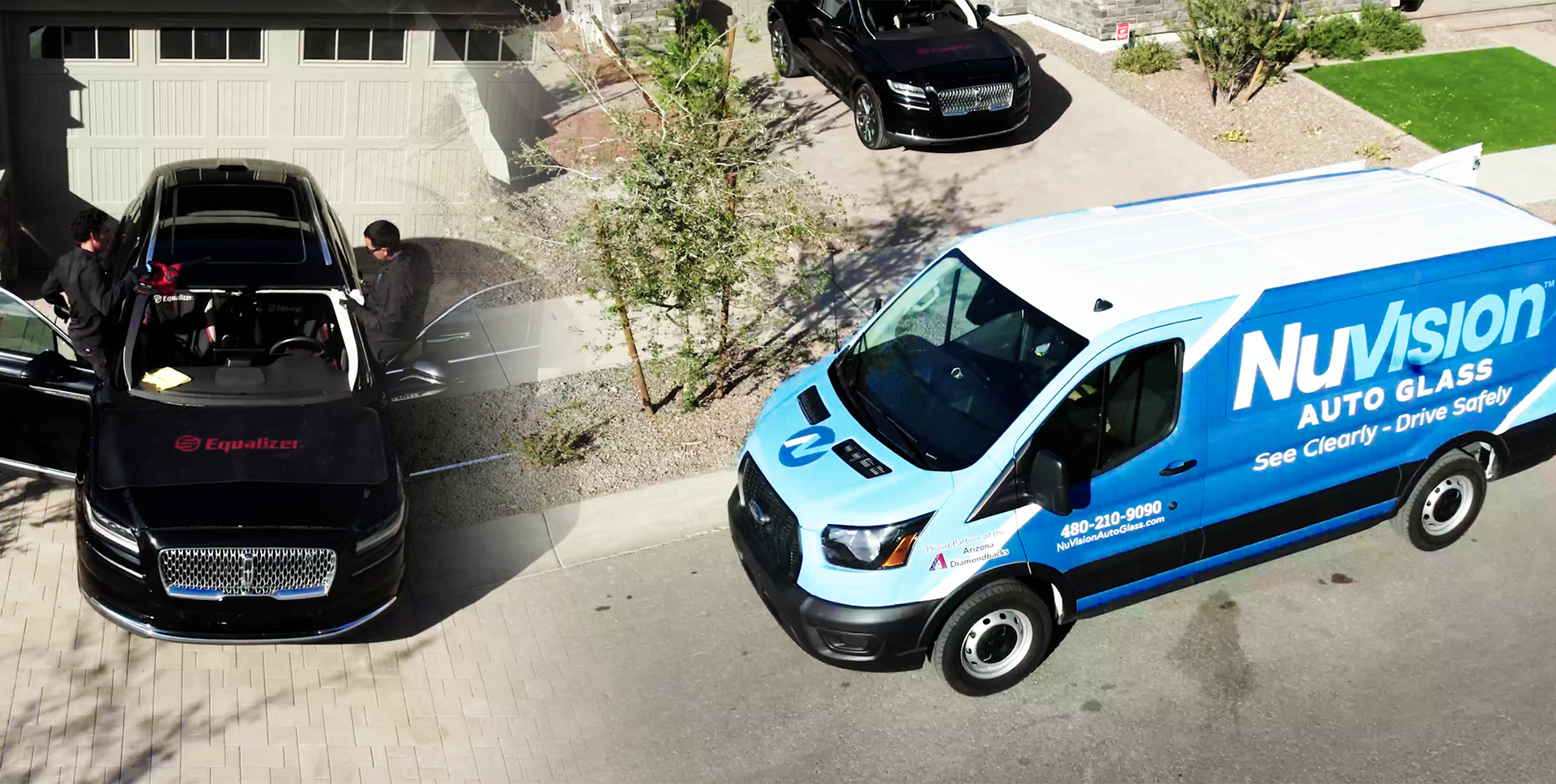
When in doubt, get a professional assessment. Our mobile auto glass repair technicians can evaluate your windshield on-site at your home or office, no trip to a shop required.
Don’t Wait for a Crash to Find Out Your Windshield Was the Weak Link
Let’s bring it all together. Your windshield provides up to 45% of your vehicle’s structural strength in a frontal crash and 60% in a rollover. Your passenger-side airbag is specifically designed to use the windshield as a backstop for proper deployment. A cracked windshield can shatter, eject, or flex under the force of deployment causing the airbag to miss entirely or lose up to 40% of its protection efficiency.
The crack you’re ignoring today could be the reason your airbag doesn’t do its job tomorrow. And in the climates NuVision serves from Arizona’s scorching heat to Colorado’s freeze-thaw, from Florida’s humidity to South Carolina’s temperature swings that crack is only getting worse.
The good news? Fixing it is fast, often free through insurance, and we come to you.
Schedule Your Free Mobile Assessment
NuVision Auto Glass brings OEM-quality windshield replacement directly to your home or office. Certified technicians. AGSC-compliant installation. We service all vehicle makes and models.
Because when it comes to your airbags, there’s no room for “good enough.”
Get a Free Quote in 60 Seconds →
Frequently Asked Questions
Can a cracked windshield cause my airbag to fail?
Yes. The passenger-side airbag uses the windshield as a backstop during deployment. A cracked windshield may shatter or detach under the force of inflation, causing the airbag to deploy outward or at the wrong angle. Research from the AAA Foundation indicates this can reduce airbag protection efficiency by up to 40%. If you suspect damage, schedule a free auto glass assessment with NuVision.
Does a small chip affect airbag deployment?
Even a small chip weakens the windshield’s lamination layer and can spread rapidly due to temperature changes and road vibrations. While a tiny chip alone may not cause immediate airbag failure, it compromises the structural integrity that the airbag system depends on. Our windshield repair service can address chips before they become cracks.
Is it legal to drive with a cracked windshield?
Laws vary by state, but most states including Arizona, Florida, South Carolina, and Colorado, prohibit driving with windshield damage that obstructs the driver’s view or creates a safety hazard. Violations can result in traffic citations. NuVision offers same-day service in locations like Phoenix, Miami, Charleston, and Denver.
Does insurance cover windshield replacement?
Most comprehensive auto insurance policies cover windshield repair or replacement with little or no deductible. Check out our detailed breakdown of windshield replacement costs to understand your options. NuVision handles all insurance paperwork for you.
How long does a mobile windshield replacement take?
A typical mobile windshield replacement takes about 60–90 minutes. NuVision’s certified technicians come to your location and handle the full replacement on-site using OEM-quality glass. If your vehicle requires ADAS calibration, we perform that on-site as well.