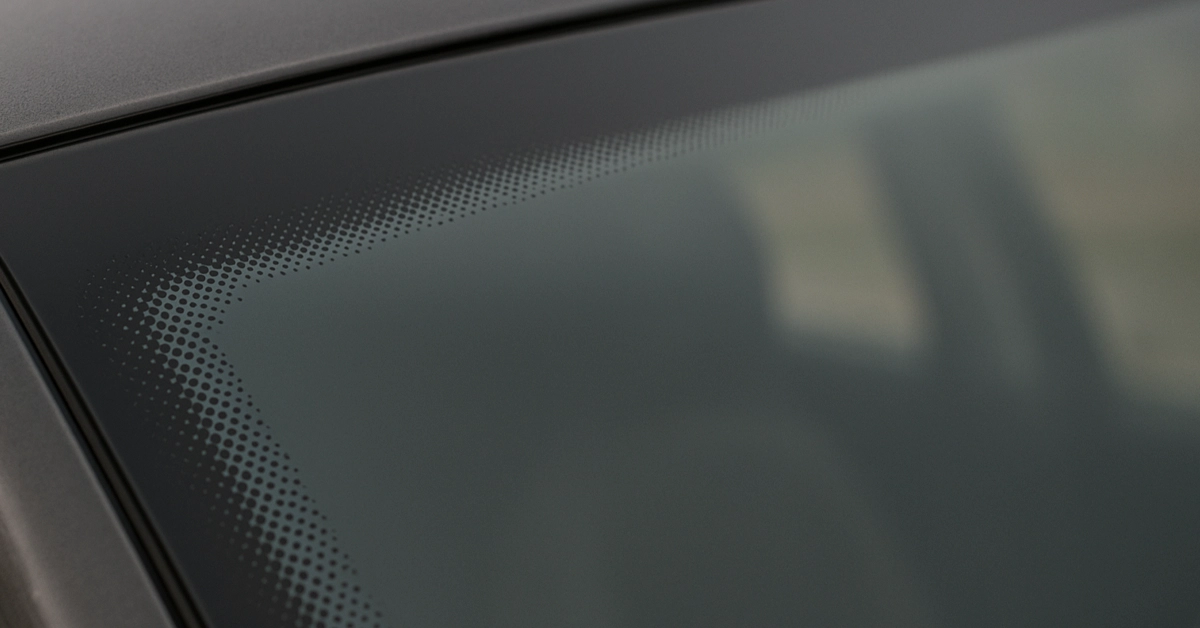

You’re stuck in traffic, or cleaning the glass on a Saturday morning, and you notice the black dots on your windshield — that solid black border around the edge, and just inside it, a band of tiny dots fading inward until they disappear. You’ve probably seen them a thousand times without thinking about it.
They’re not dirt. Not damage. Not a tint film someone applied. They have a name and a job.
At NuVision Auto Glass, we’ve installed windshields for over 200,000 drivers across Arizona, Florida, and South Carolina. The frit band is one of the first things our certified technicians inspect before and after every replacement. Here’s everything you need to know about it.
The black band is called the frit — a ceramic enamel baked permanently into the glass during manufacturing. The dot pattern inside it is the dot matrix, also called a halftone pattern. Together they protect your windshield adhesive from UV damage, improve the bond to the vehicle frame, and prevent optical distortion near the glass edge. They’re on every windshield, and they can’t be removed.
What Is The Black Band Around My Windshield Called?
The black border is called the frit band or ceramic frit. It’s a ceramic-based enamel paint applied to the glass surface and then baked at high temperature during the manufacturing process. Once fired, it’s fused into the glass — not on top of it.
This matters because it means the frit can’t peel, scratch off, or wear away over time. It’s not a film, it’s not a tint applied afterward, and it’s not a sticker. It’s part of the glass itself. The same applies to OEM-grade replacement windshields, which are manufactured to match factory specifications including the frit pattern. See our overview of types of windshields for how this fits into the broader glass specification.
The frit appears in two forms:
- The frit band: the solid opaque black border that runs around the entire windshield perimeter.
- The dot matrix: the halftone pattern just inside the solid band, where the dots start dense and gradually fade to nothing as you move toward the clear glass.
What Do The Black Dots On A Windshield Actually Do?
The frit isn’t decorative. Every element of it serves a purpose. There are four.
Protects The Urethane Adhesive From UV Damage
The windshield is bonded to the vehicle frame with structural urethane adhesive. That bond is what makes the windshield a load-bearing safety component rather than just a piece of glass in a frame — and urethane degrades when exposed to UV radiation.
The solid frit band sits directly over the adhesive bead, blocking sunlight from reaching it. Without that UV shield, the adhesive breaks down faster. A weakened adhesive bond means a windshield that’s less structurally secure in a collision and more likely to separate from the frame under crash loads.
Gives The Adhesive Something To Bond To
Smooth glass doesn’t bond as well as textured glass. The ceramic frit surface is microscopically rougher than the surrounding clear glass, giving urethane adhesive more surface area to grip. That mechanical advantage produces a stronger, longer-lasting seal between the windshield and the frame — which directly affects structural integrity over the vehicle’s lifetime.
This is one reason why OEM-grade glass with a properly baked-in frit consistently outperforms low-cost alternatives. The full comparison is in our OEM vs. aftermarket windshield guide.
Hides The Adhesive And Trim For A Clean Finish
Without the frit border, you’d see the urethane bead, the pinch weld, and the structural edge of the frame around the windshield. The opaque black band conceals all of it, giving the glass a clean, factory-finished appearance that matches interior trim lines. It’s the one benefit that’s purely aesthetic, layered on top of two structural ones.
The Dot Matrix Distributes Heat During Manufacturing
This is the function almost no other resource explains clearly, and it’s worth understanding.
During the tempering and baking process, the solid black frit band absorbs heat much faster than the surrounding clear glass. If the transition between black and clear were a hard line, the uneven heating would create a sharp thermal gradient at that border — and uneven temperatures in glass produce optical distortion. You’d see a visible warping or lens effect near the top of the windshield, particularly around the rearview mirror mount.
The dot matrix solves this. By gradually transitioning from dense dots to sparse dots to clear glass, the frit creates a smooth temperature gradient rather than a sudden one. The glass heats more evenly across that zone, and the result is a distortion-free windshield. This is also why the laminated glass construction of a windshield maintains its optical clarity under real-world thermal stress.
| Frit Function | Which Part Does It | What Happens Without It |
|---|---|---|
| UV protection for urethane adhesive | Solid frit band | Adhesive degrades faster; bond weakens over time |
| Improved adhesive bonding surface | Ceramic texture of frit | Weaker bond; higher risk of separation under load |
| Conceals adhesive bead and pinch weld | Solid frit band | Visible urethane and frame edge around glass |
| Even heat distribution during manufacturing | Dot matrix (halftone gradient) | Optical distortion / lens effect near windshield border |
Why Are The Dots Arranged In That Specific Pattern?
The gradient — dense at the edge, fading inward — is called a halftone pattern, and it’s doing two things simultaneously.
First, it solves the thermal gradient problem described above. The gradual transition eases how heat spreads across the glass during the baking process, preventing the temperature differential that would cause optical distortion at the frit border.
Second, it softens the visual transition between the solid black band and the clear glass. A hard edge between opaque and transparent would look jarring. The dot fade makes it gradual, which is why you generally don’t notice exactly where the frit ends unless you’re looking for it.
Higher-end and luxury vehicle windshields sometimes use finer or denser dot patterns, but the physics behind the design is the same across every vehicle category.
Is The Black Frit A Sign Of A Defect Or Damage?
No. The frit is on every modern factory windshield and every OEM-grade replacement. If you’re seeing it for the first time after a replacement, it’s not a sign that something went wrong — it’s confirmation that the correct glass was installed.
The things that would actually indicate a problem are different:
- Uneven or missing frit sections: If the frit band is inconsistent around the perimeter after a replacement, the wrong glass was installed or the glass wasn’t seated correctly.
- Bubbling or visible separation: Bubbling in the frit zone or a gap between the glass and the frit line indicates the adhesive is failing or was applied incorrectly.
- Urethane visible outside the frit line: The adhesive bead should be hidden behind the frit border, not visible outside of it. If it is, the install wasn’t done to standard.
Any of these after a replacement are worth a call back to the shop. For a full list of what a quality install should look like, see the signs of a bad windshield replacement guide.
Can The Black Dots Be Removed?
No. The frit is fused into the glass at high temperature during manufacturing — it’s not a surface treatment. Scratching it, applying chemicals, or using heat to try to remove it will damage the glass itself and void any warranty on the windshield.
If you’re thinking about this because of glare or privacy concerns at the top of the windshield, the answer isn’t removing the frit. Many vehicles have a blue or bronze shading band at the very top of the windshield. That band sits between the two layers of laminated glass and is a separate feature from the frit. It reduces glare from direct sunlight and can be specified when ordering a replacement. It’s not the same as the frit, and it doesn’t serve the same structural functions.
Any attempt to alter the frit — chemical treatment, abrasive polishing, or heat application — damages the glass at the structural bond zone. This voids workmanship warranties and typically results in a replacement, not a repair. If the frit looks different after your replacement, contact the installing shop before touching it.
What The Frit Tells You About Windshield Replacement Quality
The frit area is where poor installations show themselves earliest. A two-minute check around the frit line after any replacement tells you more about install quality than most other visible inspections.
After any replacement, check for these three things:
- Is the urethane bead hidden behind the frit? It should be. If adhesive is visible outside the black border, the seal isn’t positioned correctly.
- Is the glass seated evenly around the full perimeter? Any point where the gap between the glass and the vehicle body looks wider or uneven is worth flagging.
- Any ripples, gaps, or exposed adhesive at the frit line? All three indicate placement or bonding issues that can affect seal integrity over time.
If you spot any of these after a NuVision install, we come back out. That’s the 100% Lifetime Workmanship Warranty — not a conditional offer, not a 30-day window. NuVision uses OEM-grade glass with factory-matching frit patterns on every job. The frit quality you see is a direct reflection of the glass specification used.
Does The Frit Affect ADAS Calibration?
Yes — and this is a connection that matters if your vehicle has any modern driver-assistance features.
The forward-facing ADAS camera that powers lane departure warning, automatic emergency braking, and adaptive cruise control mounts directly behind the rearview mirror. That mount sits in the dot matrix zone of the frit. The halftone pattern in that area is specifically designed so the camera’s field of view looks through the clear glass — and the density of the dots is calibrated to avoid obstructing the camera’s sightline.
Aftermarket glass with a slightly different frit pattern, or glass that doesn’t include the correct camera bracket mounting point, can introduce calibration problems after installation. This is one reason the OEM vs. aftermarket decision matters more on camera-equipped vehicles than on older ones.
After any windshield replacement on a post-2015 vehicle, ADAS recalibration is required to confirm the camera is realigned to factory specification. NuVision handles this at the same appointment — no second trip, no separate booking.
Heat, Sun, And Your Windshield: Why The Frit Matters More In Hot Climates
In mild climates, the frit’s UV protection function is a long-term benefit you’d notice only over many years. In Arizona and Florida, it’s doing active work every day the vehicle sits in the sun.
Arizona. Phoenix regularly hits 110F from May through September. Interior vehicle temperatures in direct sun reach 140-160F. That level of sustained UV exposure and heat accelerates urethane adhesive degradation faster than in almost any other climate. The frit band is the primary line of defense between the sun and the bond holding your windshield in the frame. Using OEM-grade glass with a correctly baked-in frit matters here in a way it simply doesn’t in a cooler climate.
Florida. Florida’s combination of UV intensity, coastal humidity, and long sun seasons creates a similar stress profile. The adhesive bond that holds a windshield in a crash is the same bond being tested by years of Florida sun and salt air. OEM-grade glass with the correct frit specification is the right choice here — not the cheapest aftermarket option available.
South Carolina. Coastal humidity combined with UV load along the South Carolina coast stresses the adhesive bond differently than desert heat but steadily nonetheless. Our certified technicians operate statewide across all three states with 100% mobile service — the install happens wherever your vehicle is parked.
When To Worry About The Frit Band
The frit itself won’t cause problems. But it’s a reliable area for spotting problems that relate to the glass and the bond around it. Call us or schedule an inspection if you notice:
- Cracks starting in the frit zone: The frit area is a common stress concentration point. Edge cracks that begin there often spread inward and can compromise the structural bond.
- Visible separation between the glass and the pinch weld: Any gap visible through the frit line means the adhesive bond has failed or is failing at that point.
- Water leaks along the frit edge: Moisture getting in through the frit perimeter indicates a seal failure. This won’t correct itself.
- Wind noise that appeared after a replacement: A whistle or hiss from a specific corner means there’s an air gap at the frit line — the same gap water will eventually use.
NuVision offers same-day mobile windshield replacement appointments. If you’re seeing any of these signs, don’t wait — seal failures get more expensive the longer they go unaddressed.
Frequently Asked Questions
What is the black band around my windshield called?
It’s called the frit — a ceramic-based enamel paint baked into the glass during manufacturing. It’s not a sticker, a tint, or a coating applied after the fact. It’s fused into the glass itself and won’t peel or wear away. It serves three functions: UV protection for the adhesive, improved bonding between the glass and the urethane, and concealment of the adhesive bead and vehicle frame trim.
Why does my windshield have black dots?
The dots form the halftone transition zone of the frit band. During the glass tempering process, the solid black frit heats up significantly faster than the clear glass around it. Without a gradual transition, that temperature difference would cause optical distortion at the border. The dot matrix — dense at the edge and fading inward — eases the thermal gradient across the glass surface and prevents the lens-effect warping that would otherwise appear near the windshield’s edge.
Can the black dots on a windshield be removed?
No. The frit is fused into the glass at high temperature during manufacturing. Attempting to remove it with chemicals, abrasives, or heat will damage the glass itself and void any warranty. If you’re concerned about glare at the top of the windshield, a tinted sunshade band — a separate feature sitting between the glass layers — is the appropriate solution, not frit removal.
Are the black dots on a windshield a defect?
No. They’re a deliberate feature of every modern factory windshield and every OEM-grade replacement. Seeing them after a replacement confirms the correct glass specification was installed. What would indicate a defect is uneven frit, missing sections, bubbling, or urethane adhesive visible outside the frit line after a replacement.
Do all windshields have the frit band?
Yes. All factory windshields and OEM-grade replacement windshields include a frit band. The dot pattern’s density and width can vary slightly between manufacturers and vehicle models, but the frit is a universal feature of modern automotive glass.
Does the frit affect my ADAS camera?
Indirectly, yes. The ADAS camera mounts behind the rearview mirror, in the dot matrix zone of the frit. OEM-grade glass is designed with the correct frit pattern and camera bracket position so the camera’s field of view is unobstructed. Aftermarket glass with a different frit pattern or missing camera mounting point can cause calibration issues. This is why NuVision uses OEM-grade glass and performs ADAS calibration as part of every applicable replacement.
Ready To Book? We Come To You.
If you’ve noticed something in the frit zone that doesn’t look right, or you’re overdue for a windshield replacement and want it done correctly the first time, NuVision handles it all — OEM-grade glass, ADAS recalibration, insurance filing, and a 100% Lifetime Workmanship Warranty. Our certified technicians come to your location across Arizona, Florida, and South Carolina. Same-day appointments available.
Arizona drivers: NuVision handles your insurance claim directly. Qualifying replacements include up to $375 cash back plus a Rodizio Grill dinner voucher.
Florida drivers: Comprehensive insurance typically covers windshield replacement at zero out-of-pocket cost. We handle the claim — you confirm the appointment.
South Carolina drivers: Comprehensive insurance typically covers windshield replacement. Every install is backed by our Lifetime Workmanship Warranty.
Book your free quote at nuvisionautoglass.com/get-a-quote
Find us on Google Maps:
NuVision Auto Glass — Arizona
NuVision Auto Glass — Florida