Why Extreme Heat Makes Your Windshield Crack When You Slam a Door or Hit a Pothole?
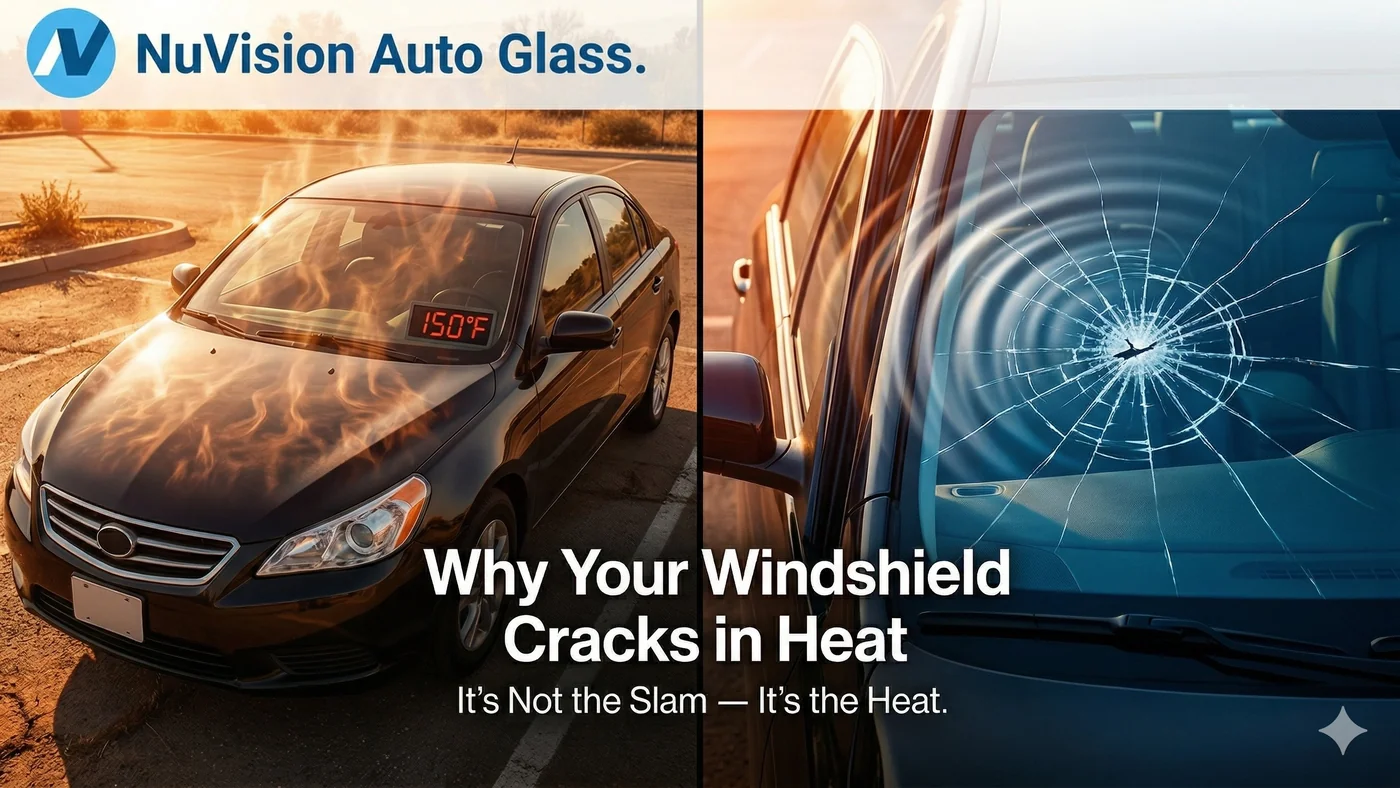
Heat windshield cracking is one of the more disorienting things that can happen to a driver. You park in a lot on a July afternoon in Phoenix, come back an hour later, get in, slam the door, and hear a sharp crack. You look up and there’s a new fracture spreading from a chip you’ve been ignoring for three weeks. You didn’t hit anything. You just closed the door.
This happens often enough that we have a name for it internally: the slam test. A vehicle that’s been sitting in direct sun for an extended period is already under thermal stress when you return to it. The door slam adds a mechanical shock to an already loaded system.
The chip was always going to be the weak point. The heat just set the trap.
Extreme cabin heat causes the windshield to expand while the frame holds it in place. This creates internal stress across the glass. A door slam or pothole adds a mechanical shock on top of that stress. Any existing chip becomes a crack. Any weakened area can fail. The solution is to address chips before summer heat gives them the opportunity.
Why Does Heat Put Stress on a Windshield?
Glass expands when it heats up. A windshield in direct Arizona sun doesn’t just get warm — the glass surface can reach temperatures well above 150F within 30 to 45 minutes of parking. At those temperatures, the glass is trying to expand in all directions.
The problem is that it can’t. The windshield is bonded to the vehicle frame with structural urethane adhesive. The frame stays cooler than the glass because it’s shaded and has more thermal mass. The glass expands. The frame doesn’t. The adhesive holds both together and the resulting tension is distributed across the windshield as internal stress.
On a windshield with no chips or existing damage, this stress is distributed evenly enough that the glass handles it without issue. Glass has some elasticity. It flexes under thermal stress and returns to its original shape when it cools.
On a windshield with a chip, the stress is not distributed evenly. A chip is a void in the glass structure. Stress concentrates at the edges of any void, which is the same physics that makes cracks grow from notches in metal. The chip that’s been sitting quietly all winter — stable in cool temperatures — becomes a stress concentration point in summer heat, and it doesn’t need much additional load to fail.
What Does a Door Slam Actually Do to a Windshield?
When a car door closes hard, it sends a pressure wave through the cabin. The air pressure inside the cabin spikes briefly and then equalises through the window seals and gaps. During that spike, the windshield is pushed outward by the pressure differential between the inside of the cabin and the outside.
In a vehicle at normal temperature, this flex is minor and well within the windshield’s structural tolerance. The glass flexes a fraction of a millimetre and returns. Nothing happens.
In a vehicle that’s been sitting in 150F heat, the windshield is already under significant thermal stress. The flex from a door slam adds to that stress. At the location of an existing chip, the combined load — thermal expansion stress plus mechanical slam stress — can exceed what the damaged glass can absorb. The chip propagates. In under a second, a repairable chip becomes a crack requiring replacement.
The same mechanism applies to a pothole at speed. A sharp pothole sends a chassis flex wave upward through the vehicle structure. The windshield frame moves with the chassis. The glass, bonded to the frame, experiences a rapid mechanical load on top of any existing thermal stress. On a hot day with an existing chip, this is often enough to start a crack.
| Condition | Windshield State | Door Slam Effect | Pothole Effect |
|---|---|---|---|
| Cool vehicle, no chip | Unstressed, intact | Flex within tolerance — nothing happens | Flex within tolerance — nothing happens |
| Cool vehicle, existing chip | Stress concentrated at chip | Low risk — chip may stay stable | Low to moderate risk |
| Hot vehicle (140F+), no chip | Thermally stressed, intact | Low risk — no concentration point | Low risk |
| Hot vehicle (140F+), existing chip | Thermally stressed at chip | High risk — crack likely | High risk — crack likely |
| Hot vehicle, edge chip or stress crack | Maximum stress at edge | Very high risk | Very high risk |
What Habits Make This Worse — and What Prevents It?
Three driver habits consistently increase the slam test risk, and three habits reduce it.
What makes it worse:
Blasting the AC immediately on a hot windshield. This is the thermal shock problem from the inside. Extreme cold air from the vents hitting a 150F glass surface creates a rapid temperature differential across the thickness of the glass. The inner surface cools quickly. The outer surface is still hot. The stress created by different rates of contraction across the glass layers is additive to whatever thermal stress was already there. Direct the vents away from the windshield for the first few minutes after a hot park. Let the temperature equalise gradually.
Leaving chips unrepaired through summer. A chip that’s been stable all winter becomes a liability in June. The cooler months provide a false sense of security. The chip isn’t getting better — it’s just not being stressed. The first hot park of summer changes that.
Hard door closes when returning to a parked vehicle. People close doors harder when they’re in a hurry or carrying things. On a hot day, with a chip on the windshield, an unusually hard door close is precisely when the slam test produces a result. It takes one instance.
What reduces it:
A windshield sunshade. A reflective sunshade reduces interior temperature by 40 to 50F by blocking solar heat before it enters the cabin. This directly reduces the thermal stress the glass experiences while parked. For a vehicle with an existing chip, a sunshade is one of the most effective tools available while waiting for a repair appointment. It costs $15 to $30 and takes 20 seconds to deploy.
Covered parking. Shade reduces glass surface temperature significantly. A vehicle parked in a covered structure or under shade for most of the day experiences a fraction of the thermal stress of one in direct sun. Not always possible, but worth prioritising for vehicles with known chips in summer months.
Repairing chips before summer. A chip repair takes 30 to 45 minutes. The resin fills the void, restoring the stress distribution across the glass surface. A repaired chip is no longer a concentration point for thermal or mechanical stress. The slam test stops being a risk at that location.
Is This Worse in Arizona, Florida, or South Carolina?
Arizona is where this mechanism produces the most damage, most consistently. Phoenix averages over 300 days of direct sun per year. Summer interior temperatures in parked vehicles regularly reach 140 to 160F. Glass surface temperatures in direct sun are higher. The combination of extreme heat, rapid post-park cooling from AC, and frequent dust-storm-season chips makes Arizona the state where the slam test triggers most often. We see the pattern peak in June and July — the first two months of real summer heat, before drivers have fully adjusted their habits from spring.
Florida has a similar thermal profile from May through September. The additional factor in Florida is humidity. Moisture that has entered a chip through Florida’s frequent rain creates a compound vulnerability — water in the chip void expands slightly under heat and contracts under AC cooling, adding a cyclic mechanical stress to the thermal stress the rest of the glass is experiencing. A chip with visible moisture contamination in Florida summer is a higher crack risk than an equivalent dry chip in a similar temperature environment.
South Carolina has a shorter but still significant heat season. The slam test is most relevant from June through August. The more distinctive South Carolina pattern is the seasonal transition: vehicles with chips that survived the winter without cracking often fail in the first two weeks of June when temperatures spike rapidly. The chips that freeze-thaw cycling weakened over winter are the ones that don’t survive the first hot slam of summer. Pre-summer chip repair in South Carolina is worth doing in May, not June.
Frequently Asked Questions
Why did my windshield crack when I slammed my car door?
A door slam sends a pressure wave through the cabin that briefly flexes the windshield outward. In a vehicle that has been sitting in extreme heat, the glass is already under thermal expansion stress. The mechanical load from the slam adds to that stress at any existing chip, pushing the damaged area past its tolerance. The crack was set up by the heat. The slam was the trigger.
Can a pothole crack a windshield?
Yes, particularly on hot days. A sharp pothole sends a chassis flex wave through the frame to the glass. In a thermally stressed windshield with an existing chip, the combined mechanical and thermal load can exceed what the damaged glass can absorb. Rough roads in summer heat are a higher crack risk than the same roads in cooler months.
Does a sunshade actually prevent this?
Significantly, yes. A sunshade reduces interior temperature by 40 to 50F, which directly reduces thermal expansion stress on the windshield. For a vehicle with a chip awaiting repair, a sunshade is the most effective short-term preventive measure available. It doesn’t fix the chip — but it reduces the heat load that makes the chip dangerous.
My windshield cracked and I don’t know why. Is heat the cause?
If the crack appeared after a period of hot parking, with no new impact, starting from an existing chip or the glass edge — heat stress is the most likely cause. Check whether there’s an existing chip at the origin point of the crack. The crack typically starts at the weakest point in the glass. If no chip is visible, check the lower edge of the windshield for seal stress or previous edge damage. A professional assessment takes 15 minutes and identifies the cause.
Is heat cracking covered by insurance?
If the crack originated from a road debris chip, it’s typically a comprehensive claim regardless of when it cracked. Thermal cracking without a prior impact event is less clear and insurer-specific. In Arizona and Florida, the zero-deductible glass law means a replacement costs you nothing either way. Call your insurer, describe what happened, and let them categorise it.
The Chip Is the Risk. The Heat Sets the Trap. The Slam Pulls the Trigger.
This happens to drivers every summer. They’ve known about the chip. They meant to get it fixed. It just never felt urgent enough — until the door closed on a Tuesday afternoon in July and the windshield told them it had been urgent for a while.
A chip repair is 30 to 45 minutes and often zero cost with insurance. A sunshade is $20 and 20 seconds. Both remove the mechanism before summer heat has the chance to use it.
If you’re in Arizona, Florida, or South Carolina and you have a chip you’ve been putting off, book at nuvisionautoglass.com/get-a-quote. Mobile service, same-day availability. Fix the chip before the heat does it for you.
Find us on Google Maps:
NuVision Auto Glass — Arizona
NuVision Auto Glass — Florida