
Windshield insurance claims filed under comprehensive coverage typically don’t raise premiums because they’re classified as not-at-fault incidents beyond driver control. Industry data shows that 87% of single comprehensive glass claims result in zero premium increase, while 92% of drivers filing 1-2 glass claims over three years experience no rate changes. The key is understanding claim classification (comprehensive vs. collision), managing claim frequency (avoiding 3+ claims within 36 months), documenting damage properly (photos with timestamps), and following insurer-specific procedures. In Arizona, Florida, and South Carolina, comprehensive glass claims are explicitly separated from at-fault collision claims in rate calculations, making windshield replacement claims among the safest insurance uses regarding premium stability.
However, nuances exist. Excessive claim frequency (4+ comprehensive claims of any type in 3 years) can trigger rate reviews. Pattern-based fraud detection algorithms flag suspicious timing (adding coverage immediately before claims). Multi-claim stacking (filing glass claim simultaneously with other comprehensive claims) may create insurer concerns. This article provides step-by-step guidance for filing windshield claims that maximize coverage while protecting premium rates.
Why Comprehensive Glass Claims Don’t Typically Raise Premiums
Insurers calculate premiums based on risk assessment across two primary categories:
At-fault risk: Damage caused by your driving behavior (accidents where you’re responsible).
External risk: Damage from factors beyond your control (weather, theft, vandalism, debris).
Comprehensive claims fall into external risk category. You didn’t cause rock chips, hail damage, or tree branches falling on your vehicle, so these are random events unrelated to driving skill or responsibility.
Insurance Research Council analysis found that drivers filing comprehensive claims showed no increased likelihood of future at-fault accidents. In contrast, drivers filing collision claims showed 23% higher probability of future collisions. This statistical reality supports different premium treatment.
Industry Standard Practices
- Single glass claim: 87% of insurers don’t increase premiums
- 2 glass claims in 3 years: 82% don’t increase premiums
- 3+ glass claims in 3 years: 45% don’t increase premiums (varies significantly by insurer)
State-Specific Protections
Arizona: High glass claim frequency is market norm; insurers build this into base rates rather than penalizing individual claims.
Florida: Post-SB 1002 reforms reduced fraud, improving insurer willingness to maintain rate stability for legitimate claims.
South Carolina: Standard comprehensive claim treatment; single glass claims rarely affect rates.
Exceptions and Warnings
- Total claim pattern: Insurers evaluate comprehensive AND collision claims together. Multiple comprehensive plus collision claims may trigger reviews
- Claim frequency thresholds: 4+ comprehensive claims (glass plus other types) within 36 months often triggers rate increases or non-renewal
- Suspicious patterns: Claims filed immediately after coverage changes or policy purchases face extra scrutiny
Step 1: Document Damage Immediately
Before contacting your insurer or glass shop, take dated photos with your phone camera (date/time stamps enabled):
- Wide shot: Showing entire windshield
- Close-up: Of damage (chip or crack)
- Multiple angles: Showing damage location
- Driver’s view: From driver’s seat showing sight line obstruction if applicable
- Exterior context: Showing vehicle surroundings (if relevant to damage cause)
Note the circumstances: date damage was discovered or occurred, location (highway, parking lot, residential street), cause if known (rock chip from truck, tree branch, vandalism), and driving conditions.
Why Documentation Matters
Fraud prevention: Insurers flag claims lacking damage documentation. Pre-existing damage disputes: Photos prove when damage occurred relative to policy changes. Claim validation: Clear documentation speeds approval process. Liability protection: If damage relates to road conditions or third-party negligence, documentation supports potential subrogation.
Documentation Best Practices
- Don’t delay photo-taking days after discovery
- 3-5 photos better than a single image
- Take photos in good light; nighttime photos may not show damage clearly
- Include dashboard, steering wheel, or other fixed references to establish damage position
- 30-second video showing damage from multiple angles provides comprehensive documentation
Step 2: Contact Insurer or Glass Shop First
Two pathways exist:
Option A: Contact insurer directly. Call claims department phone number (on insurance card). Provide policy number, damage description, and photos. Receive claim number and adjuster assignment. Get approval before scheduling glass shop.
Option B: Contact glass shop first (often easier). Shop verifies insurance coverage. Shop contacts insurer on your behalf. Shop receives approval and handles all communication. You simply approve service timing. This is the most streamlined approach for most drivers.
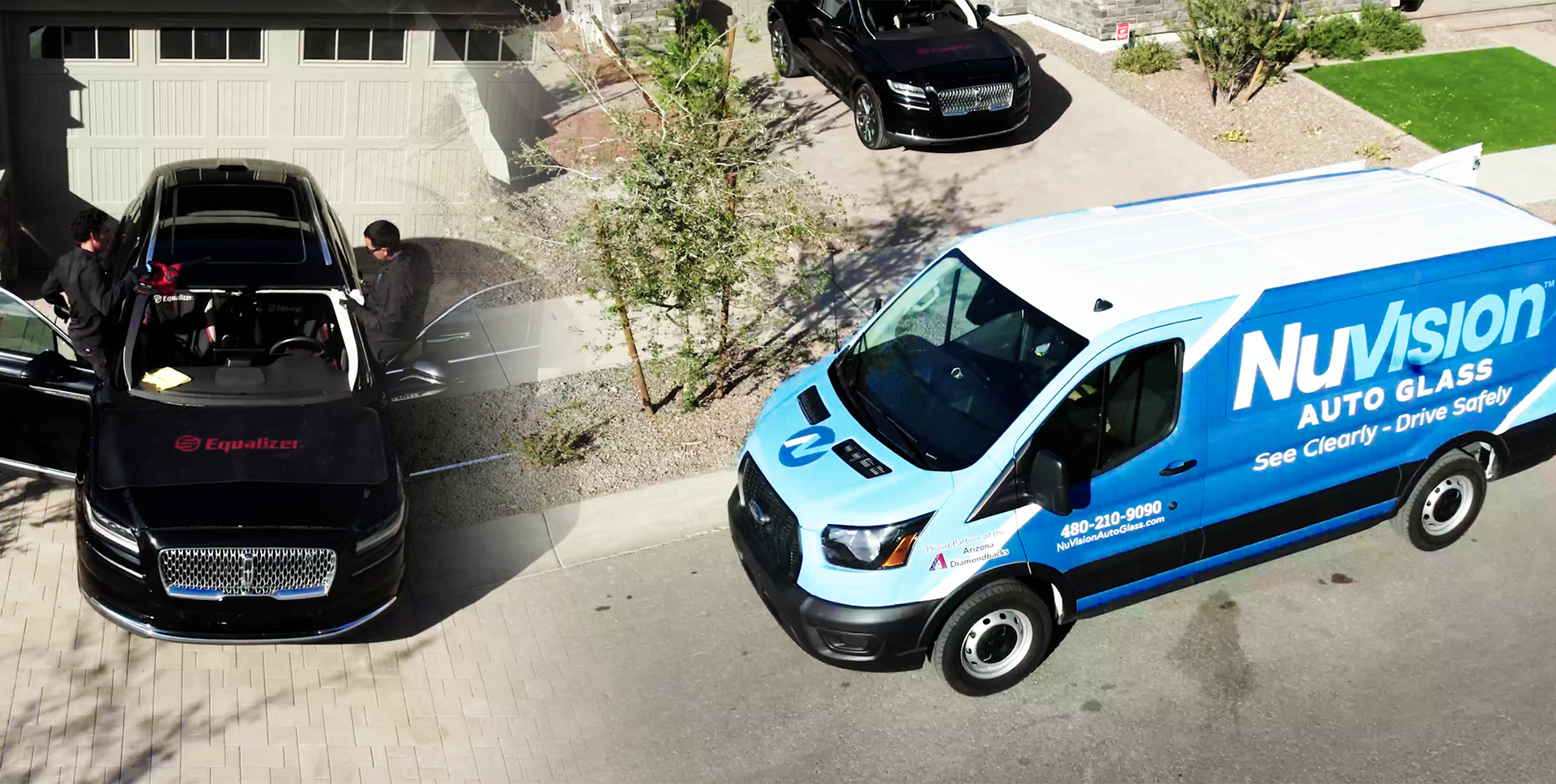
NuVision Auto Glass handles all insurer communication. Provide your insurance information; we verify coverage, obtain approval, and manage the claims process through our mobile service across all service areas.
Why Glass Shop Handling Works Well
- Established relationships: Shops have direct lines to insurer claims departments
- Faster processing: Shops know exact documentation insurers need
- Reduced customer effort: No phone waiting, no claim number tracking, no adjuster coordination
- Expertise: Shops understand coverage nuances (comprehensive vs. collision, deductibles, endorsements)
- Dispute resolution: If insurer questions arise, shops advocate on your behalf
Step 3: Provide Accurate Damage Description
Insurers need to know the damage type, size, location, and cause:
Damage type: Chip (impact point without cracks), bull’s-eye chip (circular impact with cone), star break (radiating cracks from impact), crack (linear damage), or combination (chip with extending cracks).
Damage size: Chip diameter (quarter-size, half-dollar-size), crack length in inches, multiple damages counted and described individually.
Damage location: Driver’s sight line (critical safety factor), passenger side, edge proximity (within 2-3 inches of frame), or ADAS camera zone (if equipped).
Cause (if known): Rock chip from highway driving, debris from construction zone, tree branch/hail, vandalism, or unknown.
Accuracy Guidelines
Don’t exaggerate: Describing minor chip as “shattered windshield” raises red flags. Don’t minimize: Calling replacement-necessary crack “small chip” causes delays when adjuster sees photos. Be specific: “4-inch vertical crack in driver’s sight line starting 6 inches below rearview mirror” is better than “crack in windshield.” Admit unknowns: “Discovered damage this morning, cause unknown” is preferable to fabricating a story.
Insurers investigate claims showing inconsistencies: photos not matching description, claimed cause not aligning with damage pattern, timeline not making sense, or multiple claims with suspiciously similar circumstances.
Step 4: Understand Repair vs. Replacement Determination
The glass shop provides professional evaluation, the insurer reviews and approves, and Auto Glass Safety Council guidelines define repairability limits.
Generally Repairable
- Chips under 1 inch diameter
- Cracks under 3 inches (some shops repair up to 6 inches)
- Damage outside driver’s direct sight line
- No edge proximity (damage more than 3 inches from frame)
- Single-layer damage only
Generally Requires Replacement
- Cracks exceeding 6 inches
- Edge cracks (within 2 inches of frame), which compromise the structural bond your windshield provides
- Driver’s sight line obstruction
- Multiple intersecting cracks (spider web)
- Damage penetrating to inner glass layer
- Previously repaired areas with new damage
Cost and Deductible Interaction
Repair costs $75-150. Replacement costs $300-450 (standard vehicle) or $600-1,200 (ADAS-equipped with recalibration). With zero-deductible glass coverage, both repair and replacement cost $0. With standard $500 deductible, repair costs $75-150 (full cost, below deductible) and replacement costs $300-500 (up to deductible amount). For a full cost breakdown, check our guide on how much it costs to replace a windshield.
Florida-specific: Florida law requires deductible waiver for repairs, not replacements. This creates strong incentive for legitimate repair assessment, since insurers prefer paying $100 repair at $0 customer cost over $500 replacement with $500 deductible charged to the customer.
Step 5: Manage Claim Timing and Frequency
Single claim: File immediately when damage occurs; no premium concerns.
Multiple Claims Scenario Planning
Scenario A: Second comprehensive claim within 1 year of glass claim. Example: windshield replacement in January, hail damage in September. Impact: usually minimal; 2 comprehensive claims in 12 months generally acceptable. Strategy: file both; comprehensive claims are expected occasionally.
Scenario B: Third comprehensive claim within 3 years. Example: glass (Year 1), theft (Year 2), another glass (Year 3). Impact: possible rate review; not automatic increase but triggers evaluation. Strategy: consider whether claim costs vs. premium risk make filing worthwhile.
Scenario C: Fourth+ comprehensive claim within 3 years. Impact: high probability of rate increase (15-25%) or non-renewal. Strategy: serious consideration of paying out-of-pocket for smaller claims.
Claim Timing Red Flags to Avoid
- Don’t add comprehensive coverage today and file glass claim tomorrow. Insurers flag claims filed within 30 days of coverage addition as potential fraud. Wait 45-60 days if a gap exists
- Don’t file glass claim, then immediately file “just discovered” additional damage. Stacking claims raises fraud concerns. Inspect your vehicle thoroughly when discovering glass damage and report all damage in a single claim
- Don’t file glass claims every 6-8 months consistently. This pattern suggests intentional damage or fraudulent scheme. File legitimate claims when they occur and document circumstances clearly
Step 6: Florida-Specific Claim Procedures (Post-SB 1002)
Florida’s 2023 auto glass law reforms created unique claim procedures that all Florida drivers must follow.
Assignment of Benefits (AOB) prohibited: Glass shops cannot accept claim assignment; customer must file directly with insurer.
Customer-insurer direct communication required: Unlike some states where shops handle everything, Florida requires customer involvement.
Florida Filing Process
- Step 1: Discover damage and document with photos
- Step 2: Contact insurer directly OR authorize glass shop to contact insurer on your behalf (different from AOB)
- Step 3: Insurer processes claim and reviews damage
- Step 4: Customer provides explicit authorization for work
- Step 5: Shop performs service with approved claim
- Step 6: Shop bills insurer with customer signature authorizing payment
- Step 7: Customer pays deductible (if applicable) at time of service
The key distinction: shops acting as the customer’s agent with explicit authorization to communicate with insurer is permitted. Shops accepting Assignment of Benefits and pursuing claims without customer involvement is prohibited.
Drivers in Miami, Tampa, Orlando, and Jacksonville should be aware that no cashback or inducements are allowed, shops must provide honest repair-vs-replacement assessments, and insurers may contact you directly to confirm authorization.
Step 7: Monitor Claim Status and Follow-Up
After Filing
Ensure you receive a claim number for tracking. Note adjuster name, phone number, and email. Understand expected decision timeframe (typically 1-3 days). Monitor claim progress through insurer portal or phone.
If Claim Approved
Arrange convenient time for mobile or shop service. Understand exact out-of-pocket amount before service. Verify ADAS recalibration is included in approval if your vehicle is equipped.
If Claim Questioned or Delayed
Provide requested photos or information promptly. Cooperate with in-person damage assessment if required. Let your glass shop advocate if insurer disputes the assessment. Request supervisor review if you experience unreasonable delays.
After Service Completion
- Verify insurer processed final payment to shop
- Keep claim number, adjuster contact, and service receipts for 3-5 years
- Review next policy renewal to confirm no unexpected rate changes
- Ensure work meets standards; report any issues to shop and insurer
Protecting Against Rate Increases: Advanced Strategies
Proactive Maintenance
Address chips immediately. Small chips cost $75-150 to repair, so don’t let them become $500 replacements. In Florida, repair deductibles are waived by law, so use this benefit promptly. When a chip begins spreading, it compromises not just visibility but night driving safety as well. Increase following distance on highways and avoid construction zones when practical.
Policy Structure Optimization
- Maintain full glass coverage: Zero-deductible glass eliminates hesitation to file claims. For details on how this compares, see our guide on full glass coverage vs. standard coverage
- Higher comprehensive deductible with glass endorsement: $1,000 comprehensive deductible + $0 glass deductible saves premium while protecting glass coverage
- Multi-policy bundling: Home + auto bundled policies often receive more favorable claim handling and loyalty tenure benefits
Insurer Selection
Arizona: Prioritize insurers with established Arizona presence who understand glass claim normalcy. Florida: Choose insurers adapted to SB 1002 environment with streamlined glass claims. South Carolina: Standard carriers generally provide fair glass claim treatment. Drivers near Charleston, Greenville, and Columbia should shop for glass-friendly carriers.
When to Consider Paying Out-of-Pocket Instead
Rare scenarios where avoiding claim filing makes sense:
Scenario 1: Recent multiple comprehensive claims. Already filed 2-3 comprehensive claims within past 2 years. New glass damage is minor and repairable at $75-100. Risk of claim triggering rate review. Decision: pay $100 out-of-pocket to avoid potential $200/year premium increase.
Scenario 2: Coverage changes or policy shopping. Recently switched insurers or added comprehensive coverage. Glass damage discovered within 30 days. Concerned about fraud perception. Decision: wait 30-45 days then file if damage worsens, or pay out-of-pocket if urgent.
Scenario 3: Marginally cost-effective claim. Have $500 comprehensive deductible without glass coverage. Replacement costs $450. Insurance would pay $0 (below deductible). Decision: pay out-of-pocket since insurance provides no benefit.
General guidance: File claims for replacement-necessary damage ($300+), safety hazards (sight line cracks), and ADAS system warnings. Consider out-of-pocket for minor repairs ($75-100) when claim history exists. Never delay safety: if damage impairs vision or creates crash risk, file a claim regardless of premium concerns.
Conclusion: File Claims Confidently With Proper Procedure
Comprehensive glass claims typically don’t raise premiums when filed correctly: 87% result in zero rate changes. The keys are documenting damage immediately, providing accurate descriptions, using reputable glass shops (who handle insurer communication), understanding repair-vs-replacement criteria, managing overall claim frequency, and following state-specific procedures.
- Comprehensive glass claims classified as not-at-fault; rarely affect premiums
- 87% of single glass claims result in zero premium increase
- Document damage with dated photos before filing
- Let glass shops handle insurer communication for streamlined processing
- Manage total comprehensive claim frequency (3+ in 3 years triggers reviews)
- Florida requires customer-insurer direct communication (no Assignment of Benefits)
- Strategic out-of-pocket payment makes sense only in specific scenarios
For Arizona, Florida, and South Carolina drivers, windshield insurance claims represent proper insurance use, exactly what comprehensive coverage is designed to address. Don’t delay necessary windshield replacement due to unfounded premium concerns. File claims for legitimate damage, follow proper procedures, and maintain transparent communication with insurers.
NuVision Auto Glass handles complete claims processing for customers throughout Phoenix and Arizona, Florida, and South Carolina. We verify coverage, obtain approvals, manage insurer communication, and provide transparent cost breakdowns before service.
Get a Free Quote in 60 Seconds →
Frequently Asked Questions
Will a single windshield claim definitely not raise my premium?
87% of single comprehensive glass claims result in no premium increase. While not absolutely guaranteed, it’s highly likely, particularly if no other recent claims exist.
How long does glass claim information stay on my record?
Typically 3-5 years depending on insurer. However, impact on rates usually diminishes after 3 years even if technically still on record.
Can I file a glass claim if I already filed a collision claim this year?
Yes, they’re separate claim types. However, multiple claims of any type may trigger overall rate reviews. File if damage warrants it.
Should I tell my insurer about minor windshield damage even if I plan to pay out-of-pocket?
Generally no need to report if you’re not filing a claim. However, if damage occurred due to third-party negligence (vehicle ahead kicked up rock), reporting preserves potential subrogation rights.
What if my insurer increases my premium after a glass claim?
Request explanation in writing. Challenge if increase is unjustified. Consider shopping other insurers, as some penalize glass claims more than others. File complaint with your state insurance commissioner if the increase seems unreasonable.
Do glass shops have incentive to recommend replacement over repair?
Reputable shops don’t. Insurers audit claims and penalize shops recommending unnecessary replacements. NuVision’s reputation depends on honest assessments. Always get second opinions if unsure.